Horse Powertrain Unveils X-Range C15 Direct Drive to Transform EV Platforms into Hybrids and EREVs

The global automotive industry is currently navigating a complex and often volatile transition period, moving away from the singular focus on battery-electric vehicles (BEVs) toward a more diversified approach that includes various forms of hybridization. In a significant technological development that addresses the financial and strategic challenges faced by legacy automakers, Horse Powertrain—the joint venture between Renault Group and Geely—has announced the launch of the X-Range C15 Direct Drive. This innovative "all-in-one" powertrain solution is designed to be integrated into existing electric vehicle architectures, effectively allowing manufacturers to transform dedicated EV platforms into hybrids, plug-in hybrids (PHEVs), or extended-range electric vehicles (EREVs) with minimal capital expenditure.
This move marks a reversal of a decade-long industry trend. During the early stages of the electric revolution, manufacturers often "shoehorned" electric motors and battery packs into chassis originally designed for internal combustion engines (ICE). As the market matured, companies invested billions of dollars into bespoke, ground-up EV platforms to maximize efficiency and interior space. However, as EV demand growth has plateaued in several key markets due to range anxiety, infrastructure gaps, and high purchase prices, the industry is now moving in the opposite direction. Companies are seeking ways to add gasoline engines back into EV-native designs to mitigate losses and provide consumers with the flexibility they demand.
The Technical Architecture of the X-Range C15 Direct Drive
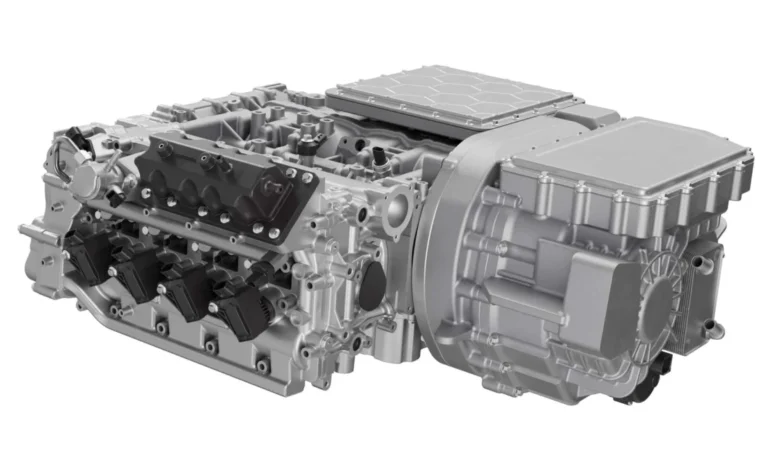
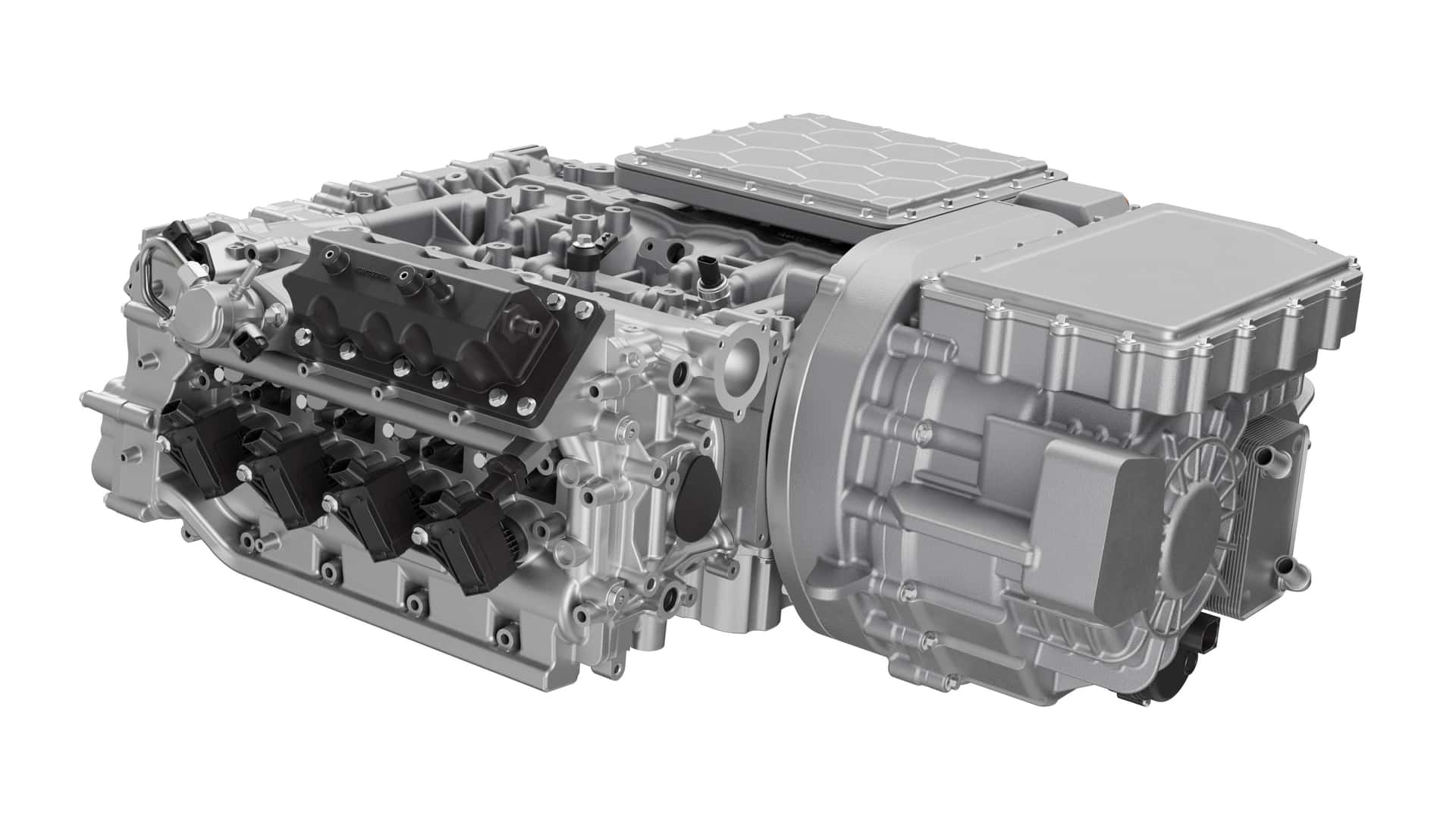
The X-Range C15 Direct Drive is engineered as a modular, high-efficiency unit that fits within a flat enclosure, specifically designed to occupy the space typically reserved for a rear electric drive unit (EDU) in a standard EV. By packaging the entire internal combustion system—including the engine, transmission, and dual electric motors—into a single compact module, Horse Powertrain provides a "plug-and-play" solution for manufacturers who need to diversify their product lineups quickly.
At the heart of the system is a 1.5-liter, four-cylinder gasoline engine. This engine can be configured in two distinct states of tune depending on the vehicle’s requirements. The naturally aspirated version produces 94 horsepower (70 kilowatts), while a more powerful turbocharged variant offers 161 horsepower (120 kilowatts). The system utilizes a P1+P3 motor configuration, a setup that has become increasingly popular in modern hybrid designs for its balance of efficiency and performance.
The P1 motor is positioned at the end of the engine’s crankshaft, serving primarily as a high-voltage generator. In the naturally aspirated setup, it can send up to 70 kW of power directly to the battery or the traction motor; the turbocharged version increases this output to 110 kW. The P3 motor is located at the transmission’s output shaft and is responsible for providing direct electric traction to the wheels. This allows the vehicle to operate in several modes: as a pure EV, as a serial hybrid (where the engine only generates electricity), or as a parallel hybrid (where both the engine and motor drive the wheels).
Furthermore, the C15 Direct Drive is designed to support all-wheel-drive (AWD) configurations. In such a setup, the front wheels are powered by a traditional electric motor, while the Horse Powertrain unit manages the rear axle. This integration at the rear axle is a strategic design choice; it simplifies the routing of exhaust systems and after-treatment components, such as catalytic converters and particulate filters, thereby preserving the flat floor and battery volume under the passenger compartment—a hallmark of modern EV design.
Strategic Context: Mitigating the "Billion-Dollar Drain"
The introduction of the X-Range C15 comes at a critical juncture for several major automotive groups. Companies such as Honda, Stellantis, and the Sony-Honda joint venture, Afeela, have faced significant headwinds in their transition to all-electric lineups. Honda recently made headlines by scaling back its ambitious "0 Series" EV strategy, a move necessitated by shifting market conditions and the high costs associated with bespoke EV production. Similarly, Stellantis has faced mounting pressure from shareholders and dealers as it grapples with inventory surpluses and a cooling market for high-priced BEVs.
For these manufacturers, the "billion-dollar drain" is a very real threat. Developing a dedicated EV platform from scratch involves massive investments in R&D, tooling, and dedicated assembly lines. If consumer demand fails to meet projections, these investments cannot be easily recouped. The Horse Powertrain solution offers a strategic exit ramp. By allowing these companies to build hybrids and EREVs on the same assembly lines as their BEVs, they can achieve better economies of scale and respond more fluidly to market fluctuations.
This approach mirrors the strategy recently adopted by Scout Motors, the Volkswagen-owned American brand. Scout’s upcoming Terra pickup and Traveler SUV will utilize an EREV system where a small gasoline generator sits at the rear to provide a total range of over 500 miles, specifically to address the towing and long-distance needs of the North American truck market. Horse Powertrain is essentially commoditizing this technology, making it available to any OEM that lacks the in-house resources to develop a compact, rear-mounted range-extender system.
A Chronology of the Powertrain Pivot
To understand the importance of the X-Range C15, one must look at the timeline of the automotive industry’s propulsion strategies over the last 15 years:
- 2010–2015: The Conversion Era. Early EVs like the Ford Focus Electric and the Fiat 500e were "compliance cars." Manufacturers took existing gas-powered models and replaced the engine with a battery and motor. These cars were often compromised in terms of range and interior space.
- 2016–2021: The Bespoke EV Gold Rush. Led by Tesla’s success, legacy OEMs committed to "EV-only" platforms. Volkswagen’s MEB, Hyundai’s E-GMP, and GM’s Ultium represented a shift toward optimizing vehicles for batteries, featuring long wheelbases and "frunks."
- 2022–2023: The Reality Check. As the "early adopter" phase of EV ownership concluded, the "early majority" of consumers expressed hesitation. Issues with public charging infrastructure in Europe and the United States, combined with high interest rates, slowed BEV sales growth.
- 2024–Present: The Era of Flexibility. Manufacturers are now pivoting back to multi-energy platforms. Toyota, which was once criticized for its slow EV adoption, is now being praised for its record profits driven by high hybrid demand. Horse Powertrain’s new system is the technological manifestation of this industry-wide pivot.
Supporting Data and Market Implications
The demand for hybrid technology is reflected in recent sales data. In the United States, hybrid sales grew five times faster than BEV sales in the first half of 2024. In China, the world’s largest auto market, Extended-Range Electric Vehicles (EREVs) have become a dominant force, led by brands like Li Auto and Leapmotor. These vehicles offer the smooth, torque-rich driving experience of an EV with the "safety net" of a gasoline engine, effectively eliminating range anxiety.
The Horse Powertrain X-Range C15 Direct Drive is uniquely positioned to capitalize on this trend. Beyond the engine and motors, the unit includes integrated power electronics, a DC-to-DC converter, and an on-board charger. Perhaps most importantly for high-end manufacturers, it includes an 800-volt charging booster. This allows a vehicle equipped with a 400-volt battery system (common in hybrids) to utilize ultra-fast 800-volt DC chargers, significantly reducing the time spent at charging stations.
From a manufacturing perspective, the C15 Direct Drive minimizes the "geopolitical bingo" risks that currently plague the industry. With fluctuating trade tariffs on Chinese-made battery cells and shifting government subsidies in the U.S. and EU, having a flexible powertrain allows a brand to pivot its production mix between gas, hybrid, and electric without redesigning the entire vehicle.
Broader Impact and the Future of Internal Combustion
The creation of Horse Powertrain itself is a testament to the changing perception of the internal combustion engine. By spinning off their ICE and hybrid divisions into a separate entity, Renault and Geely have created a specialist powerhouse capable of supplying the entire industry. Saudi Aramco has also taken a stake in the venture, signaling a belief that liquid fuels—including synthetic e-fuels and biofuels—will remain a vital part of the global transport mix for decades to come.
The C15 Direct Drive is the latest addition to a portfolio that includes the F15 (a front-drive all-in-one unit) and the standard C15 (an ultra-compact range extender). By providing these components to third-party automakers, Horse Powertrain is essentially becoming the "Intel Inside" of the hybrid world.
In conclusion, the X-Range C15 Direct Drive represents more than just a new piece of hardware; it represents a pragmatic shift in automotive engineering. As the industry realizes that the path to zero emissions is not a straight line, but rather a series of incremental steps, technologies that bridge the gap between gasoline and electricity will become the most valuable assets in a manufacturer’s arsenal. For companies struggling to make their EV investments profitable, Horse’s new "plug-and-play" hybrid system may be the lifeline they need to survive the most turbulent decade in automotive history. This solution allows for the preservation of the driving characteristics and packaging benefits of an EV while providing the range security that the mass market still clearly desires.