IoT News of the Week: Philips Hue Security Expansion, Matter Ecosystem Growth, and the Evolution of Smart Home and Industrial Technologies

The global Internet of Things (IoT) landscape continues to undergo rapid transformation, characterized by shifting corporate strategies, evolving smart home protocols, and the increasing convergence of artificial intelligence with industrial automation. Recent developments highlight a pivotal juncture for both consumer and enterprise ecosystems, ranging from legacy lighting brands pivoting into comprehensive home security to the quiet demise of pioneering voice assistants and the growing regulatory and ethical scrutiny surrounding insurtech applications.
As hardware manufacturers race to adopt universal standards like Matter, and industrial sectors pour millions into predictive maintenance, the boundaries defining modern connectivity, privacy, and utility are constantly being redrawn. This comprehensive review examines the major IoT developments of the week, analyzing their technical implications, market drivers, and broader consequences for businesses and consumers alike.
Philips Hue Eyes Home Security Expansion Amid Market Saturation
Signify, the parent company of the prominent Philips Hue brand, is reportedly preparing to enter the home security market with a dedicated lineup of surveillance cameras and contact sensors. The strategic pivot comes as little surprise to industry analysts who have monitored the trajectory of smart lighting over the past decade. Launched initially in 2013, Philips Hue established itself as a gold standard in connected lighting, commanding premium pricing through robust reliability, expansive ecosystem integration, and frequent software updates.
However, the commoditization of the smart lighting sector has severely limited organic growth. With countless white-label competitors offering RGB and tunable white bulbs at a fraction of the cost, and with high-quality LED products lasting upwards of a decade without replacement, hardware sales alone can no longer sustain exponential growth for premium brands. By venturing into home security, Philips Hue can leverage its massive global brand recognition and existing user base to capture high-margin subscription revenues.
In the modern smart home economy, recurring revenue streams—driven by cloud video storage, advanced motion analytics, and professional monitoring services—have become the primary mechanism for long-term monetization. If Signify successfully integrates its lighting automation ecosystem with high-definition video feeds and perimeter sensors, it could pose a formidable challenge to established security giants by offering consumers a unified application interface for both ambient illumination and home protection.
TP-Link Expands Matter Portfolio with New Kasa Smart Switches
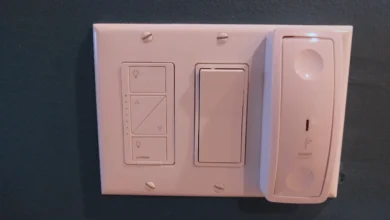
Interoperability remains a foundational pillar for the maturation of the smart home, and TP-Link is continuing its aggressive push toward universal connectivity with the introduction of new hardware supporting the Matter standard. Following the successful rollout of various Matter-compatible smart plugs and switches under its budget-oriented Tapo brand, TP-Link has expanded its premium Kasa lineup to include two new Wi-Fi-enabled devices: the Kasa KS205 Smart Wi-Fi Light Switch and the Kasa KS225 Smart Wi-Fi Light Dimmer Switch.
Priced competitively at $27.99 and $29.99 respectively, these devices require a neutral wire for installation and offer advanced automation capabilities, including customizable scheduling and a designated "away mode" designed to simulate occupancy and deter potential intruders. The integration of the Matter protocol allows these switches to operate seamlessly across competing ecosystems, including Apple Home, Amazon Alexa, and Google Home, bypassing historical fragmentation issues that have long frustrated consumers. This hardware expansion illustrates a broader industry-wide migration toward protocol agnosticism, reducing friction for end-users and accelerating smart home adoption rates globally.
Microsoft Officially Retires Cortana Across Windows Platforms
The era of the dedicated desktop voice assistant has officially drawn to a close as Microsoft completes the systematic dismantling of Cortana. Launched in 2014 as a direct competitor to Apple’s Siri, Cortana was initially hailed as a revolutionary productivity companion designed to navigate the Windows ecosystem through natural language processing. Despite offering robust functionality and seamless integration with Windows 10, Cortana struggled to secure a dominant market share in the mobile space, ultimately lagging behind competitors anchored to pervasive smartphone operating systems.
Microsoft’s strategic retreat from the consumer voice assistant market began years ago with the discontinuation of dedicated hardware like the Harman Kardon Invoke speaker and the removal of Cortana from consumer-facing mobile apps. However, the assistant remained embedded as a standalone application within the Windows operating system. With a recent system update to Windows 11, the Cortana app has been officially rendered non-functional, with support scheduled to terminate entirely for remaining Windows 10 users in the near future.
Industry observers note that Cortana’s departure makes way for a new generation of artificial intelligence tools, most notably Microsoft Copilot. Rather than relying on a traditional conversational agent tailored for general inquiries and calendar management, enterprise and consumer computing are rapidly pivoting toward context-aware generative AI models deeply integrated into the operating system architecture to enhance productivity and workflow efficiency.
Tractian Secures $45 Million in Funding to Scale Industrial AI Monitoring
In the enterprise technology sector, predictive maintenance continues to attract significant venture capital investment, driven by the acute need to minimize costly equipment downtime in manufacturing and supply chain environments. Atlanta-based Tractian announced a $45 million funding round, bringing its total capital raised to over $60 million since its founding in 2019.
Tractian specializes in industrial machine health monitoring, combining proprietary hardware sensors with advanced software analytics. By transitioning terminology from traditional "anomaly detection" to modern "AI-driven predictive maintenance," the company has successfully captured the attention of both industrial buyers and institutional investors. The fresh capital infusion will be directed toward expanding sales operations and accelerating research and development initiatives.
With an existing customer base exceeding 500 industrial clients, Tractian’s trajectory reflects a broader macro trend: factories and industrial plants are rapidly digitizing legacy machinery through Internet of Things sensors. By continuously tracking vibration, temperature, and electrical current, machine-learning algorithms can predict mechanical failures weeks before they occur, transforming reactive maintenance strategies into proactive operational efficiencies that save enterprises millions of dollars in unexpected downtime.
Insurtech and Connected Home Devices: The Emerging Privacy and Policy Risks
While connected home technologies offer unprecedented convenience, security, and efficiency, they are simultaneously giving rise to significant ethical and consumer protection concerns, particularly within the insurtech sector. As property and casualty insurance companies grapple with escalating replacement costs, severe weather events, and macroeconomic inflation, underwriters are aggressively seeking ways to mitigate risk by reducing exposure in vulnerable geographic regions.
In states like California, where climate change and wildfire risks have prompted numerous major insurance carriers to restrict new policies or non-renew existing ones, firms are increasingly turning to advanced surveillance technology to evaluate properties. Reports have highlighted instances where insurance companies utilize aerial drone footage to scan residential roofs and yards for potential liability risks.
In documented cases, homeowners have faced sudden policy cancellations due to perceived roof maintenance issues or the presence of drained swimming pools, forcing them to produce repair receipts and documentation to reverse non-renewal decisions. While insurers are legally permitted to evaluate property conditions during claims processing and underwriting, the integration of autonomous drones, smart home data feeds, and continuous monitoring creates a precarious precedent. As connected sensors become ubiquitous within private residences, the danger remains that these very technologies could be leveraged by corporate entities to penalize consumers or systematically strip coverage as systemic environmental and financial risks mount.
Energy Harvesting Innovations: Graphene Foam Flooring Transforms Kinetic Motion into Power
Innovations in sustainable power generation continue to emerge from academic and research laboratories, offering promising alternatives to traditional battery-powered IoT deployments. Researchers in Scotland have recently showcased a novel graphene foam material engineered to serve as an energy-harvesting floor sensor.
When
subjected to human footsteps, the graphene foam nanogenerator converts kinetic energy into approximately 10 watts of electricity, generating sufficient power to operate the sensor itself. Furthermore, the accompanying software analytics can analyze the distinct pressure profiles and cadence of footsteps to determine occupancy levels, identifying who is entering or leaving a room in real time.
This development addresses one of the most persistent engineering bottlenecks in the Internet of Things: power sustainability. While kinetic energy harvesting has been explored for years, scalable and cost-effective materials like graphene foam pave the way for self-powered smart building infrastructure, eliminating the labor-intensive maintenance required to replace countless lithium-ion batteries across expansive commercial and residential properties.
SaaviHome Pioneers Smart Home Integration Franchising Model
As the complexity of connected ecosystems deepens, the demand for professional installation and integration services continues to surge. Ahead of the upcoming CEDIA professional installers trade show, smart home integration provider SaaviHome has officially launched a franchise initiative designed to scale its operational model across new geographic markets.
Founded in 2004, SaaviHome spent decades refining its deployment strategies before developing proprietary software and administrative services in 2020 specifically tailored for franchising. Leveraging established enterprise automation platforms such as Control4, the company is actively recruiting franchise partners across the Mountain West region, focusing initial expansion efforts on Colorado, Utah, Nevada, and Arizona.
The franchise launch underscores a fundamental evolution in the smart home industry: despite the proliferation of user-friendly, plug-and-play devices, high-end residential installations involving lighting control, multi-room audio, advanced networking, and integrated security systems still require expert configuration. By standardizing the integration business model, SaaviHome aims to bridge the gap between complex enterprise-grade technologies and consumer expectations, providing a structured pathway for technicians to build scalable businesses in a rapidly expanding market.