Samsung Galaxy SmartTag 3 Sees Rapid Price Drop Barely One Week After Retail Launch

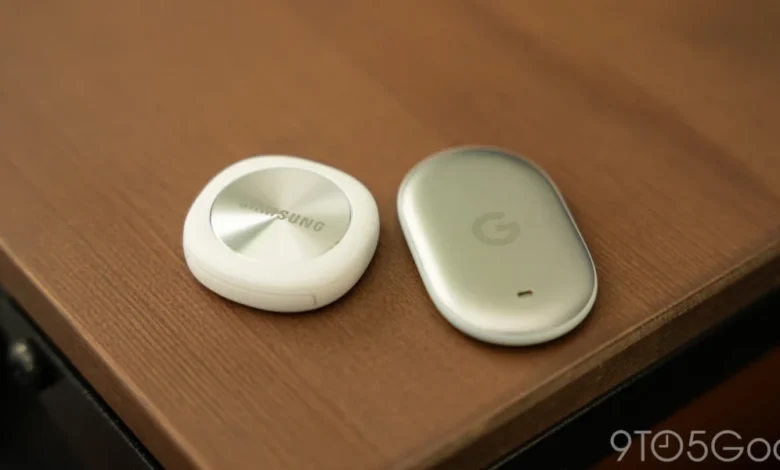
Barely a week after its official market release, the Samsung Galaxy SmartTag 3 has already entered the discount cycle, with retail prices plummeting to as low as $20 per unit. This aggressive pricing strategy, spearheaded by third-party retailers like Woot, positions the new tracker as a formidable competitor to Google’s recently launched Pixel Tag. While Google’s ecosystem aims to standardize tracking for all Android users via its Find Hub network, Samsung’s latest hardware suggests that the South Korean manufacturer remains committed to maintaining its dominant, albeit proprietary, position in the item-tracking market.
The rapid devaluation of the SmartTag 3 from its MSRP of $29.99 is notable not just for the consumer savings, but for what it reveals about the competitive landscape of Bluetooth-enabled asset tracking. As the market for such devices matures, hardware differentiation is becoming less about the tracking mechanism itself and more about the robustness of the supporting software ecosystem.
A Chronology of the SmartTag Evolution
To understand the significance of the SmartTag 3, one must look at the trajectory of Samsung’s hardware development over the past several years. The original Galaxy SmartTag was introduced as a niche accessory, primarily designed to tether Samsung users to the SmartThings ecosystem. It was followed by the SmartTag+, which introduced Ultra-Wideband (UWB) technology for precision finding.
The Galaxy SmartTag 2, released in late 2023, represented a major design overhaul, moving toward a more streamlined, oblong shape with an integrated metal loop. It was praised for its battery efficiency and dual-mode connectivity. The release of the SmartTag 3 in early November 2026 marks the next iteration, characterized by a significant reduction in physical footprint and the removal of the built-in mounting hole, a design choice that has sparked debate among power users who relied on the previous iteration’s ability to attach directly to keyrings.
Despite the design shift, the SmartTag 3 introduced critical functional upgrades:

- Extended Battery Longevity: Refinements in power management firmware allow for longer operational cycles between battery swaps.
- NFC Contact Information: A new, user-facing feature allows individuals who find a lost tag to scan it with an NFC-enabled smartphone, instantly displaying the owner’s contact details without requiring the finder to be part of a specific ecosystem.
- Limited Cross-Platform Support: Perhaps the most significant change is the introduction of restricted support for iPhone devices, a move that subtly challenges the closed-loop nature of Apple’s AirTag network, though full integration remains exclusive to the Samsung ecosystem.
Ecosystem Fragmentation: Google vs. Samsung
The primary point of contention in the current market is the divide between the Google Find Hub network and the Samsung SmartThings Find ecosystem. Google’s Pixel Tag, marketed as the quintessential tracker for the broader Android user base, relies on a vast, crowdsourced network of millions of Android devices. However, early field reports and data from user communities, such as the r/GoogleFMD subreddit, indicate that the Google Find Hub network still struggles with latency and location accuracy in high-density urban environments compared to Samsung’s established network.
Samsung’s infrastructure, built over years of massive hardware distribution, benefits from a higher density of "beacon" devices. When a lost item pings a nearby Samsung smartphone, the data transmission is often faster and more reliable than the equivalent handshake on the Google network. This technical disparity is a primary reason why, despite the technological promise of Google’s universal standard, many power users continue to prefer Samsung hardware.
Economic Implications of the Price Drop
The availability of the SmartTag 3 for $23.99 for a single unit, and as low as $20 per unit when purchasing a four-pack, signals a shift in retail strategy. Historically, electronic accessories of this nature maintain their launch price for at least a fiscal quarter. The immediate transition to discounted pricing suggests that retailers are aggressively trying to clear inventory or that Samsung is subsidizing these costs to maintain market share against the encroaching Pixel Tag ecosystem.
From a macroeconomic perspective, the pricing of item trackers is reaching a saturation point. With competitors like Tile, Chipolo, Apple, and Google fighting for space on the same keychain, manufacturers are forced to lower margins to capture the "ecosystem loyalty" of the consumer. A user who purchases a four-pack of SmartTag 3s is effectively locked into the Samsung ecosystem for the next two to three years—the expected life cycle of the device—thereby increasing the likelihood that their next smartphone purchase will also be a Samsung Galaxy device.
Official Stances and Industry Feedback
While neither Google nor Samsung has issued a direct press release regarding the other’s market performance, internal product roadmaps suggest a high level of awareness. Samsung’s recent whitepapers on the SmartTag 3 emphasize "Security and Privacy at Scale," specifically highlighting the encrypted nature of the tracker’s location data. This is a direct response to privacy concerns that have plagued the industry since the inception of Bluetooth trackers, particularly regarding stalking and unauthorized tracking.
Industry analysts suggest that the SmartTag 3’s design, while controversial due to the lack of a mounting loop, is intended to be used with a proprietary or third-party adhesive-backed case. This "accessory-within-an-accessory" business model provides Samsung with additional revenue streams while allowing the main device to remain as small as possible.

Broader Impact on the Consumer Electronics Sector
The implications of this price war extend beyond mere convenience. We are witnessing the solidification of "walled gardens" in the Internet of Things (IoT) space. While the FIDO Alliance and other standards bodies advocate for interoperability, the reality for the end-user is that tracking technology is currently bifurcated. If you own a Samsung phone, the SmartTag 3 is arguably the most reliable and cost-effective solution available. If you own a Pixel or a generic Android device, you are effectively nudged toward the Pixel Tag, even if the current network performance is, as many users have noted, still catching up to its competitors.
Furthermore, the integration of NFC contact sharing in the SmartTag 3 is likely to become a industry standard. As regulatory bodies in the European Union and North America continue to scrutinize the privacy implications of Bluetooth trackers, features that allow for transparency—such as enabling a finder to contact an owner easily—will become mandatory rather than optional.
Future Outlook and Technical Analysis
Looking ahead, the next phase of the "Tracker War" will likely focus on UWB (Ultra-Wideband) accuracy and AI-assisted search. Samsung is reportedly working on software updates that will utilize the Galaxy AI suite to predict the location of a lost item based on historical usage patterns. Should this be implemented, it would provide a significant edge over the current, purely reactive tracking methods.
For the consumer, the current discount on the Galaxy SmartTag 3 presents a rare opportunity. At $20 per unit, the barrier to entry for a robust, high-performance tracking system is at an all-time low. However, potential buyers should remain cognizant of the ecosystem limitations. The SmartTag 3 remains a "Galaxy-first" device, and while it offers limited functionality for other users, its true power is only unlocked when paired with a Samsung smartphone.
As the retail market adjusts to these price points, it is expected that other manufacturers will respond with their own bundled promotions. Consumers can anticipate a period of high volatility in pricing for the remainder of the holiday season, as manufacturers attempt to capture the high-volume demand typically associated with the year-end shopping period. Whether these price drops represent a permanent shift in MSRP or a temporary marketing tactic remains to be seen, but for now, the consumer is the primary beneficiary of the intensifying competition in the item-tracking sector.