BYD Secures Legal Victory in Netherlands Over JLR Land Rover Defender Design Dispute

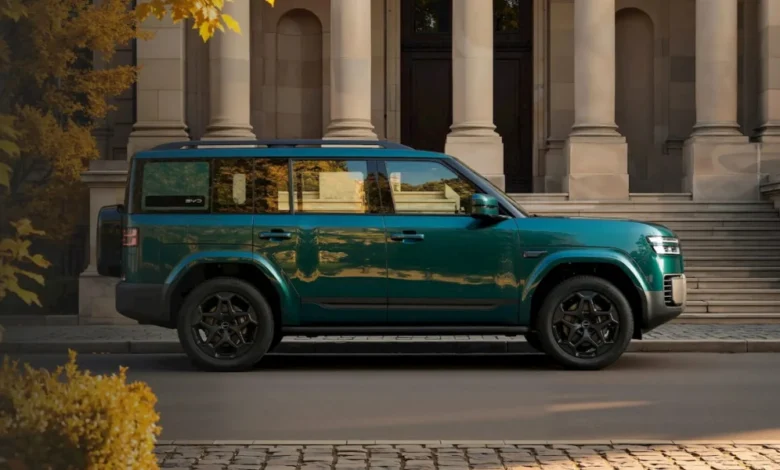
The escalating global competition between established legacy automakers and rapidly expanding Chinese electric vehicle manufacturers has manifested in a high-stakes intellectual property battle in Europe. Chinese automotive giant BYD has secured an important early legal victory against Jaguar Land Rover (JLR) in the Netherlands, following an aggressive raid on BYD’s Dutch corporate offices. A court in The Hague has ruled against the British luxury carmaker, ordering it to destroy digital records and internal launch plans seized during an unannounced enforcement action, or face steep financial penalties. The legal clash centers on the design and technological architecture of BYD’s new plug-in hybrid SUV, the Ti 7, which JLR alleges is a "slavish imitation" of its iconic Land Rover Defender.
Chronology of the Dispute and Dutch Court Ruling
The tensions between the two automotive firms escalated significantly in late July, when BYD officially opened order books for the Ti 7 in the United Kingdom and broader European markets. Automotive analysts and enthusiasts immediately drew sharp comparisons between the rugged, boxy aesthetic of the BYD Ti 7 and the distinctive silhouette of the Land Rover Defender. BYD itself has leaned into this aesthetic in its marketing materials, describing the vehicle as possessing an unapologetically boxy profile that delivers an imposing yet contemporary look favored by modern SUV buyers.

In response to the market entry of the Ti 7, JLR initiated aggressive legal countermeasures. Acting through local enforcement authorities, JLR executed a surprise raid on BYD’s corporate offices in the Netherlands in August. During this operation, investigators seized a substantial volume of digital records, technical data, and internal launch strategies without prior warning.
BYD’s legal counsel vigorously contested the legality and scope of the raid, characterizing the enforcement action as an overreaching "fishing expedition" and asserting that investigators had sequestered far too many proprietary files unrelated to the core intellectual property dispute. According to BYD representatives, the company had previously maintained an open posture of cooperation with JLR’s preliminary inquiries, making the sudden seizure of documents an aggressive escalation.
The legal standoff reached a crucial juncture on November 11, when the District Court in The Hague delivered its verdict. The Dutch court ruled firmly in favor of BYD, ordering JLR to completely destroy the seized documents within a strict 24-hour window. The tribunal established severe financial disincentives for non-compliance, dictating that JLR would face a penalty of €50,000 ($55,000) for every hour of delay, up to a maximum cumulative fine of €500,000 ($553,000). Furthermore, the court mandated that JLR must provide third-party verification confirming the complete destruction of the files within 24 hours of execution, while simultaneously rejecting JLR’s counter-request for a €500,000 sanction against BYD.

According to reports from Autoweek Netherlands, the judicial reasoning hinged heavily on the fact that the Ti 7 has not yet officially commenced sales within the European Union proper, rendering the immediate acquisition of broad launch plans through such invasive seizures unwarranted under local legal frameworks. While this specific ruling blocks JLR from pursuing further legal enforcement under the initial seizure order in the Netherlands, the broader conflict is far from resolved. JLR has already initiated parallel summary proceedings regarding alleged design infringement in both Rotterdam and The Hague.
Intellectual Property Claims and Vehicle Specifications
At the heart of the litigation is JLR’s assertion that the BYD Ti 7 infringes upon the intellectual property rights protecting the Land Rover Defender. JLR claims the vehicle constitutes a slavish imitation and has accused BYD of procuring physical models of the Defender to dismantle and reverse-engineer proprietary technologies.
Despite these allegations, the BYD Ti 7 enters the European marketplace with a distinct powertrain and pricing strategy designed to undercut established luxury off-roaders. In the United Kingdom, the Ti 7 commands an on-the-road starting price of £47,995 ($64,000). This positions the vehicle at a substantial discount compared to its British rival; the plug-in hybrid Defender 110 starts at £71,840 ($95,500) in the UK market, representing a price delta of more than £20,000 ($26,500).

The Ti 7 is built around a comprehensive feature set explicitly tailored to European consumer preferences, including a standard seven-seat passenger configuration. Underneath its rugged exterior, the vehicle serves as the debut platform in the UK for BYD’s advanced DM-p (Dual Mode Performance) powertrain architecture. The system combines a 1.5-liter turbocharged internal combustion engine with a sophisticated three-motor electric setup, generating a combined output of 402 horsepower (408 PS). This powertrain propels the heavy SUV from zero to 62 miles per hour in an impressive 4.8 seconds.
Energy storage is managed via a 35.6 kWh iteration of BYD’s proprietary Blade Battery technology, which utilizes lithium iron phosphate (LFP) chemistry known for its thermal stability and safety profile. The battery system delivers a pure-electric driving range of up to 74 miles under the WLTP testing cycle, which extends to up to 102 miles of zero-emission capability exclusively within urban driving environments. Distributed exclusively in the UK market in its high-tier Excellence AWD trim, BYD asserts that the vehicle provides an inventory of standard equipment that outvalues competing models in its specific price tier.
Broader Industry Implications and Market Dynamics
The legal battle between JLR and BYD serves as a microcosm of the structural shifts occurring within the global automotive industry. As Chinese electric vehicle manufacturers accelerate their expansion into Western markets—traditionally dominated by legacy European, American, and Japanese brands—intellectual property and industrial design disputes are becoming increasingly common.

For legacy automakers like JLR, protecting the distinct design language and heritage associated with iconic legacy models like the Defender is essential for maintaining brand equity and pricing power. The rapid commercial scaling of Chinese automakers, backed by highly vertically integrated supply chains and advanced battery technologies, poses a direct competitive challenge to traditional premium manufacturers who have historically commanded high profit margins in the luxury SUV segment.
Conversely, for emerging global entrants like BYD, navigating the complex regulatory and legal landscapes of foreign jurisdictions is a critical hurdle in establishing long-term market legitimacy. While the Dutch court’s ruling provides BYD with a procedural victory, the ongoing summary proceedings in Rotterdam and The Hague indicate that litigation surrounding the Ti 7’s design will likely continue for an extended period.
Legal experts note that the outcome of these subsequent proceedings could establish significant legal precedents for how European courts evaluate design similarities between traditional internal combustion luxury vehicles and newly developed Chinese electrified platforms. As both companies prepare for further courtroom arguments, the broader automotive sector will closely monitor the litigation, as its resolution could influence the competitive strategies of other Chinese manufacturers seeking to establish a footprint in European markets.
Related posts: