Geely Set to Unveil Revolutionary 2.2MW EV Charging System and Four-Minute Battery Technology

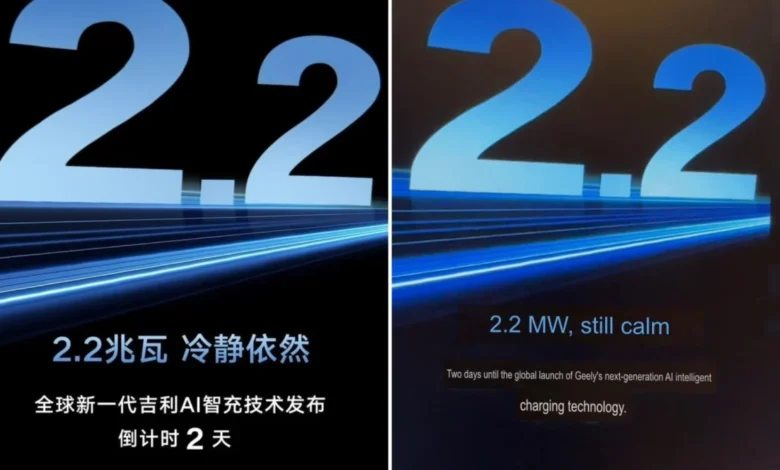
The global electric vehicle landscape is once again shifting at a breakneck pace, driven primarily by technological advancements emerging from the Chinese automotive market. Geely, one of China’s foremost automotive giants, has officially announced plans to reveal its next-generation electric vehicle battery and ultra-fast charging ecosystem. Scheduled for a grand unveiling on September 23 at the Geely Global All-Domain Safety Center in Ningbo, China, the upcoming technology promises to redefine consumer expectations for battery replenishment by offering a jaw-dropping four-minute charging window.
This upcoming announcement highlights an aggressive technological arms race among Chinese automakers. As infrastructure and cell chemistries evolve at an unprecedented rate, the industry has effectively outgrown the traditional metric of measuring charging times in minutes. Instead, the race has narrowed down to seconds, with companies fiercely competing to shave fractional time blocks off a standard power-up routine. Geely’s latest leap forward is poised to outpace its domestic competitors significantly, raising the bar for high-performance electric mobility worldwide.
The Escalating Race for Ultra-Fast Charging in China
While Western charging infrastructure continues to grapple with the deployment of 150kW to 350kW direct current fast chargers, China’s EV ecosystem is operating in an entirely different stratosphere. Over the past several years, domestic automakers and battery suppliers have systematically dismantled range anxiety and charging friction by pushing power outputs well into the megawatt scale.
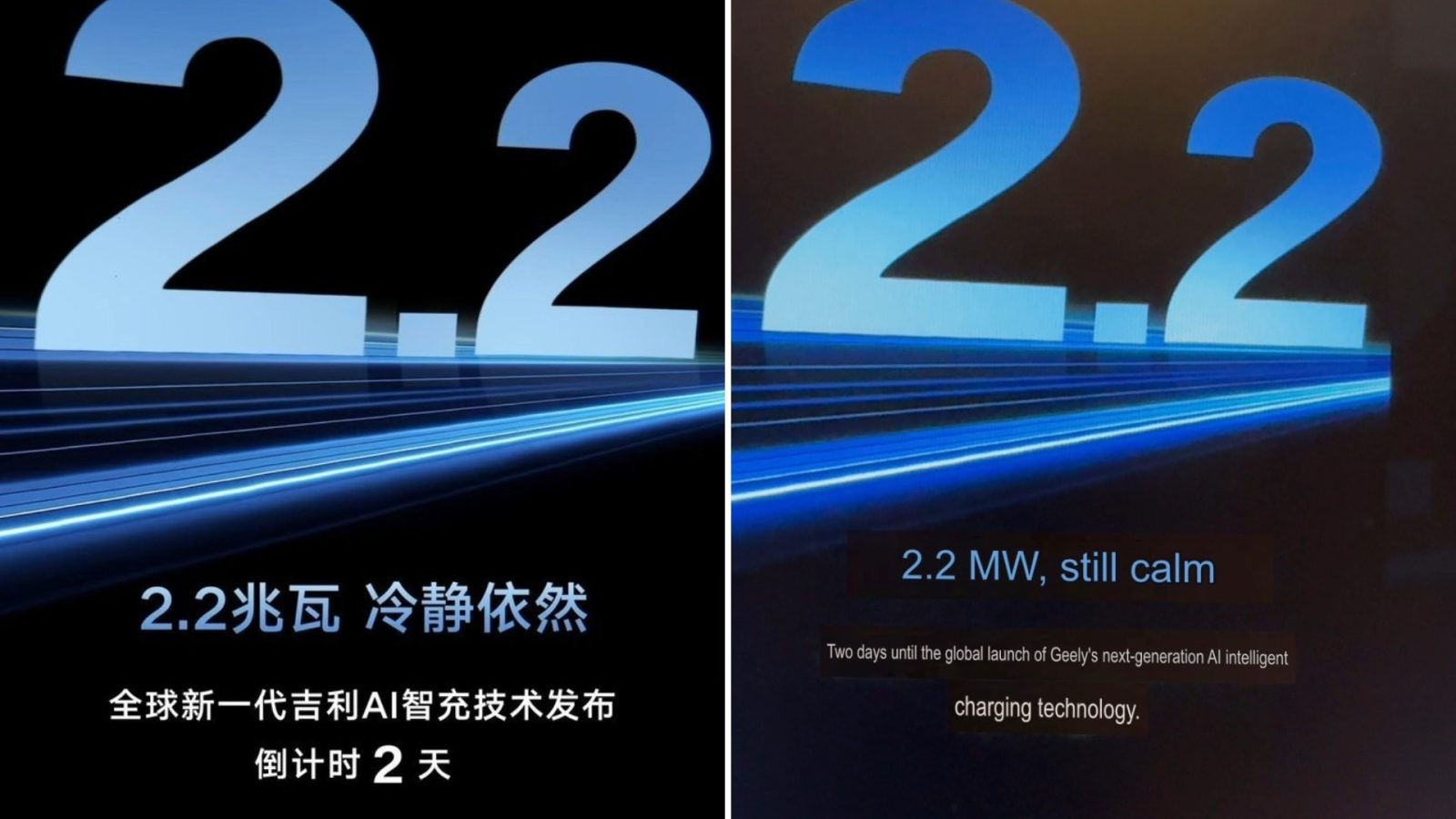
Just months prior to Geely’s upcoming showcase, rival manufacturer BYD introduced its "Flash Charging 2.0" system, paired with the latest iteration of its Blade battery architecture. BYD’s system successfully dropped charging times to the five-minute mark utilizing a robust 1.5MW output. However, Geely’s impending reveal threatens to render even that cutting-edge benchmark second-best. By introducing a staggering 2.2MW power delivery system—an increase of roughly 50 percent over BYD’s current flagship technology—Geely is pushing the boundaries of what high-voltage electrical architectures can safely handle.
The psychological and practical impact of a four-minute charge cannot be overstated. For the average consumer, pulling into a charging station and waiting for a duration comparable to pumping a tank of gasoline bridges the final operational gap between internal combustion engine vehicles and battery-electric vehicles. Yet, achieving this feat requires simultaneous breakthroughs in thermal management, conductor materials, grid stability, and cell chemistry to prevent catastrophic degradation under such intense thermal and electrical stress.
Chronology of the Announcement and Teaser Campaign
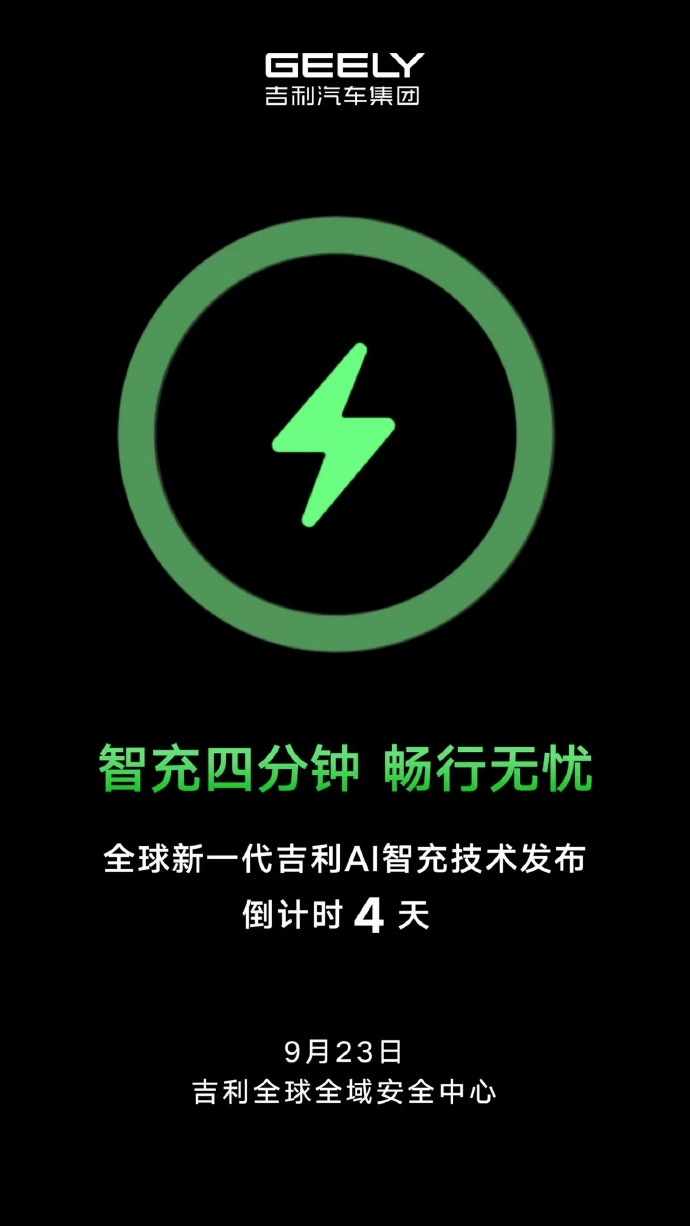
The trajectory toward this week’s unveiling began building momentum over the weekend, when Geely released a series of promotional teaser materials across its digital and social media channels. Translated from Mandarin, the company’s official promotional copy read: "Charge in Four Minutes, Drive with Peace of Mind. Global Launch of Geely’s Next-Generation AI Smart Charging Technology."
The notice confirmed that the global debut will take place on September 23 at the Geely Global All-Domain Safety Center, a massive, state-of-the-art testing and research facility located in Ningbo, China. This venue choice is strategically significant. By hosting the event at a dedicated safety center, Geely aims to proactively address the primary consumer concern associated with ultra-fast charging: battery safety and longevity. Pumping massive amounts of energy into a battery pack in a matter of minutes generates immense heat, which historically accelerates chemical degradation and raises safety risks. By framing the announcement within the context of safety and structural integrity, Geely is signaling to the market that its high-power system has successfully solved these foundational engineering hurdles.
Decoding the Technology: AI Integration and Battery Longevity
Although Geely has kept full technical specifications under wraps ahead of the official presentation, industry analysts and early promotional leaks have provided a clearer picture of what the system entails.
A central pillar of the upcoming release is the integration of what Geely terms "AI Smart Charging Technology." While artificial intelligence buzzwords are frequently deployed in consumer technology marketing, in this context, the AI functions as an advanced, real-time battery management system (BMS). The algorithm is designed to dynamically monitor cell temperatures, internal resistance, and state-of-charge curves on a millisecond-by-millisecond basis. By modulating the current dynamically throughout the charging cycle, the system can maximize energy uptake while mitigating the internal trauma typically inflicted on lithium-ion cells during high-power fast charging.
Furthermore, reports circulating within the Chinese automotive supply chain suggest that Geely’s new battery architecture does not sacrifice lifespan for speed. Early performance metrics hint at a capability of supporting up to 3,500 charge and discharge cycles with minimal capacity degradation. For the end user, a battery capable of withstanding thousands of rapid replenishment cycles without significant range loss solves the long-term asset depreciation fears that have historically plagued early EV adopters.
It is also worth noting the nuances of the "four-minute" claim. In the electric vehicle industry, charging speeds are conventionally measured across specific parameters, most commonly from 10 percent to 70 percent or 80 percent state of charge. This is because modern lithium-ion batteries naturally taper their intake rate as they approach full capacity to protect the cells from overcharging and dendrite formation. Whether Geely’s four-minute window applies to a specific baseline state-of-charge bracket or a full replenishment cycle will be a critical detail clarified during Wednesday’s presentation.

Global Comparisons: The Growing Gulf Between Markets
The sheer scale of Geely’s 2.2MW system becomes starkly apparent when viewed through a global lens. To put the impending technology into perspective, a 2.2MW charger delivers power at a rate roughly six times faster than the typical high-speed charging infrastructure currently deployed across the United States, which generally caps out around 350kW for consumer vehicles.
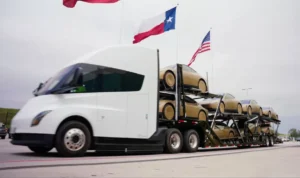
Even when compared against specialized commercial heavy-duty infrastructure, Geely’s consumer-focused technology holds its own. For context, Tesla recently deployed its inaugural 1.2MW Megacharger location in Ontario, California, specifically engineered to supply heavy electrical loads to the Class 8 Tesla Semi truck, which features a massive, high-capacity battery pack. The fact that Geely is preparing to channel nearly double that amount of power—2.2MW—into standard, smaller passenger vehicle battery packs underscores the profound divergence between the pace of EV innovation in China versus Western markets.
As a result, American and European automotive sectors face mounting competitive pressure. While legacy Western automakers continue to navigate slower rollouts of 400-volt and 800-volt architectures, Chinese original equipment manufacturers (OEMs) are aggressively transitioning toward ultra-high-voltage systems capable of handling megawatt-level inputs safely and efficiently.
Broader Industry Implications and Future Outlook
The introduction of Geely’s 2.2MW charging system and four-minute battery technology carries significant ramifications for the global automotive industry.

First, it forces a reevaluation of charging infrastructure investments worldwide. As passenger cars begin adopting megawatt charging capabilities, traditional public charging stations will require significant overhauls to their local grid connections, transformer capacities, and energy storage buffers. Drawing 2.2 megawatts of power instantaneously from the grid without causing localized brownouts or destabilizing local electrical distribution networks requires sophisticated megawatt-scale battery-buffered energy storage systems (BESS) integrated directly into the charging stations.
Second, it accelerates the globalization of Chinese EV technology. Geely, which parent-owns or holds major stakes in a sprawling portfolio of international brands including Volvo Cars, Polestar, Lotus, and Zeekr, possesses established pathways to export these technological advancements beyond domestic borders. If these ultra-fast charging systems and compatible battery packs are integrated into Geely’s global export portfolio, Western automotive brands may find themselves at a severe competitive disadvantage in international markets where charging speed is a primary purchase driver.
As the industry awaits the official September 23 keynote from Ningbo, analysts and enthusiasts alike will be watching closely for the fine print. Key details regarding vehicle compatibility, manufacturing costs, thermal management hardware, and the deployment timeline for public charging stalls will determine whether this technology represents a near-term commercial reality or a longer-term transitional milestone. Regardless of the immediate rollout schedule, one reality remains undisputed: the goalposts for electric vehicle charging convenience have moved once again, leaving global competitors scrambling to catch up.