The truth behind the breathtaking colors of the James Webb Space Telescope cosmic imagery

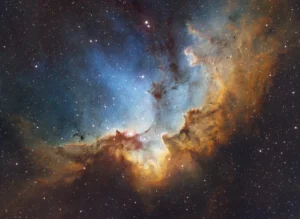
The teal peaks and orange haze of the Cosmic Cliffs, the iconic Carina Nebula image that introduced the James Webb Space Telescope (JWST) to the global public in July 2022, represent a triumph of data visualization. To the human eye, these colors do not exist in the way they appear on a screen. Because the JWST is an infrared observatory, almost none of the light it records falls within the narrow spectrum of human vision. Understanding the meticulous, science-driven process behind these color assignments transforms the viewer’s experience, revealing that these images are not merely artistic interpretations, but rigorous, objective maps of a universe that remains perpetually hidden from our biological senses.
The Physics of Invisible Light
To comprehend why Webb’s imagery is composed the way it is, one must first understand the telescope’s primary objective. The Near-Infrared Camera (NIRCam) functions primarily in the 0.6 to 5-micron range, while the Mid-Infrared Instrument (MIRI) extends its reach to 28 microns. Visible light, which the human eye perceives, occupies a thin slice of the electromagnetic spectrum between approximately 0.4 and 0.7 microns. Consequently, nearly every photon collected by the JWST exists beyond the red edge of human perception.
This technical design is a deliberate scientific necessity. As the universe expands, light from the most distant, ancient galaxies is stretched, or "redshifted," from its original ultraviolet or visible emissions into the infrared spectrum. Furthermore, infrared light possesses a longer wavelength that allows it to penetrate the dense, opaque curtains of interstellar dust that effectively blind optical telescopes like Hubble. By operating in the infrared, the JWST acts as a cosmic piercer, allowing astronomers to observe the inner sanctum of stellar nurseries where gravity and gas collapse to form new stars.
From Monochrome Data to Chromatic Composition
A common misconception regarding the JWST is that it captures full-color photographs in the traditional sense. In reality, the telescope’s detectors are entirely monochrome. Each light-sensitive chip records only intensity—a single numerical value per pixel representing the amount of photons detected. A raw exposure from the JWST is a high-resolution grayscale frame, capable of capturing over 65,000 distinct shades of gray. There is no inherent color data in the raw telemetry transmitted back to Earth.
To construct the vibrant images that have become synonymous with the mission, the Space Telescope Science Institute (STScI) utilizes a process involving filters. The NIRCam instrument is equipped with 29 filters, and MIRI with nine. These filters are specialized pieces of glass that permit only a narrow or wide swath of the infrared spectrum to pass through to the detector. By capturing the same patch of space through multiple filters, astronomers create a series of grayscale layers.
The assembly of these layers follows a practice known as "chromatic ordering." Astronomers sort the filters by their wavelength, assigning the shortest infrared wavelength to the blue end of the visible spectrum and the longest to the red end. This methodology ensures that the image remains scientifically grounded. While the colors are assigned, they follow a logical, hierarchical structure that maps invisible infrared data onto a human-readable visual spectrum.
Chronology of the Cosmic Cliffs
The release of the Carina Nebula image on July 12, 2022, marked a pivotal moment in modern astrophysics. The data for the "Cosmic Cliffs" (NGC 3324) was acquired during the telescope’s initial commissioning phase. The image was the result of a coordinated multi-filter capture, utilizing F090W, F187N, F200W, F470N, F335M, and F444W filters.
In this specific instance, the team departed from strict chromatic ordering to enhance scientific clarity. For example, the F470N filter—a narrowband filter designed to isolate molecular hydrogen—was assigned a yellow hue to ensure it stood out against the broadband F444W filter assigned to red. This adjustment was not an aesthetic flourish, but a deliberate decision to highlight the presence of molecular hydrogen, which is essential for understanding star formation processes.
Analytical Perspective: Representation vs. Fabrication
The debate over whether these images are "real" often stems from a fundamental misunderstanding of the term "representational imaging." In the scientific community, the distinction between a photograph and a data visualization is clear. An MRI scan of a human brain is not considered "fake" simply because the colors represent tissue density rather than skin-tone reflections. Similarly, JWST imagery is a translation of physical measurements into a format that allows human brains to process complex structural data instantly.
The structure captured by the telescope—the filaments, ridges, and cavities—is entirely factual. The spatial distribution of gas and dust is an accurate representation of the physical geometry of the nebula. The "color," however, is a layer of information that acts as a legend for the map. According to Alyssa Pagan, a science visuals developer at STScI, the team’s goal is to maximize scientific value while maintaining aesthetic integrity. By stretching the contrast of faint structures and cleaning out detector artifacts, the imaging team renders the raw, invisible data into a format that reveals the underlying physics of the region.
Broader Implications and Scientific Value
The impact of this imaging technique extends far beyond public relations. By mapping different wavelengths to specific colors, researchers can identify chemical compositions within a nebula at a glance. For instance, in the "Pillars of Creation," oxygen, sulfur, and hydrogen are often assigned different colors to allow astronomers to distinguish between different gas compositions within the towers of dust.
This flexibility is essential for the advancement of astrophysics. Without these translation tools, the scientific community would be forced to analyze thousands of individual, unreadable grayscale frames. Instead, the current methodology allows for rapid, comparative analysis across global research institutions. When astronomers examine a JWST image, they are viewing the results of a high-precision measurement process that has been optimized for human cognition.
Conclusion: A Faithful Portrait of the Unseen
The JWST does not take pictures; it builds representations of the unseen. The "Cosmic Cliffs" and the "Pillars of Creation" are not artistic interpretations born of imagination, but precise visualizations of infrared radiation interacting with matter. Every jet of gas, every star hidden behind a veil of dust, and every cavity carved by stellar winds is a measured, recorded fact.
The color, while assigned by human hands, adheres to the strict physical relationships of the light being measured. It is the language of science translated into the language of sight. As the mission continues to peer deeper into the history of the universe, these images will remain the definitive bridge between the cold, invisible reality of space and the human capacity to understand it. They are not merely photographs; they are the most accurate portraits of a distant, ancient reality that we have ever possessed, providing a glimpse into the mechanics of creation that was, until the launch of Webb, entirely beyond our reach.