EchoMotion: Cornell University researchers transform smartwatches into full-body motion trackers using ultrasonic sonar

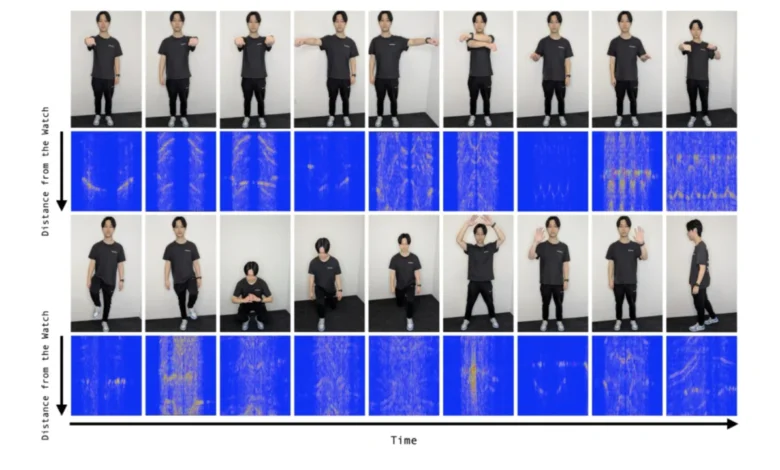
The current landscape of wearable technology is dominated by devices that provide high-level summaries of physical activity, such as step counts, heart rate variability, and estimated calories burned. However, these metrics often fail to capture the nuanced mechanics of human movement, leaving a gap between general activity tracking and precise performance analysis. Achieving high-fidelity feedback typically requires expensive motion-capture suites, specialized camera setups, or the guidance of a professional trainer. Researchers at Cornell University’s Smart Computer Interfaces for Future Interactions (SciFi) Lab have introduced a transformative solution: EchoMotion. This innovative, software-only system repurposes the existing hardware of commercial smartwatches to achieve comprehensive full-body pose estimation, effectively turning a standard wrist-worn device into a sophisticated motion-tracking laboratory.
The Evolution of Wearable Motion Tracking
For the past decade, the smartwatch industry has relied almost exclusively on inertial measurement units (IMUs), specifically accelerometers and gyroscopes. While these sensors are excellent at detecting repetitive rhythmic movements like running or swimming strokes, they are inherently limited. Because they are confined to the wrist, they cannot "see" the position of the torso, legs, or opposite limbs. Consequently, devices like the Apple Watch or Samsung Galaxy Watch often struggle to differentiate between complex exercises like a squat and a lunge, or to provide meaningful feedback on posture during yoga or Pilates.

The limitation of IMU-based tracking has long been a subject of study in human-computer interaction (HCI). Previous attempts to bridge this gap have involved adding extra hardware, such as ultra-wideband (UWB) chips or miniaturized cameras. While effective, these solutions increase the bill of materials (BOM), drain battery life, and raise significant privacy concerns among users who are increasingly wary of wearable cameras. EchoMotion circumvents these hurdles by utilizing the principles of active sonar, which operates by emitting sound waves and analyzing the time-of-flight and frequency shifts of the returning echoes.
How EchoMotion Functions: The Science of Sound
At its core, EchoMotion is a software architecture that leverages the existing piezoelectric speakers and microphones found in mass-market smartwatches. The system operates by emitting a continuous, inaudible ultrasonic signal. As these waves bounce off the wearer’s body—arms, torso, legs, and head—the reflections return to the watch’s microphone.
The system’s effectiveness lies in its sophisticated signal processing and lightweight artificial intelligence model. The entire package, including the inference engine, weighs in at less than 30MB, ensuring it can run locally on the processor of a standard smartwatch without requiring cloud-based computation. This local processing is critical, as it minimizes latency and preserves user privacy by ensuring that raw audio data does not need to be transmitted to external servers.

The AI model reconstructs a 3D representation of the user’s skeleton by identifying 12 major joints. By analyzing the "sound-wave bubble" generated around the user, the model can interpret complex poses, effectively providing the functionality of a 360-degree capture rig through the lens of acoustic sensing.
Chronology of the Research and Testing Phase
The development of EchoMotion followed a rigorous, multi-stage testing protocol to ensure its efficacy across diverse user profiles and hardware configurations.
- Initial Prototype Development: The team first established the feasibility of the concept using custom, non-commercial hardware, conducting 18 distinct physical movements with a sample group of 10 participants. This phase was focused on mapping the acoustic signatures of human joints.
- Hardware Integration: Following the initial success, the researchers deployed the model onto an unmodified Samsung Galaxy Watch 6. They recruited 15 new participants to test the system’s "out-of-the-box" accuracy.
- Calibration Benchmarking: The study revealed that for a new user, the system achieved an average joint position error of approximately 4 inches. Crucially, after a brief 12-minute calibration period—where the user performed various movements—the system’s accuracy improved significantly, reducing the error margin to 2.4 inches.
- Cross-Platform Validation: To prove the system was not optimized for a single device, the team ported the software to a Samsung Galaxy Watch 7 and a Google Pixel Watch 3. The results were consistent with the initial testing, demonstrating that the technology is agnostic to the specific make or model of the smartwatch, provided the audio hardware meets baseline performance standards.
Performance Metrics and Environmental Constraints
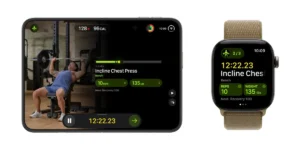
A significant portion of the research focused on the system’s resilience to real-world environments. One of the most common criticisms of acoustic sensing is the potential for interference from ambient noise. However, the study found that the system performed remarkably well in noisy environments. In a gym setting with background music playing at approximately 76 decibels, the system maintained a 95.4% accuracy rate in recognizing 20 common gym exercises, including chest presses, lateral raises, and leg presses.

The primary environmental constraint identified was the presence of other individuals in close proximity. In a busy building hallway, the "sound-wave bubble" was occasionally disrupted by moving objects, causing a temporary dip in tracking accuracy. The researchers noted, however, that stationary objects like furniture had negligible effects on the system’s performance.
From an efficiency standpoint, the system is highly optimized. It consumes approximately 12 milliwatts of power—a negligible drain compared to optical tracking systems, which can consume significantly more energy. During a 30-minute high-intensity workout session, the EchoMotion system utilized only 5% to 6% of the watch’s battery capacity, confirming its viability for daily use.
Implications for Healthcare and Rehabilitation
The potential applications for EchoMotion extend far beyond fitness tracking. In the healthcare sector, the ability to track limb movement and joint angles without the need for specialized physical therapy clinics is a game-changer. Patients recovering from strokes, joint replacements, or ligament injuries often require strict adherence to prescribed exercise regimens.

Currently, rehabilitation progress is often assessed through self-reporting or sporadic, in-person clinical visits. EchoMotion provides a bridge for remote monitoring. By allowing clinicians to review the accuracy and form of a patient’s at-home exercises, the system could enable more frequent and precise clinical adjustments. This data-driven approach to rehabilitation could significantly improve recovery outcomes by catching form-related complications early and ensuring patients perform their exercises with the correct range of motion.
Future Prospects: XR and Beyond
The research team at Cornell is already exploring the integration of EchoMotion with other wearable form factors, most notably smart glasses. The intersection of XR (Extended Reality) and body tracking is currently a primary bottleneck for developers. For VR headsets and AR glasses to provide immersive experiences, they must be able to track user gestures and body movement. Traditional methods, such as external sensor bases or multiple high-resolution cameras, add significant weight, cost, and complexity to headsets.
By integrating EchoMotion, smart glasses could track a user’s hands and arms as they interact with virtual interfaces or play games, all while keeping the device lightweight and affordable. This synergy between acoustic sensing and XR could represent the next major evolution in how humans interact with digital environments.

Analysis and Conclusion
The development of EchoMotion represents a significant milestone in wearable technology. By proving that high-fidelity motion tracking can be achieved through software innovation rather than hardware expansion, the Cornell team has provided a blueprint for the next generation of smartwatches.
The primary implication of this research is the democratization of advanced fitness and health analytics. If manufacturers integrate this technology into future firmware updates, it would allow millions of users to access personalized form correction and granular activity data without purchasing new, specialized equipment. While the system currently faces limitations in highly crowded environments, the researchers have demonstrated a clear path toward overcoming these hurdles through iterative AI model training.
As Saif Mahmud, lead author of the study, noted, the focus on making this technology work on off-the-shelf devices is intentional. By prioritizing compatibility and power efficiency, the EchoMotion project shifts the focus of the wearable industry from "more hardware" to "smarter software." If the technology continues to scale, it will likely become a standard feature in the next generation of health-focused wearables, effectively turning every consumer smartwatch into a personal coach and a home-based rehabilitation tool. The transition from simple step-tracking to comprehensive, real-time pose estimation is no longer a question of if, but rather a question of when such features will reach the consumer market.
Related posts: