The Sourdough Sidekick: Navigating the Intersection of Traditional Baking and Automated Kitchen Technology

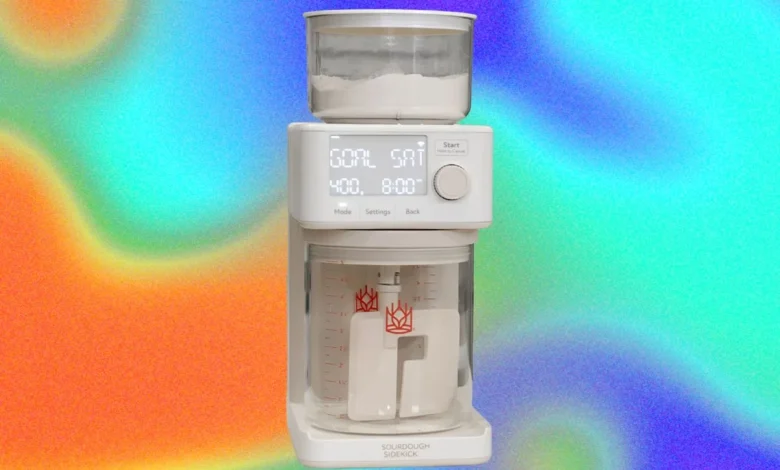
The sourdough fermentation process has long been regarded as an exercise in patience, requiring bakers to adhere to a rigid schedule of feeding, discarding, and temperature monitoring. For home bakers seeking to streamline this labor-intensive ritual, the introduction of automated starter management systems—such as the Sourdough Sidekick—represents a significant technological pivot. While these devices promise to remove the guesswork from wild yeast cultivation, recent testing indicates that successful integration requires a departure from "plug-and-play" expectations in favor of rigorous manual calibration and technical maintenance.
The Evolution of Automated Fermentation
Sourdough starters are living microbial ecosystems consisting of a symbiotic culture of lactic acid bacteria and wild yeast. Traditionally, maintaining these cultures requires daily attention, as the yeast consumes available sugars and eventually exhausts its food source, leading to a decline in activity and potential spoilage if not refreshed.
The Sidekick was developed to address the "discard dilemma"—the waste generated when bakers refresh their starters—and the time constraints that prevent many from maintaining a live culture. By automating the addition of flour and water, the device seeks to mimic the consistency of a professional bakery’s environment. However, the transition from manual, intuition-based baking to machine-led automation involves a steep learning curve, particularly regarding the precise calibration required to maintain the hydration levels necessary for healthy yeast activity.
Chronology of Implementation: A Technical Case Study
Initial setup of the Sourdough Sidekick begins with the Quick Start Guide, which encourages users to populate the flour hopper and water reservoir, define a start date, and engage the "Auto Mode." Yet, early field testing highlights a common pitfall: the reliance on initial factory settings without secondary verification.
In initial trials, users reported that following the Quick Start Guide alone resulted in a dry, under-hydrated ball of dough. This failure stems from a lack of water dispensing during the first cycles, suggesting that the hardware relies heavily on firmware synchronization. Upon further investigation, it was discovered that the device required a mandatory firmware update via its proprietary application to enable the water-dispensing mechanism.
The subsequent phase of the installation process necessitates a rigorous calibration step. Unlike standard kitchen appliances, the Sidekick requires the user to manually weigh the output of water and flour to ensure the machine’s internal sensors are correctly tuned to the specific density of the ingredients provided. This process, while "fiddly" and time-consuming, is essential. Once calibrated, the machine operates on a two-hour mixing cycle, punctuated by audible alerts. While these alerts—a loud beep followed by mechanical whirring—may be disruptive in quiet domestic environments, they serve as a necessary diagnostic tool for the user to confirm that the fermentation is proceeding according to schedule.
Data-Driven Fermentation and Maintenance
Effective sourdough management relies on the ratio of water to flour, commonly referred to as hydration. Most professional starters are maintained at 100% hydration (equal parts water and flour by weight). The Sidekick aims to maintain this consistency, provided the calibration is accurate.
Data from the testing phase indicates that once correctly configured, the device reliably dispenses 30 grams of flour and 30 grams of water every two hours. This frequency of intervention is significantly higher than manual feeding, which typically occurs once or twice every 24 hours. Consequently, the physical appearance of the starter differs from traditional methods. Because the starter is constantly being mixed and "knocked down," it lacks the characteristic aeration and massive volume expansion seen in a static jar.

Industry experts, including representatives from King Arthur Baking, have long advocated for the maintenance of a "backup" culture in a refrigerated environment. This redundancy is critical when integrating automated systems, as it mitigates the risk of total culture loss in the event of power surges, firmware failures, or mechanical malfunctions.
Analytical Perspectives on "Trusting the Process"
The shift toward automated fermentation has sparked a debate within the baking community regarding the definition of "authentic" sourdough. Proponents of the technology argue that automation democratizes the craft, allowing those with limited time or inconsistent schedules to bake high-quality bread. Critics, however, argue that the sensory experience—the smell, texture, and visual cues of a starter—is fundamental to the baker’s skill set.
The Sidekick’s performance is heavily influenced by the inputs. Users have experimented with various flour compositions, including the addition of rye flour to increase mineral content and enzymatic activity. While some report anecdotal improvements in the starter’s vigor, empirical analysis suggests that the primary driver of success is not the flour type but the consistency of the feeding interval.
Regarding the "discard" function, the Sidekick offers different modes. Auto Mode is designed for long-term maintenance, while Ratio and Custom modes provide prompts for discarding excess starter. This feature is particularly valuable for home bakers, as it addresses the environmental impact of discarding hundreds of grams of flour each week. By keeping the starter volume contained and providing structured disposal reminders, the device offers a more sustainable approach to large-scale starter management.
Broader Implications for Kitchen Automation
The rise of devices like the Sourdough Sidekick signals a broader trend in kitchen appliances: the transition from "dumb" tools to "smart" IoT-connected systems. This evolution brings both benefits and complications. On the one hand, these devices can achieve a level of precision that is difficult to maintain manually over years of operation. On the other, they introduce points of failure that are entirely new to the culinary world, such as software bugs, connectivity issues, and firmware requirements.
Furthermore, the reliance on an application to unlock the full functionality of a hardware device creates a dependency that may concern long-term users. If the manufacturer ceases support for the application or if server connectivity is lost, the machine’s utility could be compromised. For the home baker, this necessitates a shift in mindset: one must now be a systems administrator as much as a bread maker.
Practical Recommendations for Prospective Users
For those considering the adoption of automated starter technology, several best practices have emerged from the initial deployment of these systems:
- Prioritize Calibration: Do not skip the calibration process outlined in the full instruction manual. Using a digital scale to verify the machine’s dispensing accuracy is the single most important step for success.
- Maintain Redundancy: Always keep a traditional, manual starter in the refrigerator. This serves as a fail-safe against technology-related disruptions.
- Acknowledge Sensory Shifts: Understand that the starter will not always look like a traditional, bubbly, high-volume culture. Rely on olfactory cues—a tangy, acidic, fermented scent—to gauge the health of the culture rather than visual volume alone.
- Monitor Firmware: Regularly check for app-based updates to ensure that the hardware components, such as the water pump and mixing motors, are receiving the correct software instructions.
- Audit the Environment: Consider the placement of the device. Given the mechanical noise associated with the stirring cycle, it is advisable to keep the machine in a utility area or kitchen corner where the periodic alerts will not cause significant disruption.
Conclusion
The Sourdough Sidekick represents an intriguing intersection of ancient food science and modern engineering. While it successfully automates the repetitive labor of feeding and mixing, it is not a "black box" solution. The user remains an active participant in the process, tasked with the initial setup, calibration, and monitoring of the fermentation environment.
As consumer interest in sourdough continues to grow, it is likely that automated systems will become more refined and user-friendly. However, for the present, the device serves as a testament to the fact that while technology can assist in the creation of sourdough, it cannot fully replace the vigilance of the baker. Whether the trade-off—a reduction in daily manual labor in exchange for the complexities of software-led maintenance—is beneficial depends largely on the individual baker’s willingness to adapt to a digital workflow. Ultimately, the success of the system rests on the user’s ability to "trust the process," provided that the process has been meticulously calibrated from the start.