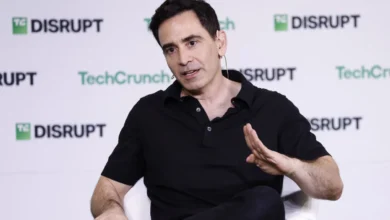
Automattic Names Jeremy Klaperman Interim CFO Following Executive Shakeup and Boardroom Turmoil


Automattic, the prominent web development company behind WordPress, WooCommerce, and WordPress.com, has officially named Jeremy Klaperman as its interim Chief Financial Officer. Klaperman, who previously served as the Chief Financial Officer for the company’s enterprise-focused WordPress VIP business unit, steps into the role following a turbulent period of executive departures and a high-stakes, short-lived attempt by the board of directors to oust long-standing CEO and co-founder Matt Mullenweg.
The leadership transition was communicated internally to employees via a company Slack post on Friday, September 18, 2026. This reorganization is the direct fallout from an extraordinary corporate governance crisis earlier in the month, which saw a fractured relationship between executive leadership and the board of directors erupt into a public power struggle. As Automattic works to stabilize its operations, the company is also filling other critical vacancies, including a replacement for its former Chief Legal Officer, as it prepares for an upcoming board meeting scheduled for late September.
The Genesis of the Leadership Crisis
To understand the weight of Klaperman’s appointment, it is necessary to examine the chaotic sequence of events that rattled Automattic earlier in September 2026. The crisis began when a faction of Automattic’s board of directors moved to force CEO Matt Mullenweg into a leave of absence, effectively attempting to oust him from the company he co-founded and has led for decades.
The sudden move shocked the tech industry, given Automattic’s massive footprint on the global internet infrastructure. WordPress powers over 40% of the top 10 million websites, making Automattic a linchpoin of digital publishing and e-commerce through its commercial offerings and contributions to the open-source project.
During Mullenweg’s brief removal—which lasted roughly 33 hours—then-CFO Mark Davies was elevated to the position of interim CEO. Simultaneously, during this brief window of administrative control, Davies and then-Chief Legal Officer Andy Missan reportedly executed reciprocal severance agreements. These documents were designed to protect executive positions and financial payouts in the event of subsequent corporate restructuring.
However, the board’s maneuverings lacked broad internal and external backing. The attempt to sideline Mullenweg collapsed almost as quickly as it began. Due to rapid pushback, realignment among stakeholders, and structural leverage, Mullenweg was reinstated as CEO just over a day after his forced departure.
The failed ouster proved fatal to the tenure of the executives who engineered it. Mark Davies and Andy Missan both departed the company in the wake of Mullenweg’s return. Furthermore, the board members who voted in favor of the CEO’s removal were forced out, leaving the company temporarily without a fully constituted board of directors while new governance structures are put into place.
A Familiar Face Stepping Up
In his internal communications to Automattic staff, Matt Mullenweg emphasized stability and continuity, noting that Jeremy Klaperman is far from a stranger to the position. Klaperman previously filled in as Automattic’s CFO when Mark Davies took a sabbatical, giving him direct familiarity with the company’s high-level financial operations, balance sheets, and fiscal strategies.
While Klaperman takes the financial reins on an interim basis, the company faces a broader search process. Mullenweg noted that the incoming board of directors—whose new members have not yet been publicly named—will ultimately be responsible for evaluating both internal and external candidates before making a permanent CFO appointment.
In tandem with the CFO announcement, Mullenweg shared another critical development regarding Automattic’s executive suite: a candidate for the Chief Legal Officer position has verbally accepted the role, poised to succeed Andy Missan. This addition is expected to restore foundational legal oversight to a company that manages complex intellectual property portfolios, massive enterprise contracts, and ongoing open-source governance responsibilities.

Reassuring Stakeholders Amid Financial Stability
Addressing any potential concerns regarding the company’s financial health in the wake of executive turmoil, Mullenweg sought to project absolute confidence.
“I have 100% confidence in our cash and financial position,” Mullenweg stated in his Slack address to employees. “There is still work to do, but everything is within our control and depends only on Automattic’s ability to execute.”
Automattic operates as a distributed, remote-first company with over 2,000 employees spread across dozens of countries. Its business model spans subscription-hosted websites, enterprise VIP hosting solutions, e-commerce infrastructure via WooCommerce, and enterprise-grade security and optimization tools through Jetpack. Maintaining uninterrupted financial operations and client trust is paramount for a company that services major media outlets, Fortune 500 companies, and millions of independent creators.
The Role of Stephen Wolfram and Upcoming Governance Milestones
As Automattic seeks to turn the page on its recent governance crisis, external advisors are playing a stabilizing role. Special advisor Stephen Wolfram, renowned as the creator of Mathematica and Wolfram|Alpha, will continue serving in his official advisory capacity on Automattic’s board-level initiatives. Wolfram’s steady presence is viewed by observers as a steadying anchor as the company reconstructs its corporate governance framework.
Mullenweg advised employees to “stay tuned” for official announcements regarding the composition of the new board of directors. The next formal board meeting is scheduled for September 23, 2026, where the newly forming leadership coalition is expected to chart Automattic’s strategic direction for the remainder of the year and beyond.
Broader Implications for Automattic and the Open-Source Ecosystem
The events of September 2026 represent one of the most severe governance stress tests in Automattic’s history. For years, the company has operated under a unique corporate philosophy that blends commercial enterprise with a deep commitment to the open-source WordPress community.
The attempted boardroom coup highlighted the inherent tensions that can arise in large private technology companies backed by institutional capital when the vision of founders clashes with the strategic priorities of board members. By swiftly regaining control, purging the dissenting board faction, and installing trusted internal leaders like Jeremy Klaperman, Mullenweg has reinforced his authority over the company’s trajectory.
However, the leadership shakeup leaves Automattic with significant rebuilding to do. Beyond naming a permanent CFO and legal chief, the company must successfully constitute a new board of directors that can work harmoniously with executive leadership. For an organization responsible for a substantial portion of the world’s digital infrastructure, stability at the top is not merely an internal corporate concern—it is a matter of global web stability.
As Jeremy Klaperman assumes his responsibilities and the September 23 board meeting approaches, the tech industry will be watching closely to see how Automattic transitions from damage control to long-term execution. For now, leadership is betting that institutional knowledge, financial transparency, and a renewed focus on core operations will successfully guide the company out of its recent turbulence.