Google Introduces Selfie Video Verification as a New Safeguard Against Account Lockouts

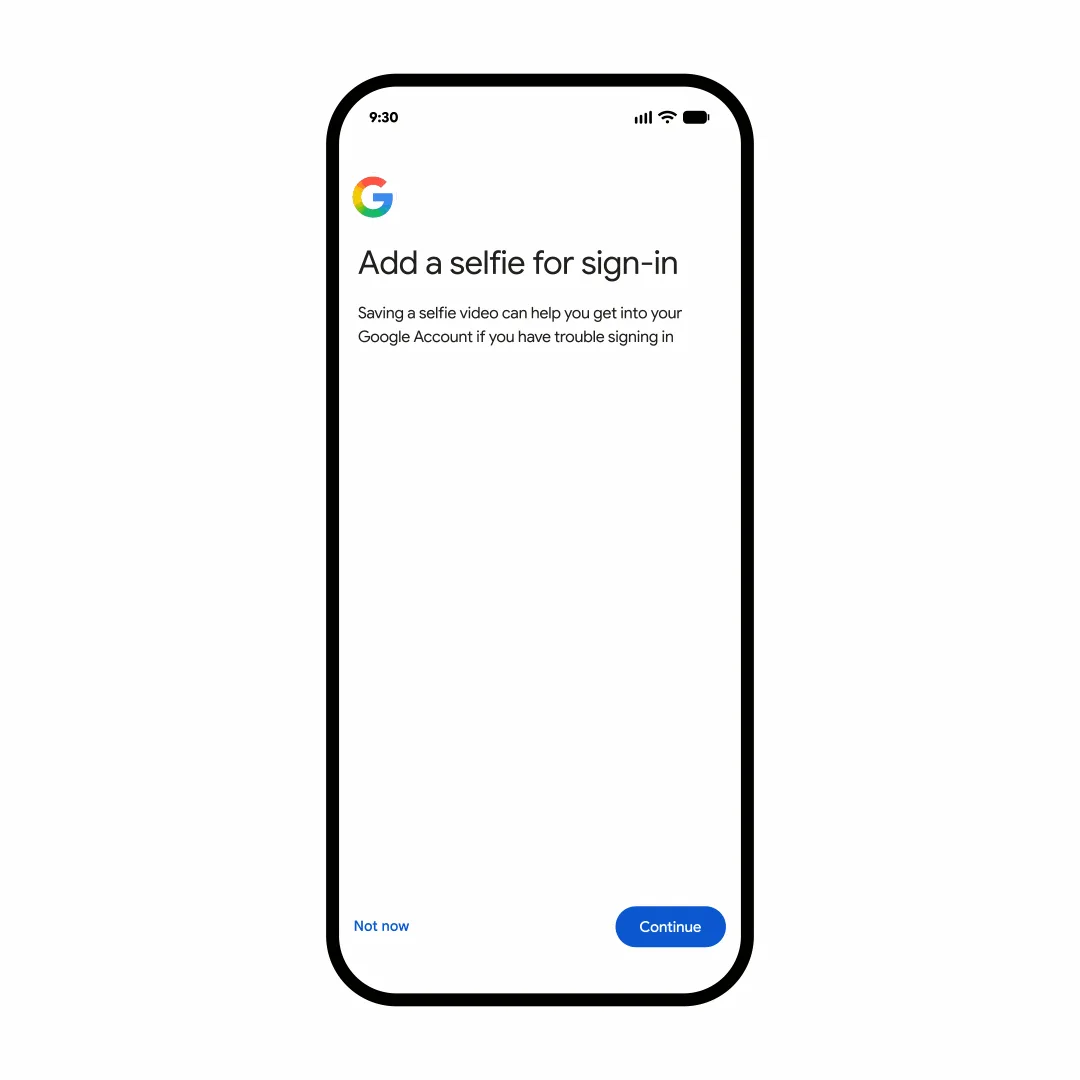
Google has officially launched a new biometric authentication feature that allows users to sign in to their accounts and facilitate recovery via a selfie video. This move represents a significant expansion of the company’s identity management suite, aimed at providing a "spare key" for users who find themselves locked out of their digital lives. As Google services—ranging from Workspace and Gmail to Calendar and Photos—become increasingly central to the daily routines of billions of people, the stakes for account recovery have never been higher. The introduction of selfie video verification is designed to mitigate the friction and occasional desperation associated with traditional recovery processes, particularly when a primary device or passkey is no longer accessible.
The Evolution of Account Security and the "Lockout" Crisis
For years, the process of recovering a Google account has been a source of frustration for many users. While security measures like two-factor authentication (2FA) and passkeys have drastically reduced the success rate of unauthorized logins, they have also created a paradox: the more secure an account is against hackers, the more difficult it can be for the rightful owner to regain access if they lose their hardware. Security experts have often described the recovery process as "Kafkaesque," involving a series of complex hurdles that can leave users permanently separated from their data.
Claire Forszt, a product manager at Google specializing in identity and engagement, emphasized that the selfie video is not intended to replace existing security measures but to supplement them. "We always recommend that you set up more than one option," Forszt stated. "Selfie is just the newest option in that list available for users. It’s designed to help specifically in these vulnerable scenarios around not having access to the device where your passkey might be." By adding this biometric layer, Google aims to provide a recovery path that is tied to the user’s physical presence rather than a physical object or a memorized string of characters.
Technical Implementation and User Experience
The setup process for selfie video verification is designed to be streamlined, typically requiring less than five minutes for completion. Users can find the option within their Google Account settings under the "Security & sign-in" tab. Within the section labeled "How you sign in to Google," the selfie video option appears as a new configuration tool. Google is currently in the midst of a global rollout, making the feature available to the majority of personal accounts over the coming weeks.
During the recording process, Google’s software provides real-time prompts to ensure the capture meets security standards. To successfully register a video, users are generally required to:
- Ensure standard, clear lighting so that facial features are distinct.
- Remain the only person visible in the frame, avoiding background distractions like family portraits or crowded environments.
- Follow specific movement prompts, such as slowly lifting the chin or turning the head, to allow the system to capture multiple angles.
- Maintain direct eye contact with the camera for a final verification capture.
Once the video is recorded and verified by Google’s algorithms, it is stored under the account’s Security Settings, ready to be deployed as a verification method should the user lose their primary login credentials or device.

Security Architecture: Defending Against Deepfakes
One of the primary concerns with biometric video verification is the rise of generative artificial intelligence and sophisticated "deepfake" technology. If a malicious actor could use an AI-generated video to impersonate a user, the security of the entire system would be compromised. To counter this, Google has integrated advanced "liveness detection" tools into the selfie video feature.
Liveness detection is a security protocol designed to distinguish between a live human being and a synthetic representation, such as a high-resolution photo, a video playback, or a deepfake. By requiring specific, randomized movements—like looking up or tilting the head—Google’s system can verify that the person in the video is physically present and reacting to prompts in real-time.
However, Google acknowledges that biometrics are not an infallible silver bullet. Forszt noted that in high-risk scenarios, a selfie video might be used as one part of a multi-factored assessment. "There might be instances where passing a selfie video alone may not always be sufficient to get you back into your account if we suspect something risky going on," she explained. Google evaluates the overall risk based on a variety of signals, including IP address, location data, and the history of the recovery attempt.
Privacy, Data Ethics, and AI Training
The introduction of selfie videos brings to the forefront the sensitive issue of how biometric data is handled and stored. Google has implemented an "opt-in" model for the use of these videos in broader AI development. During the setup process, users are presented with a choice to allow Google to use the recording as training data.
The optional checkbox allows Google to use the selfie video and related data to improve facial recognition, age estimation, and other verification methods across its services. This transparency is a calculated move to build trust, especially as the tech industry faces scrutiny over data harvesting. Users who initially opt in can later change their mind by adjusting the "Improve Google services" setting within their privacy dashboard.
This approach stands in contrast to recent controversies involving other tech giants. For instance, Meta recently faced significant backlash after it automatically opted Instagram users into a feature that allowed their public images to be used for AI remixes. The outcry was so intense that Meta was forced to retract the feature within days. By making the AI training aspect of the selfie video strictly optional and secondary to the security function, Google appears to be navigating the ethical complexities of biometric data with more caution.
A Chronology of Google’s Authentication Milestones
The selfie video feature is the latest step in a long-term strategy to move away from traditional passwords. A look at the timeline of Google’s security evolution reveals a steady shift toward biometric and hardware-based identity:

- 2011: Google introduces 2-Step Verification (2SV), encouraging users to use SMS codes as a second layer of security.
- 2014: The company begins supporting physical Security Keys based on the FIDO Universal 2nd Factor (U2F) standard.
- 2019: Google turns Android phones into physical security keys, allowing users to verify logins via Bluetooth.
- 2022: Google, alongside Apple and Microsoft, announces expanded support for "Passkeys," a passwordless standard that uses device-level biometrics (like FaceID or fingerprints).
- 2024 (Early): Google launches AI avatar tools in Gemini, showcasing its ability to create photorealistic digital clones.
- 2024 (Late): The rollout of Selfie Video Verification begins, providing a biometric recovery "spare key."
Industry Impact and the Shift to "What You Are"
Security analysts view Google’s latest move as part of a broader industry shift in the "three pillars of authentication": something you know (passwords), something you have (physical keys/phones), and something you are (biometrics). As "something you know" becomes increasingly vulnerable to phishing and data breaches, and "something you have" is prone to being lost or stolen, "something you are" is becoming the most reliable anchor for digital identity.
The use of video verification is already common in the financial services sector, where many "neobanks" and fintech apps use "Know Your Customer" (KYC) video checks to verify identities during account creation. Google’s adoption of this method brings it to a much larger, mainstream audience.
However, the move is not without its critics. Privacy advocates warn that the normalization of providing video likenesses to private corporations could lead to the creation of massive biometric databases that might be subject to government subpoenas or future data leaks. While Google asserts that the data is safeguarded, the long-term implications of centralized biometric storage remain a point of debate among cybersecurity experts.
Implications for the Future of Digital Identity
As Google continues to roll out selfie video verification globally, the feature is expected to become a standard part of the digital hygiene of the average user. By encouraging users to set up this "spare key" before a crisis occurs, Google is attempting to solve one of the most persistent problems in the digital age: the total loss of access to one’s digital footprint.
For the end-user, the benefit is clear: a reduction in the anxiety of being permanently locked out of their emails, documents, and memories. For Google, the benefit is twofold: a more secure user base and a wealth of biometric data (for those who opt in) to refine the next generation of AI-driven identity tools. As the line between our physical and digital selves continues to blur, the "face card" may soon become the most important credential we carry.