The era of the supersized tablet: Why Android manufacturers are obsessed with big screens

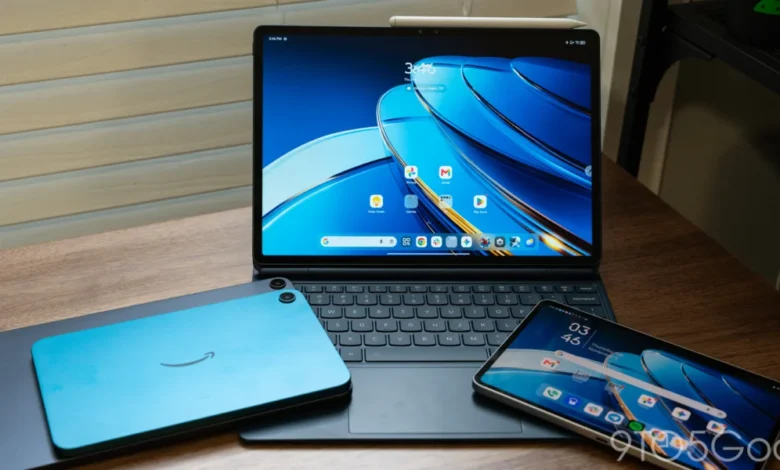
The landscape of Android tablets has undergone a radical transformation over the past five years, shifting from a market saturated with budget-friendly, small-format devices to a premium battleground defined by "gargantuan" displays. As major manufacturers like Samsung, Lenovo, Google, and RedMagic push the physical boundaries of their hardware, a fundamental question emerges: Is the current industry obsession with 12-inch and 14-inch screens actually aligning with consumer needs, or are we witnessing a decoupling between hardware innovation and real-world utility?
The Shift in Market Dynamics
Historically, the tablet market was defined by the 7-inch to 9-inch form factor. Devices like the original Nexus 7 were celebrated for their portability, acting as digital companions that could easily slip into a coat pocket or a small bag. However, data from industry research firms indicates a sharp decline in the popularity of small tablets. According to IDC’s quarterly personal computing device trackers, the average screen size for new Android tablet releases has climbed steadily since 2021.
This trend is largely driven by the professionalization of the tablet. As manufacturers position these devices as laptop replacements—or at least as robust secondary productivity tools—the software experience has evolved. Features like Android’s "Desktop Mode," improved multi-window support, and deeper integration with mouse and keyboard peripherals have made larger screens a functional necessity rather than a luxury. For the casual user, however, the shift toward 13-inch or 14-inch slabs often results in a device that is too heavy for long-term handheld reading or video consumption, forcing users to reconsider the necessity of a dedicated tablet at all.
Chronology of the "Big Screen" Pivot
The transition to larger displays did not happen overnight. It was a calculated industry pivot that accelerated during the global shift to remote work in 2020.

- 2019-2020: The "tablet as a media consumption device" era. Most Android tablets remained under 11 inches, focusing on battery efficiency and affordability.
- 2021: Samsung released the Galaxy Tab S7+ and S8 series, introducing the 12.4-inch and 14.6-inch Ultra models. This served as a catalyst, signaling to the industry that consumers were willing to pay premium prices for high-end, large-format hardware.
- 2022-2023: Lenovo and Google entered the fray. Lenovo’s Tab P12 and the Pixel Tablet signaled a move toward mid-to-high-end devices that prioritized display real estate for multitasking.
- 2024-2025: Specialized gaming brands, such as RedMagic, began introducing tablets with screens exceeding 12 inches. These devices emphasize high refresh rates and thermal management, catering to power users and gamers who view screen size as a primary metric for immersion.
Supporting Data and Market Trends
Market analysis from Counterpoint Research suggests that tablets with screens larger than 12 inches now account for approximately 28% of the Android tablet market, up from less than 8% in 2018. The "small tablet" segment (under 10 inches) has seen a contraction, with many manufacturers opting to discontinue these models entirely in favor of foldable smartphones.
The logic here is sound from a product-lineup perspective: if a user wants a portable, handheld device for light media consumption, a modern foldable smartphone provides a 7-to-8-inch display that fits in a pocket. If a user needs a device for work, they are increasingly opting for tablets that offer a screen size comparable to an 11-inch or 13-inch laptop. This leaves the traditional 8-inch tablet in a "dead zone" of utility.
Industry Perspectives and Strategy
Representatives from major hardware firms often point to "work-life balance" as the driving force behind these design choices. In statements provided during recent product launch events, spokespeople for companies like Lenovo and Samsung emphasized that their customers are no longer using tablets as secondary devices but as "primary hubs for both professional creativity and leisure."
"The tablet has evolved from a secondary consumption device to a primary creation tool," stated a product manager at a leading Android manufacturer during a recent trade show briefing. "When users ask for better multitasking and more screen real estate to host multiple windows, our answer is to optimize for the 12-inch and above category."
However, this strategy is not without its critics. Ergonomics experts note that the increased weight of these large devices can lead to "tablet fatigue," particularly for users who attempt to use them for extended periods in bed or during commutes. The lack of a high-end, compact Android tablet has created a niche market vacuum, currently filled mostly by aging hardware or budget-tier devices that often lack the processing power required for modern multitasking.

Broader Impact and Implications
The implications of this industry-wide pivot are profound. By favoring larger screens, Android manufacturers are effectively ceding the "ultra-portable" tablet market to Apple’s iPad mini, which remains one of the few high-performance tablets in the sub-9-inch category. This creates a strategic imbalance in the ecosystem:
- Reduced Choice: Consumers who desire a powerful, compact Android tablet are currently underserved. The lack of competition in the 8-inch high-performance segment means that innovation in this space has largely stagnated.
- Increased Costs: Larger screens, coupled with the high-resolution OLED panels required to make them viable, significantly drive up the bill-of-materials for manufacturers. This pushes the average selling price of Android tablets higher, distancing them from the budget-conscious demographic that originally built the platform’s market share.
- Software Optimization: Because Android is now being scaled for larger displays, developers are forced to build apps that function across a massive variance in screen sizes. While this improves the overall ecosystem, it also creates an inconsistent user experience where some applications feel like "stretched phone apps" on a 14-inch tablet, while others feel like stripped-down desktop software.
The Road Ahead
As we look toward the next cycle of hardware releases, it remains to be seen if manufacturers will attempt to reclaim the small-tablet segment. There is growing evidence that the "bigger is better" philosophy is nearing a saturation point. With the rise of increasingly powerful and affordable foldable smartphones, the need for a 10-inch "middle ground" device may vanish entirely, potentially leading to a bifurcation of the market: massive 14-inch "Pro" tablets for professional use and folding phones for everything else.
For the consumer, the current market is one of specialization. If you are looking for a device to replace your laptop for document editing, digital illustration, or complex multitasking, the current Android offerings are arguably the most capable they have ever been. If, however, you are looking for a comfortable, lightweight digital reader or a device to pass the time on a flight, the industry is increasingly leaving you behind. The challenge for Android manufacturers in the coming years will be to prove that these gargantuan tablets are not just an exercise in hardware excess, but a sustainable evolution of the mobile computing experience.