Elon Musk Proposes High-Speed Precursor Hyperloop to Connect Austin and San Antonio

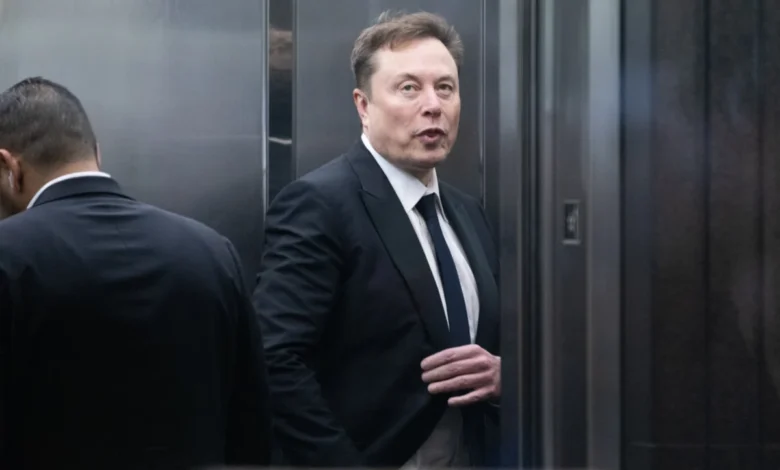
Elon Musk has once again set his sights on transforming regional transit, claiming that his tunneling venture, The Boring Company, is actively developing a "simple precursor Hyperloop" intended to bridge the 80-mile gap between Austin and San Antonio. The proposed project, which Musk suggests could cut transit times between the two Texas cities to under 30 minutes, represents the latest in a long series of ambitious infrastructure goals articulated by the entrepreneur. The Boring Company has formally signaled its intent to pursue the project, stating on its official social media channels that it would be "excited and honored" to undertake such a massive infrastructure endeavor.
This announcement, delivered via the X platform on September 20, 2026, emerged during a broader discourse on the future of human technological advancement. The proposal follows a $3 billion funding injection for The Boring Company, led by the United Arab Emirates, which has significantly bolstered the firm’s capital reserves and intensified speculation regarding its long-term operational roadmap.
A History of Ambitious Infrastructure Proposals
The vision of an Austin-San Antonio Hyperloop is not the first time Musk has proposed revolutionary transit solutions. Since the founding of The Boring Company in 2016, the firm has proposed several high-profile projects that aimed to alleviate urban congestion through high-speed, underground transit tunnels. However, the company’s history is marked by a significant disparity between initial announcements and final delivery.
Historically, the company gained early notoriety for proposing a network of tunnels in Los Angeles, intended to move vehicles on electric skates at high speeds. Subsequent proposals included a high-speed link between Chicago’s O’Hare International Airport and downtown, as well as a multi-city underground transit system connecting New York City and Washington, D.C. Despite considerable media attention and initial government interest, these projects largely failed to materialize, eventually being shelved or abandoned.
In contrast, the company has found limited success with its "Loop" concept, currently operational at the Las Vegas Convention Center. This system, which utilizes standard electric vehicles traveling through tunnels at moderate speeds, offers a functional model that differs from the original, high-velocity Hyperloop concept. The shift toward a "precursor" system for the Texas project suggests a pragmatic evolution in the company’s strategy—prioritizing proven tunneling methods over the experimental, vacuum-sealed pods originally envisioned for Hyperloop systems.
The Texas Context: Growth and Congestion
The choice of the Austin-San Antonio corridor is strategically significant. As one of the fastest-growing regions in the United States, the I-35 corridor faces chronic traffic congestion and limited high-speed public transit alternatives. With the rapid expansion of tech-centric industries in Austin and the sustained population growth of San Antonio, the demand for more efficient regional connectivity has reached a critical juncture.
Infrastructure experts note that any project connecting these two hubs would face monumental regulatory, environmental, and engineering challenges. The construction of a tunnel spanning nearly 80 miles would require extensive geological surveying, multi-jurisdictional environmental impact assessments, and significant land-use negotiations. Furthermore, the cost of boring through the diverse geological strata of Central Texas would likely reach into the tens of billions of dollars, requiring a combination of private capital and public-private partnership models that have yet to be tested at this scale.

Financial Backing and Corporate Strategy
The $3 billion funding round, finalized earlier in September 2026, provides The Boring Company with the financial runway necessary to pursue large-scale projects that were previously beyond its reach. By securing capital from international investors, specifically those based in the UAE, the company has signaled an intention to expand its footprint beyond the North American market.
However, analysts remain divided on the feasibility of the project. While the infusion of capital provides the resources for equipment procurement and labor, the underlying technology for a truly high-speed, inter-city Hyperloop remains in the prototype stage. Critics argue that Musk’s reliance on "precursor" terminology is a tactical hedge, allowing the company to build traditional tunnel infrastructure while maintaining the branding associated with his more visionary, and often unrealized, transit goals.
The Influence of Science Fiction on Tech Leadership
Musk’s announcement was prompted by his engagement with an AI-generated video depicting a future featuring interplanetary human colonies. By reposting the video with the caption, "This is the future we shall bring into being," Musk reinforced his well-documented tendency to derive inspiration from science fiction narratives.
This approach has drawn both praise and criticism from observers of the tech industry. Supporters view his commitment to these visions as a necessary catalyst for innovation, arguing that his willingness to challenge the status quo is what drives progress in aerospace and transportation. Conversely, critics, including prominent historians like Jill Lepore, suggest that this reliance on "pulp" science fiction may lead to a fundamental misunderstanding of democratic and social complexities. Lepore has noted that the tech industry’s leadership often appears detached from the realities of public policy, favoring technological solutions that sometimes ignore the broader societal costs and infrastructure limitations.
Analyzing the Path Forward
The path toward an Austin-San Antonio transit solution is paved with systemic hurdles. For The Boring Company to move from a social media announcement to actual construction, several milestones must be achieved:
- Feasibility Studies: Comprehensive engineering reports must verify that the soil and rock conditions between Austin and San Antonio can support a high-speed, long-distance tunnel system.
- Regulatory Approval: The project would require approval from the Texas Department of Transportation (TxDOT) and the various municipal governments along the proposed route.
- Public-Private Partnership (P3) Frameworks: Given the massive capital requirements, a transparent financial model outlining the cost-sharing between private investors and the State of Texas would be essential to secure public trust.
- Technological Validation: The company must demonstrate that its tunneling equipment—the "Prufrock" machines—can achieve the necessary speed and cost-per-mile metrics required to make such a project economically viable compared to traditional high-speed rail or highway expansion.
Broader Implications for Infrastructure
If The Boring Company successfully breaks ground on a Texas project, it would represent a significant shift in how the United States approaches regional transit. Conventional transit projects, such as light rail or high-speed rail, are often subject to decades of planning, public hearings, and political gridlock. Musk’s model proposes a more direct, albeit highly centralized, approach to infrastructure development.
However, the risk of failure remains high. If the project follows the pattern of previous proposals in Chicago and the Northeast Corridor, it could lead to significant capital loss and a decline in investor confidence. Conversely, if it succeeds, it could set a new standard for subterranean transit, effectively creating a "megaregion" that combines the economic power of Austin and San Antonio into a single, highly integrated labor and housing market.
As of late September 2026, there have been no formal filings with state regulatory bodies regarding a specific route or timeline. The public and the industry are left to observe whether this latest announcement will evolve into a concrete construction schedule or remain another entry in the catalog of ambitious, yet unrealized, visions associated with The Boring Company. For now, the prospect of a 30-minute journey between Texas’s two most prominent hubs remains a compelling, if currently speculative, proposition that reflects the ongoing tension between futuristic technological ambition and the practical constraints of modern urban planning.