Honda Drops Gas-Only CR-V: Why Traditional Combustion Is Losing Ground to Hybrid Powertrains

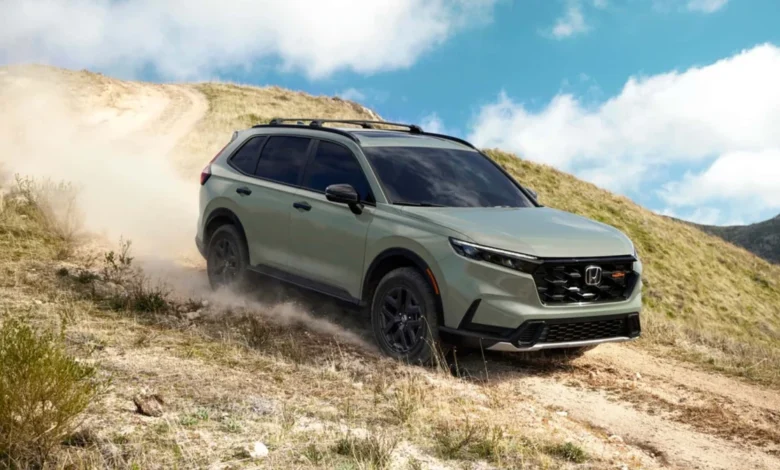
The automotive industry is undergoing a structural transformation as legacy automakers pivot away from pure internal combustion engines in favor of electrified alternatives. Honda Motor Company announced that its best-selling vehicle in North America, the CR-V crossover, will transition exclusively to hybrid-electric powertrains starting with the redesigned 2028 model year. This strategic shift mirrors a broader industry trajectory, led by competitor moves such as Toyota’s decision to make its popular RAV4 hybrid-only beginning with the 2026 model year.
These high-profile transitions mark a watershed moment for the U.S. automotive market. For decades, traditional gasoline-powered internal combustion engines served as the undisputed default for mainstream buyers. Today, tightening fuel economy regulations, shifting consumer preferences, and advancements in powertrain engineering have converged to make pure gas options increasingly obsolete in high-volume segments. As automakers phase out legacy configurations, the heart of the American car market is rapidly redefining what constitutes a standard consumer vehicle.
The Shift to Exclusive Hybridization for High-Volume SUVs
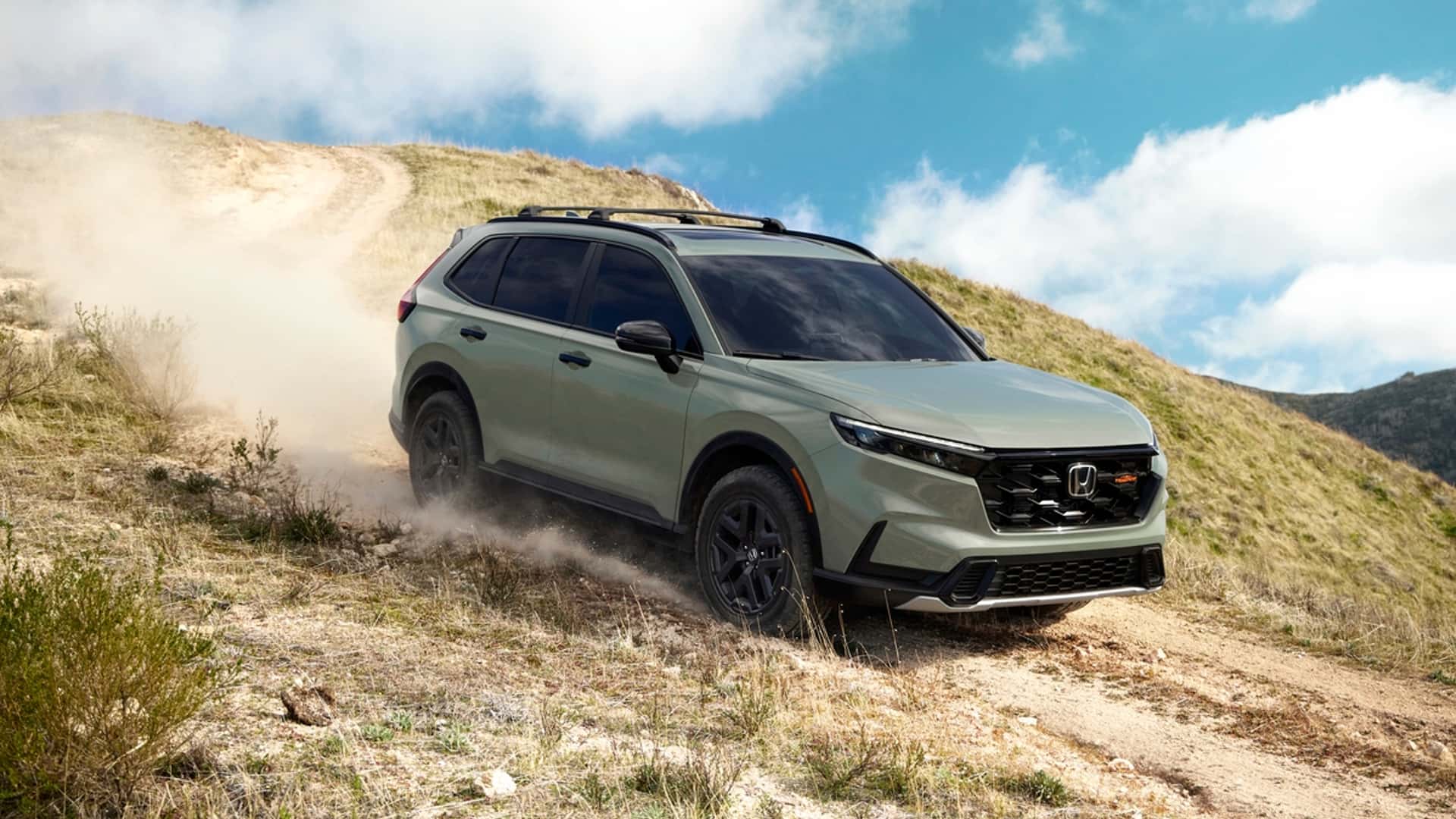
The announcement regarding the CR-V was delivered by Luis Guerra, assistant vice president of Honda National Auto Sales. Guerra emphasized that the next-generation, seventh-generation CR-V will leverage a 100% hybrid powertrain to capture surging consumer demand. The vehicle, scheduled to arrive at dealerships next year, will incorporate an advanced two-motor hybrid system engineered to optimize thermal efficiency across a wider operating range than current iterations.
Currently, the CR-V is offered with a choice between a conventional turbocharged four-cylinder gasoline engine and a hybrid variant. By eliminating the pure-gas option entirely, Honda is committing fully to electrification for its flagship SUV. This strategy follows a playbook recently written by Toyota, which dropped internal combustion variants from both the RAV4 and the Camry, making hybridization the mandatory baseline for two of its most critical volume drivers.
The collective weight of these changes cannot be overstated. In 2025, the Toyota RAV4, Honda CR-V, and Tesla Model Y dominated the North American SUV landscape, accounting for approximately 1.2 million combined sales. With two of these three top-tier sellers transitioning permanently to electrified platforms, millions of consumers will be introduced to hybrid technology simply by shopping for a mainstream family vehicle, effectively bypassing traditional gasoline engines without requiring an immediate leap to a full battery-electric vehicle (BEV).
Chronology of the Hybrid Surge in the U.S. Market
The acceleration of hybrid adoption in the United States represents a steady evolution over the past decade, characterized by distinct phases of technological maturation and consumer acceptance:
- Early Adoption (Late 1990s–2010s): Hybrids entered the mainstream consciousness with the introduction of vehicles like the Toyota Prius. Initially perceived as niche products for environmentally conscious buyers, these vehicles carried a significant cost premium and offered polarizing styling.
- Mainstream Integration (2015–2020): Automakers began integrating hybrid technology into popular crossover and sedan platforms, focusing on performance enhancement and fuel economy rather than distinct aesthetic branding. Reliability data solidified consumer trust in battery longevity and system durability.
- Regulatory Pressures and Supply Realities (2021–2025): Stricter Corporate Average Fuel Economy (CAFE) standards forced manufacturers to seek efficiency gains across their entire fleets. Simultaneously, a plateau in pure EV adoption curves—driven by charging infrastructure gaps and upfront vehicle costs—positioned hybrids as the ideal bridge technology.
- The Exclusivity Era (2026 and Beyond): Market leaders like Toyota and Honda initiated the complete phase-out of pure gas powertrains in high-volume segments, signaling that hybrids are no longer an optional trim level, but the new foundational standard.
Economic Viability and Consumer Realities
The rapid commercial success of hybrids is supported by compelling economic fundamentals. While pure electric vehicles often require substantial upfront investments and specialized home-charging infrastructure to maximize cost-per-mile efficiency, hybrids occupy a pragmatic middle ground.
Market data compiled by Consumer Reports indicates that the average hybrid commands a modest upfront price premium of approximately $1,700 compared to its traditional gasoline counterpart. However, due to significant reductions in fuel consumption—particularly in urban driving cycles where regenerative braking recaptures kinetic energy—most buyers recoup this financial difference through fuel savings within four years of ownership.
This short payback period has resonated with American motorists navigating fluctuating fuel prices and broader economic uncertainties. In the third quarter, hybrid vehicles captured roughly 16% of the total U.S. light-duty vehicle market. Industry analysts project that this market share will continue to expand as automakers introduce more electrified options across diverse vehicle segments.
Broadening Industry Adoption Beyond Crossovers
The pivot toward hybridization is extending well beyond compact crossovers. Competitors are aggressively restructuring their product portfolios to capture market share in adjacent segments where fuel efficiency has historically lagged.
Nissan is preparing to introduce a Rogue Hybrid featuring a proprietary powertrain architecture designed to mimic the driving dynamics of a battery-electric vehicle, providing instant torque and a seamless acceleration profile. Meanwhile, legacy American manufacturers are following suit; General Motors has announced plans to integrate hybrid powertrains into its large, three-row utility vehicles, including the Chevrolet Traverse and GMC Acadia, addressing the fuel consumption challenges inherent to heavy family haulers.
Despite this momentum, automakers face delicate strategic balancing acts regarding their long-term decarbonization roadmaps. Full battery-electric vehicles remain the most efficient and environmentally benign consumer transport option per mile, provided owners have access to reliable home charging. Furthermore, BEVs deliver a smooth, noise-free driving experience that internal combustion engines and traditional hybrids cannot fully replicate.
Honda’s aggressive stance on hybrids coincides with a recalibration of its broader electrification strategy. While the company is expanding its hybrid footprint to meet immediate market demands, its parallel adjustments to dedicated EV timelines mean that consumers seeking an immediate, permanent exit from liquid fuels may find themselves evaluating alternative brands. For the time being, however, the elimination of pure-gas options in top-selling lines like the CR-V and RAV4 establishes hybrids as the undisputed anchor of the modern automotive landscape.