The Erosion of Trust: Staged Travel Photography Undermines Documentary Credibility

The lines between staged commercial photography and authentic documentary work are blurring, a concerning trend particularly visible in the realms of travel and humanitarian photography. This phenomenon, as highlighted by veteran photographer Justin Mott, represents a significant breach of trust at a time when the credibility of the photographic medium is already under immense pressure. Mott, who has dedicated over two decades to living and working in Vietnam, has observed a disturbing pattern emerge: photographers orchestrating culturally specific scenes, presenting them as genuine documentation, and publishing them to an unsuspecting audience. The ramifications extend beyond individual misrepresentation, casting a shadow over the entire genre and the critical role it plays in informing public understanding.
The Trigger Incident: A Vietnamese Vignette Misrepresented
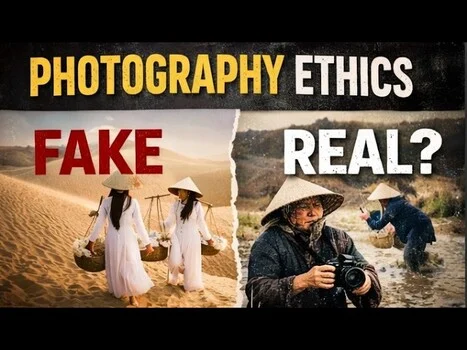
The specific catalyst for Mott’s pointed commentary was a sponsored Facebook post by an American photographer. The image depicted two women adorned in pristine white áo dài and conical hats, carrying shoulder poles laden with salt across sand dunes in Vietnam. The accompanying caption purported to describe salt workers engaged in predawn labor and hardship. Mott, intimately familiar with Vietnam’s cultural nuances, immediately recognized the scene as incongruous. The áo dài, a traditional Vietnamese garment, is typically reserved for ceremonial occasions such as weddings and formal events. His Vietnamese wife’s reaction upon viewing the image was one of amusement, underscoring the stark disconnect between the visual narrative and the presented reality. This palpable discrepancy, where staged elegance was framed as arduous daily toil, compelled Mott to create a video addressing the issue.
Mott is unequivocal that staging photographs is not inherently problematic. Commercial photography, by its very nature, often involves meticulous staging to achieve specific aesthetic or narrative goals. The fundamental ethical transgression, he argues, lies in the deliberate misrepresentation of staged work as documentary truth, thereby deceiving the audience.
Echoes of Past Controversies: The Steve McCurry Precedent
This contemporary incident is not an isolated event. Mott draws a direct parallel to the controversies surrounding the renowned photographer Steve McCurry, whose work has faced scrutiny for alleged staged scenes and the manipulation of elements within images, all published under the implicit authority of photojournalism. Mott contends that the industry’s response to these McCurry controversies was, in many instances, insufficiently robust, partly due to McCurry’s iconic status and widespread acclaim. This perceived leniency, he posits, has inadvertently fostered an environment where such practices can persist and proliferate.
The photographer at the center of Mott’s current critique possesses an impressive professional resume, boasting significant publication credits in major outlets. This fact dispels any notion that the misrepresentation is a result of ignorance or inexperience. When a photographer’s professional brand is built upon the foundation of documenting the human experience, accuracy and authenticity are not merely desirable attributes; they are indispensable prerequisites.
The Evolving Landscape of Photography: Content Creators and the Documentary Space
Mott extends his analysis to encompass the broader contextual shifts within the photographic industry. He observes a diminishing presence of traditionally trained photojournalists in the field. Concurrently, there has been an influx of content creators and travel photographers venturing into documentary spaces without a comprehensive understanding of the ethical responsibilities inherent in asking audiences to place their trust in their visual narratives. The advent and increasing prevalence of Artificial Intelligence (AI) in image creation further exacerbate the strain on this trust, introducing new layers of complexity and potential for deception.
Deconstructing the Misrepresentation: Cultural Nuances and Their Significance
Within his video, Mott meticulously dissects the specific cultural details that betray the staged nature of the image. He explains why these seemingly minor inaccuracies are crucial, extending beyond mere factual correctness. They are the subtle tells that, to an informed observer, unravel the intended deception and expose the artifice. His analysis underscores the importance of cultural literacy and deep engagement with subject matter for anyone purporting to document it.
Furthermore, Mott addresses the cascading effect of such deceptions on a photographer’s credibility. Once a single staged image is exposed, skepticism can permeate an entire portfolio, eroding the audience’s faith in all subsequent work. His assertion that responsibility scales with influence is direct and delivered without diplomatic softening, emphasizing the profound impact that influential photographers have on public perception.
The Ethical Imperative: Upholding Trust in the Digital Age
The rise of social media and digital platforms has democratized the distribution of imagery, allowing photographers of all levels to reach global audiences. While this accessibility is a positive development, it has also amplified the potential for misinformation and ethical lapses. The ease with which images can be shared and disseminated means that a single misrepresented photograph can have far-reaching consequences, influencing public opinion and perpetuating stereotypes.
The travel photography genre, in particular, often relies on visual storytelling to evoke a sense of place and culture. When this storytelling is based on fabrication, it not only misleads viewers but also risks commodifying and trivializing the very cultures it purports to represent. The romanticized or exoticized portrayal of people and their lives, divorced from authentic context, can contribute to harmful generalizations and a superficial understanding of diverse societies.
Supporting Data and Industry Trends
While specific data on the prevalence of staged documentary photography is difficult to quantify precisely, anecdotal evidence and numerous instances of controversy suggest a growing concern. Surveys of photojournalists and editors often highlight ethical considerations as paramount. For instance, a 2022 report by the World Press Photo Foundation, while not directly measuring staged travel photography, emphasizes the increasing importance of transparency and ethical reporting in visual journalism. The report noted a rise in discussions around authenticity and the responsible use of technology in image creation and manipulation.
Moreover, the increasing demand for visual content across various platforms, from social media to editorial publications, can create pressure on photographers to produce compelling and often dramatic imagery. This pressure, coupled with the allure of engagement and virality, may incentivize shortcuts that compromise ethical standards.
The Role of Platforms and Audiences
The platforms where such imagery is shared also play a role. While many platforms have community guidelines against misinformation, the enforcement of these policies, particularly for artistic or commercial content, can be inconsistent. Audiences, too, bear a responsibility to be critical consumers of visual information. Developing media literacy skills, questioning sensational imagery, and seeking out diverse sources can help mitigate the impact of misrepresented content.
Broader Implications for Photojournalism and Public Discourse
The continued prevalence of staged documentary work has significant implications for the broader field of photojournalism. Photojournalism serves as a crucial lens through which the public understands complex global issues, human rights, and diverse cultures. When its credibility is undermined by deceptive practices, it weakens its ability to hold power accountable, foster empathy, and promote informed discourse.
The erosion of trust in visual documentation can lead to increased cynicism and disengagement. In an era saturated with information, the ability to discern truth from fiction is more critical than ever. Photography, when practiced ethically, possesses an unparalleled power to connect us to the world and to each other. The current trend threatens to diminish this power, leaving audiences more disconnected and less informed.
Moving Forward: Reaffirming Ethical Standards
Justin Mott’s video serves as a timely call to action for photographers, editors, and audiences alike. It underscores the necessity of maintaining rigorous ethical standards, particularly when dealing with subjects that involve human lives and cultural representation. The distinction between staged commercial work and authentic documentary portrayal must be clearly maintained and communicated.
For photographers, this means a renewed commitment to accuracy, transparency, and a deep respect for the subjects they photograph. It involves understanding the cultural context of their work and being honest about their methods. For editors and publications, it requires diligent fact-checking and a commitment to publishing work that adheres to the highest ethical standards. For audiences, it means cultivating a critical eye and demanding authenticity from the visual narratives they consume.
The future of documentary photography, and indeed the credibility of visual storytelling as a whole, hinges on the collective commitment to upholding the integrity of the medium. As Mott’s intervention powerfully illustrates, the stakes are too high to allow the lines to blur any further. The trust placed in photographers is a privilege, not a given, and it must be earned and meticulously maintained through honest and ethical practice. The ongoing discourse initiated by photographers like Mott is essential for navigating the evolving landscape of visual media and ensuring that photography continues to serve as a powerful tool for truth and understanding.