Tesla Semi Autonomy Targeted for Early 2027 as Elon Musk Outlines Multi-Year Strategy for Self-Driving Logistics

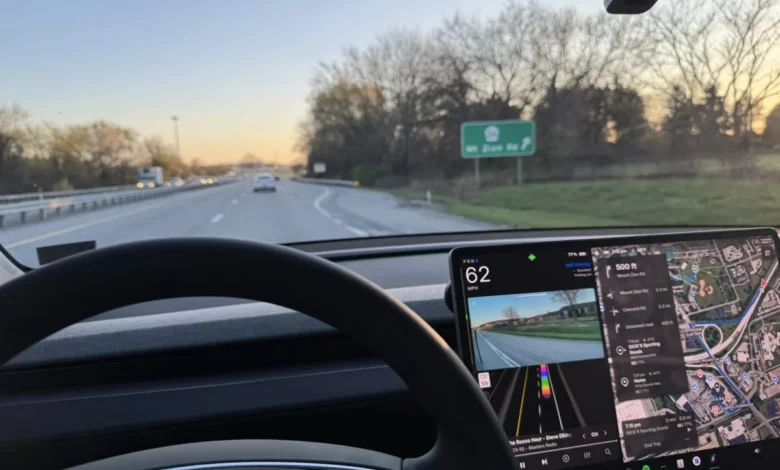
During the Tesla Q2 2026 earnings call, Chief Executive Officer Elon Musk provided the most definitive roadmap to date regarding the integration of autonomous driving technology into the Tesla Semi program. Addressing inquiries from analysts concerning the timeline for Full Self-Driving (FSD) capabilities in the heavy-duty trucking segment, Musk stated that autonomous functionality is expected to be operational for the Semi "around the end of this year or early next year." This projection marks a significant milestone for a vehicle that has long been positioned as the future of sustainable, cost-effective logistics, though Musk clarified that the rollout remains secondary to the company’s mass-market passenger vehicle goals.
The announcement highlights a strategic pivot in Tesla’s software development priorities. While the hardware for autonomy has been increasingly visible on production-ready Semi units, the software stack has been intentionally focused on high-volume models. Musk framed this decision as a matter of resource allocation rather than a lack of technical capability. Currently, Tesla’s autonomy team is concentrated on the Model 3, Model Y, and the upcoming Cybercab—vehicles that represent the vast majority of Tesla’s global fleet. By focusing on these high-volume platforms, Tesla aims to accelerate what Musk calls the "march of nines," referring to the incremental pursuit of 99.9999% reliability and safety required for unsupervised autonomy.
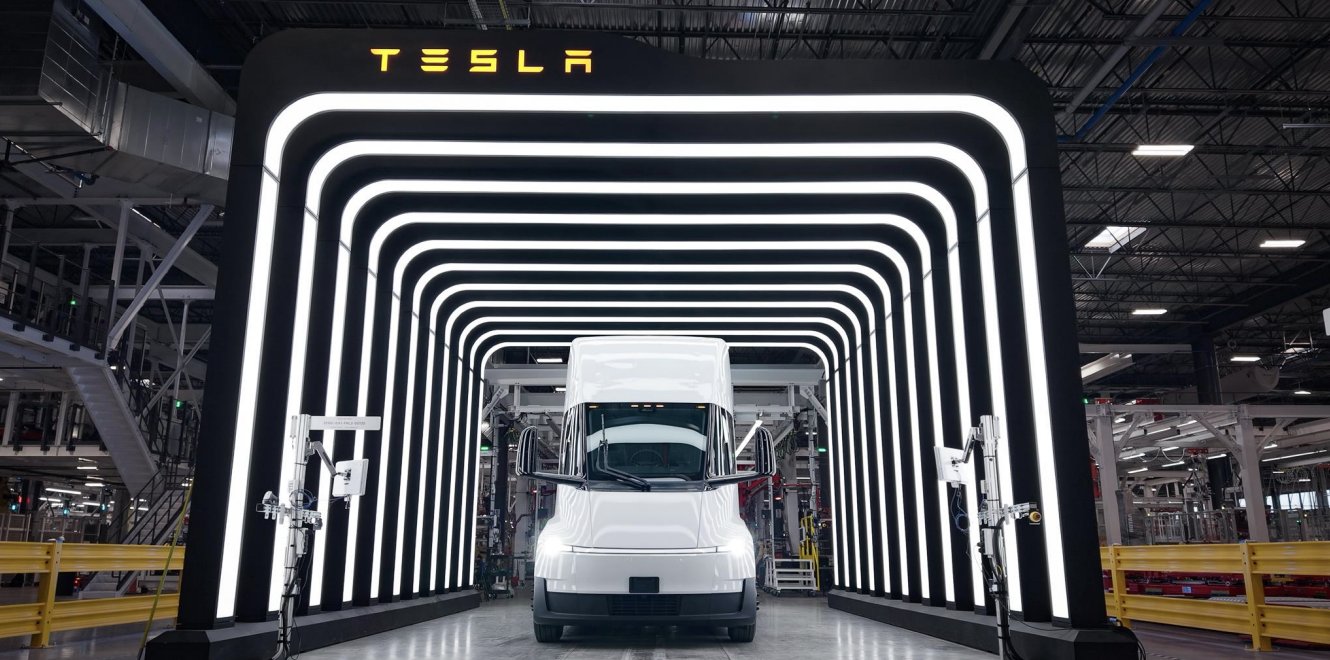
Strategic Prioritization and the "March of Nines"
The delay in bringing FSD to the Tesla Semi is rooted in the sheer scale of data available from Tesla’s consumer fleet. With millions of Model 3 and Model Y vehicles on the road, Tesla’s neural networks receive a constant stream of real-world driving data, which is essential for training the AI models that power FSD. In contrast, the Tesla Semi fleet, while expanding, remains a fraction of the size of the passenger car fleet.
Musk noted during the call that autonomous Semi development has "taken a bit of a backseat for the next six months or so" to ensure that the software for the Cybercab and consumer vehicles reaches the necessary safety thresholds. However, he reassured investors that the software would be fully functional in time for the anticipated high-volume production ramp of the Semi at the Nevada Gigafactory. This phased approach ensures that when the Semi reaches mass production, the software will have benefited from the safety refinements developed for the broader fleet, while also accounting for the unique physics and braking requirements of a Class 8 heavy-duty truck.
Technical Validation and Hardware Evolution
Evidence of Tesla’s progress in Semi autonomy has been mounting in recent months. In June 2026, a Tesla Semi was observed in Sunnyvale, California, equipped with an extensive validation rig. This rooftop sensor array is a hallmark of Tesla’s pre-release testing phase, similar to the equipment seen on Model 3 and Model Y prototypes before major FSD version updates. Shortly thereafter, a second unit was spotted near Tesla’s Fremont factory, featuring a matching camera suite and integrated lens-washing systems—a critical component for maintaining visibility in the harsh weather conditions often encountered by long-haul trucks.
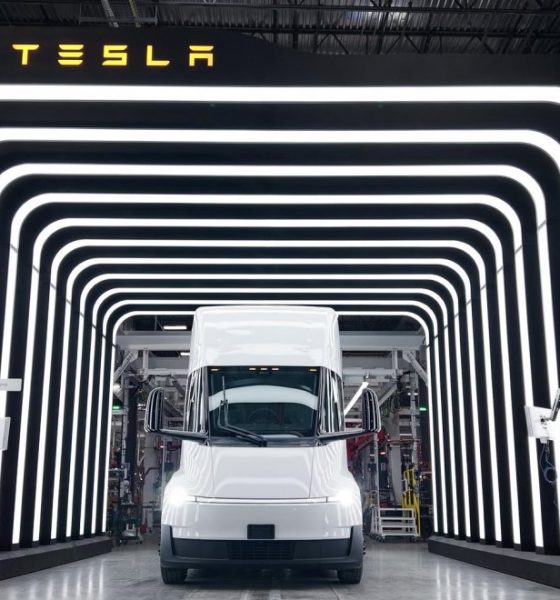
Furthermore, industry analysts have identified that the latest production versions of the Tesla Semi are equipped with "AI4" hardware. This fourth-generation AI computer is designed to handle the massive data processing requirements of vision-based autonomy. Observations by tech analysts, including Nic Cruz Patane, have confirmed that the production Semi now features ten high-resolution exterior cameras integrated directly into the truck’s chassis. Unlike earlier prototypes that relied on bolt-on sensors, the current production hardware is built with the explicit intention of achieving autonomy, featuring redundant power and data paths to ensure system reliability during long-range hauls.
Addressing the Global Logistics Labor Crisis
One of the primary drivers behind the push for an autonomous Semi is the persistent and worsening shortage of qualified truck drivers. According to the American Trucking Associations (ATA), the industry faces a shortage of nearly 80,000 drivers, a figure that could double by 2030 as the workforce ages. Musk addressed this during the earnings call, framing the autonomous Semi as a vital tool for both safety and economic stability.
"There is a really serious shortage of truckers," Musk stated, emphasizing that self-driving technology would not only improve safety but also enhance the comfort and productivity of existing drivers. In the near term, FSD is expected to operate as a sophisticated driver-assist system that reduces fatigue on long highway stretches. In the long term, Tesla envisions "platooning" and unsupervised highway driving, which could radically lower the cost per mile of freight transport, making it competitive with rail transport while offering the flexibility of point-to-point trucking.

Production Constraints and the 4680 Battery Ramp
While the software timeline is coming into focus, the physical production of the Tesla Semi remains tied to the company’s battery manufacturing capacity. Tesla’s Q2 2026 shareholder letter indicated that the Semi and the Cybercab are currently constrained by the output of 4680 battery cells. These large-format cells are essential for the Semi’s range and weight requirements, as they offer higher energy density and improved thermal management compared to traditional cells.
Tesla is currently expanding its Gigafactory Nevada to include a dedicated high-volume Semi production line. While initial deliveries to partners like PepsiCo and Martin Brower have been successful, volume production is now expected to align with the software’s maturation in early 2027. This synchronization allows Tesla to avoid a scenario where it has thousands of trucks on the road without the high-margin autonomous software that defines its competitive advantage.
The Broader AI Ecosystem: SpaceX and xAI Integration
The development of the autonomous Semi does not exist in a vacuum. Musk’s broader ecosystem of companies—including SpaceX, X (formerly Twitter), and xAI—is increasingly contributing to Tesla’s technological lead. During the same period as the earnings call, Musk revealed that SpaceX is beginning to feed its internal engineering data into the training models for Grok, the AI developed by xAI.

This "corpus of world-class engineering data" includes advancements in materials science, manufacturing, and hardware design. While SpaceX data is subject to International Traffic in Arms Regulations (ITAR), the non-restricted engineering insights are expected to improve the problem-solving capabilities of Musk’s AI models. For Tesla, this cross-pollination of data means that the neural networks governing the Semi’s autonomy are being trained on some of the most sophisticated computational models in existence. The synergy between SpaceX’s aerospace precision and Tesla’s real-world fleet data creates a formidable barrier to entry for traditional truck manufacturers.
Market Impact and Competitive Landscape
Tesla’s move toward a 2027 autonomy window for the Semi comes at a time when the competitive landscape for electric and autonomous trucks is heating up. Companies such as Volvo, Daimler, and Nikola have all made strides in electric propulsion, but Tesla’s vertical integration of software and hardware remains its primary differentiator.
Market analysts suggest that the early 2027 timeline provides a realistic window for regulatory bodies to catch up with the technology. The Department of Transportation and various state-level agencies are currently evaluating frameworks for autonomous heavy-duty vehicles. By targeting "working" autonomy by early 2027, Tesla is positioning itself to lead the conversation on regulatory standards, potentially setting the benchmark for safety and operational protocols in the autonomous freight industry.

Chronology of the Tesla Semi Development
To understand the significance of the 2027 target, it is necessary to look at the project’s decade-long trajectory:
- November 2017: Tesla officially unveils the Semi prototype, promising 500 miles of range and revolutionary aerodynamics.
- 2019-2021: Production is delayed multiple times as Tesla focuses on the Model 3 "production hell" and subsequent global expansion.
- December 2022: The first production Tesla Semis are delivered to PepsiCo’s Frito-Lay facility in Modesto, California.
- January 2024: Tesla announces a $3.6 billion expansion of Gigafactory Nevada to accommodate volume Semi production.
- June 2026: Advanced validation rigs and AI4 hardware are spotted on Semi units in public testing.
- July 2026: Elon Musk confirms the early 2027 target for autonomous functionality during the Q2 earnings call.
Conclusion: The Road Ahead
The Tesla Semi represents more than just a shift to electric propulsion; it is a fundamental reimagining of the logistics industry. By aligning the software’s readiness with the high-volume production ramp in Nevada, Tesla is preparing to deploy a vehicle that could potentially operate at a lower total cost of ownership than any diesel-powered competitor.
While Musk’s timelines are often viewed with skepticism by critics, the physical evidence of hardware integration and the strategic focus on "the march of nines" suggest a disciplined approach to the Semi’s autonomy. As 2027 approaches, the focus will shift from whether the technology works to how quickly it can be scaled to meet the demands of a global economy hungry for more efficient, safer, and more sustainable shipping solutions. For investors and industry stakeholders, the message from the Q2 2026 call is clear: the era of autonomous freight is no longer a distant vision, but a looming reality scheduled for the turn of the next year.