Rivian’s Tesla Model Y rival is a hit among buyers, with Rivian increasing its annual delivery guidance again.

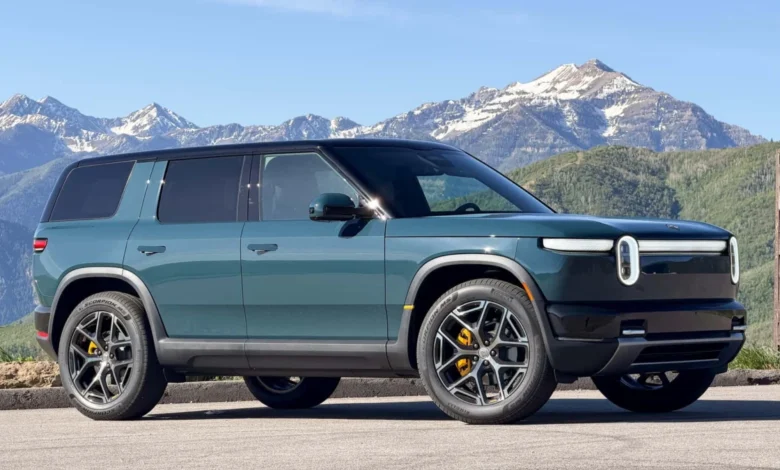
Rivian Automotive has reached a critical watershed moment in its corporate lifecycle, driven by the immediate and overwhelming market success of its newest midsize electric SUV, the R2. In its third-quarter financial and operational earnings report released on Thursday, the California-based electric vehicle manufacturer disclosed that the R2 has rapidly eclipsed all other nameplates in its portfolio to become its best-selling vehicle by volume just months after official customer deliveries commenced. This unprecedented demand has prompted company leadership to revise its annual delivery forecasts upward for the second consecutive quarter, signaling a robust operational turnaround and strengthening consumer adoption of the brand’s more affordable product offerings.
The Rise of the R2: Sales Dominance and Financial Revisions
Between the months of July and September, Rivian achieved a record-breaking performance with 19,751 total vehicle deliveries. Within this volume, the newly introduced R2 midsize electric SUV commanded the lion’s share of consumer demand, decisively outselling the company’s established flagship models—the R1T pickup truck and the R1S SUV—as well as its commercial electric delivery vans.
This unexpected velocity of sales has forced a recalibration of corporate expectations. Rivian has adjusted the baseline of its annual delivery target from a previously projected range of 65,000 to 70,000 units up to a tighter, more confident window of 67,000 to 70,000 units. This follows an earlier upward revision from 62,000 units earlier in the year, propelled by the initial wave of Q3 successes.
"We had great results with R2 becoming our best selling vehicle by volume in the third quarter," said Rivian Chief Executive Officer RJ Scaringe in an official statement accompanying the earnings report. Highlighting the reception of the vehicle, Scaringe added, "Customer and media feedback on R2 has been exceptional."
Strategic Imperatives: A Make-or-Break Launch
The aggressive market penetration of the R2 is not merely a transient sales victory; it is a foundational pillar for Rivian’s long-term corporate viability. As a direct competitor to the dominant Tesla Model Y—the reigning heavyweight in the global electric crossover segment—the R2 represents the company’s bridge from a niche luxury manufacturer to a high-volume mainstream producer.
In a prior interview on the InsideEVs Plugged-In Podcast, CEO RJ Scaringe candidly emphasized the gravity of the vehicle’s rollout. He noted that the deployment of the R2 "must go well" to secure the company’s financial future. The profit margins and production scaling achieved through the R2 are designed to serve a dual purpose: funding the continuous research, development, and eventual manufacturing of upcoming compact and affordable vehicles such as the anticipated R3 and R4 platforms, while simultaneously subsidizing Rivian’s burgeoning investments in advanced vehicle autonomy and software architecture.
Chronology of Rivian’s 2026 Production and Sales Trajectory
The journey to the R2’s market dominance has been marked by strategic milestones, careful capital allocation, and incremental operational scaling:
- Early Implementation: Following initial prototype reveals and high consumer anticipation, factory retooling at Rivian’s Normal, Illinois manufacturing facility set the stage for low-volume pilot production runs.
- Delivery Inauguration: Customer deliveries officially commenced in mid-2026, introducing the midsize SUV to pre-order holders and early adopters across North America.
- Q3 Record Milestone: Surpassing internal forecasts, Rivian registered 19,751 total vehicle deliveries in the third quarter of 2026, establishing a new quarterly benchmark for the firm.
- First Guidance Hike: Buoyed by the initial delivery momentum in late Q3, management adjusted its annual delivery floor from 62,000 units to a range of 65,000 to 70,000 units.
- Second Guidance Hike: The release of the Q3 earnings report on Thursday officially confirmed the R2’s status as the top-selling model, triggering a subsequent narrowing of the annual guidance baseline to 67,000–70,000 units.
Competitive Landscape and Market Context
While Rivian’s ascent positions it firmly as the second best-selling dedicated EV brand in the United market during the third quarter of 2026, the company continues to operate in the shadow of industry titan Tesla. The Model Y remains a formidable adversary, commanding massive global production output and entrenched consumer brand recognition.
However, Rivian’s strategy relies on differentiating the R2 through distinct styling, off-road heritage, rugged utility features, and a modern software ecosystem that recently integrated advanced features like real-time traffic alerts through partnerships with platforms like Waze. Furthermore, recent corporate maneuvers—including the strategic acquisition of synthetic data startups to bolster autonomous driving capabilities—demonstrate that Rivian is heavily investing in the technological parity required to compete at the highest tiers of the modern automotive industry.
At the same time, the broader Rivian ecosystem is exhibiting internal shifts. Alongside the success of the R2, Rivian’s commercial electric delivery vans have shown remarkable strength, occasionally outpacing the combined delivery volumes of the consumer-focused R1S and R1T lines during specific production cycles. Meanwhile, comparative highway range tests against international competitors, such as the BMW iX3, continue to provide valuable engineering data as the company refines its powertrain efficiencies.
Broader Implications and Outlook
The financial implications of the R2’s successful commercial launch extend far beyond short-term delivery statistics. For years, Wall Street analysts and industry observers scrutinized the high per-vehicle production costs associated with Rivian’s early generation R1 platform. By transitioning to a more optimized, cost-effective manufacturing architecture with the R2, Rivian is addressing its path to profitability head-on.
As the company navigates the final months of the fiscal year, meeting or exceeding the newly established delivery guidance of 67,000 to 70,000 units will serve as a definitive litmus test for its supply chain resilience and manufacturing scalability. If Rivian can sustain the current consumer appetite for the R2 while simultaneously keeping production bottlenecks at bay, the vehicle will have successfully accomplished its mission: transforming Rivian from an ambitious challenger into a self-sustaining, high-volume staple of the modern electric vehicle landscape.