Rodney Charters, Pioneering Cinematographer of the Hit TV Series 24, Dies at 80

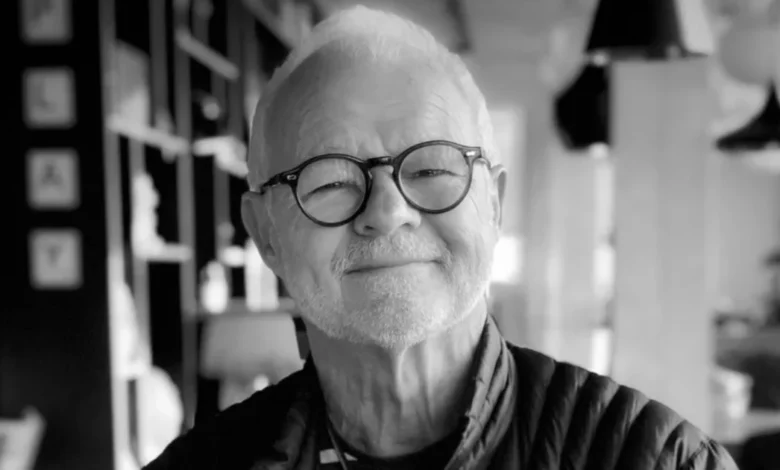
Rodney Charters, the visionary director of photography who defined the frenetic, high-stakes visual language of the groundbreaking real-time television drama 24, has passed away at the age of 80. His death occurred suddenly on September 13 in Amsterdam, as confirmed by the American Society of Cinematographers (ASC). Charters leaves behind an indelible legacy in the television industry, having spent a prolific career shaping the aesthetics of some of the most influential network programs of the late 20th and early 21st centuries.
Born in New Zealand, Charters cultivated a deep-rooted passion for visual storytelling from an early age. His artistic trajectory was profoundly influenced by his family background; his father worked as a portrait photographer and filmmaker, immersing Charters in the mechanics of visual media from childhood. He famously described his formative years as being raised inside the darkroom, an environment that instilled in him an intuitive grasp of exposure, composition, and narrative framing. This early foundation ultimately propelled him into a celebrated career that spanned decades, moving from documentary and commercial work to the demanding schedules of American prime-time television.
The Definitive Look of a Groundbreaking Series
While Charters contributed to numerous successful projects throughout his lifetime, his name remains permanently intertwined with Fox’s iconic suspense thriller 24. Starring Kiefer Sutherland as relentless counter-terrorism agent Jack Bauer, the series revolutionized the television landscape upon its debut in November 2001. Its defining gimmick—and narrative engine—was its real-time format, wherein each of the 24 episodes in a season accounted for one hour of a single, catastrophic day. The concept was visually amplified by a persistent on-screen digital clock and a breathless pacing that demanded an equally innovative approach to camera work.
Between 2001 and 2010, Charters shot an astonishing 184 episodes of the series, covering every single installment across the first eight seasons with the exception of just eight episodes. In addition to his core duties as director of photography, he lensed the 2008 television movie 24: Redemption and stepped behind the camera to direct three of the episodes he did not shoot.
To capture the urgency of Bauer’s race against time, Charters helped forge what the American Society of Cinematographers aptly characterized as an "aggressive camera style." Eschewing the static, multi-camera setups traditionally favored in network television, Charters relied heavily on handheld camera operators, whip pans, snap zooms, and long, unbroken takes. This chaotic yet deliberate framing placed viewers directly into the visceral panic of the Counter Terrorist Unit (CTU), making the audience feel as though they were rushing through corridors alongside federal agents.
In a February 2004 interview with American Cinematographer magazine, Charters detailed the rigorous and unconventional methods used on set. "We’ve evolved to the point where we always shoot a scene in its entirety — it’s never broken into setups," Charters explained. He noted that scenes were frequently blocked and staged by the cast privately without his presence—a rarity in television production. Once brought in, the camera crew collaborated closely with executive producer and director Stephen Hopkins to find unconventional angles. As Charters recalled, Hopkins would frequently instruct the crew: "Look at the scene and imagine where the camera would never be, and that’s where I want it."
This relentless visual experimentation earned Charters widespread critical acclaim, including two Primetime Emmy Award nominations for Outstanding Cinematography for a Single-Camera Series in 2005 and 2006.
A Chronological Overview of a Storied Career
Charters’ journey to the pinnacle of television cinematography was marked by steady contributions to several influential series prior to and following his tenure on 24.
Before joining the CTU fold, Charters established himself as a versatile director of photography on fantasy and procedural dramas. From 1997 to 2000, he shot 57 episodes of NBC’s supernatural drama The Pretender, helping anchor its serialized mystery with a polished, atmospheric look. Shortly after, he lent his talents to the second season of the science-fiction series Roswell, shooting 19 episodes between 2000 and 2001 and further cementing his reputation for handling complex, genre-bending storytelling.
The definitive chapter of his career unfolded throughout the 2000s with 24, where his stamina matched the grueling physical demands of the production schedule. Shooting action-heavy television under tight weekly deadlines required exceptional leadership on the floor and a seamless partnership with directors and lighting technicians.
Following the initial conclusion of 24 in 2010, Charters did not slow down. He smoothly transitioned into the gritty, handheld aesthetic of cable and premium television, serving as the director of photography for the first three seasons of Showtime’s critically acclaimed dark comedy-drama Shameless from 2011 to 2013. His ability to adapt his visual signature to suit the anarchic, working-class chaos of the Gallagher family demonstrated his remarkable range as an artist. Across his career, Charters proved that his visual language was not bound to a single genre, but was instead rooted in an innate understanding of character psychology and environmental tension.
Industry Tributes and the Broader Implications of His Work
News of Charters’ passing prompted an outpouring of grief and remembrance from colleagues, professional organizations, and fans across the entertainment community. The American Society of Cinematographers released a formal statement mourning the loss of a treasured member whose contributions significantly expanded the stylistic boundaries of television production.
The implications of Charters’ work on 24 extend far beyond his individual accolades. When the series premiered in the wake of the September 11 attacks, its themes of national security, imminent threats, and moral ambiguity resonated deeply with the global public. However, the show’s visual style proved equally influential. At a time when standard television drama often mirrored the traditional, polished look of feature films, 24 demonstrated that a documentary-style, kinetic aesthetic could sustain a long-running, high-budget broadcast hit.
Charters helped prove that television could embrace risk-taking cinematography on an episodic schedule. The whip pans, rapid zooms, and fluid tracking shots he championed helped pave the way for a generation of action and thriller series that rejected the tripod in favor of raw, kinetic immediacy. By treating every dialogue scene and foot pursuit as an organic, continuous event rather than a fragmented puzzle of close-ups and reaction shots, he raised the bar for visual storytelling in the medium.
Legacy of a Master Craftsman
As tributes continue to circulate, those who worked alongside Charters remember him not only as a master of his craft, but as a generous collaborator who empowered directors, actors, and camera crews alike. His upbringing in his father’s darkroom instilled a lifelong reverence for light and shadow, which he translated from chemical emulsions to digital sensors as the industry underwent its massive technological transition.
Rodney Charters is survived by his family, friends, and a vast body of work that continues to influence how modern television captures movement, tension, and human drama. Whether through the frantic, clock-driven chaos of Los Angeles counter-terrorism operations or the chaotic family dynamics of Chicago’s South Side, his camera work captured the frantic pulse of contemporary life, ensuring his name remains permanently etched in the annals of cinematic history.