OpenAI Launches Grid Protectors Program to Mitigate AI Data Center Power Demands and Local Grid Strain

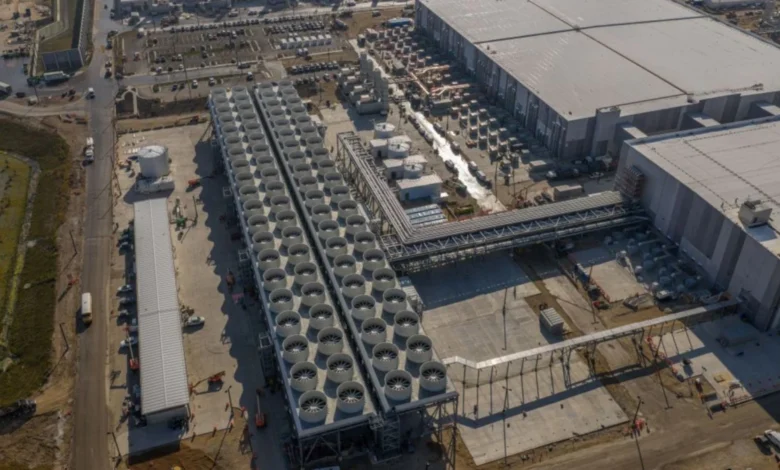
Electricity consumption is one of the biggest concerns that residents bring up whenever a data center is proposed in their community, which is why OpenAI is taking steps to minimize its impact on the local electricity grid. As artificial intelligence models scale to unprecedented levels of complexity, the infrastructure required to power them has expanded exponentially. Modern large language models necessitate vast computational clusters comprising tens of thousands of specialized accelerators, such as graphical processing units and tensor processing units, which operate continuously and draw staggering amounts of electrical power. This insatiable appetite for energy has placed unprecedented strain on regional transmission organizations, public utilities, and municipal power grids across the globe, sparking fierce public debates, community resistance, and regulatory scrutiny.
According to the company, its Grid Protectors Program aims to reduce the power consumption of its data centers as local demand increases, ensuring that the grid is not overwhelmed during peak hours. Aside from ensuring that the lights remain on for everyone, it would also allow its data centers to connect to the grid and go online sooner instead of waiting for the additional power sources to come online. This strategic initiative represents a proactive effort by one of the leading artificial intelligence research and deployment organizations to address the growing friction between rapid technological advancement and local resource availability. By dynamically modulating energy consumption during periods of high grid stress, OpenAI hopes to chart a sustainable path forward for AI infrastructure development.
The Origins and Escalation of the AI Energy Crisis
The convergence of artificial intelligence and electrical grid infrastructure challenges is a relatively recent phenomenon, born out of the generative AI boom that accelerated dramatically following the public release of ChatGPT in late 2022. Prior to this inflection point, data center growth was steady, predictable, and largely integrated into long-term utility resource planning. Traditional cloud computing facilities, while massive, scaled their energy needs gradually alongside enterprise adoption rates.
However, the training and inference demands of frontier AI models completely altered this paradigm. Training a single state-of-the-art foundational model now requires megawatt-scale power supplies running uninterrupted for months at a time. Once trained, these models must handle billions of daily inference requests from users worldwide, necessitating permanent data center installations that consume as much electricity as small towns or medium-sized industrial manufacturing plants.
Throughout 2023 and 2024, utility providers in key technology hubs—particularly in Northern Virginia, Silicon Valley, the Pacific Northwest, and parts of Texas—began issuing urgent warnings regarding capacity constraints. Grid operators highlighted the risk of rolling blackouts, destabilized wholesale electricity markets, and accelerated retirement of legacy fossil-fuel plants without adequate renewable replacements coming online. Local communities frequently pushed back against proposed data center developments, citing fears of rising residential electricity rates, increased carbon emissions, and the potential degradation of local municipal water supplies used for cooling server infrastructure.
Chronology of OpenAI’s Infrastructure Strategy and Grid Integration
The launch of the Grid Protectors Program is the latest milestone in OpenAI’s evolving infrastructure strategy, which has pivoted from relying purely on traditional cloud providers to actively shaping and securing dedicated power arrangements.
In the early stages of the generative AI boom, OpenAI relied almost exclusively on Microsoft Azure’s existing global cloud infrastructure, leveraging Microsoft’s established data center footprint and power purchase agreements. However, as compute requirements scaled toward artificial general intelligence (AGI) timelines, the sheer volume of power needed outpaced standard cloud expansion rates.
By 2023, discussions surrounding dedicated, ultra-large-scale data centers—often referred to in the industry as "hyperscale" or "gigawatt" campuses—took center stage. OpenAI executives engaged with policymakers, energy companies, and infrastructure investors to explore innovative ways to source clean and reliable energy, including discussions around advanced nuclear fission, geothermal energy, and grid-tied battery storage systems.
Despite these efforts, the lead time required to build new power generation facilities—whether wind farms, solar arrays, or nuclear reactors—often spans five to ten years due to permitting, environmental reviews, and supply chain bottlenecks. Conversely, modern data centers can be constructed and equipped within 18 to 24 months. This profound temporal mismatch created a critical vulnerability: data centers ready to process AI workloads were forced to sit idle or face severe operational restrictions while waiting for corresponding electrical generation capacity to clear regulatory and construction hurdles.
To bridge this gap, OpenAI developed the Grid Protectors Program, formally introducing the initiative to align data center operations with real-time grid conditions, thereby circumventing traditional grid-connection bottlenecks without compromising local electrical reliability.
Data and Metrics Governing the Grid Protectors Program
The mechanics of the Grid Protectors Program rely heavily on real-time telemetry, automated demand-response protocols, and advanced software optimization. While proprietary details regarding exact threshold triggers remain confidential, the framework is designed around several core quantitative principles:
-
Dynamic Load Shedding and Shifting: When local grid operators signal peak demand events—typically driven by extreme weather conditions such as summer heatwaves or winter deep freezes—participating OpenAI data centers automatically curtail non-critical computational tasks. This includes pausing background model training runs, deferring batch data processing, and shifting flexible workloads to geographic regions with excess grid capacity.
-
Reserve Margin Protection: The program establishes strict operational boundaries ensuring that data center power draw scales inversely with available local reserve margins. If the margin between total electricity supply and consumer demand drops below predetermined safety thresholds, the data center’s automated energy management systems step down power consumption within seconds.
-
Interconnection Acceleration Metrics: By guaranteeing grid operators that data centers will act as flexible, load-shedding assets rather than inflexible, baseload burdens, OpenAI aims to reduce interconnection queue wait times. Utility planning commissioners can approve grid access for these facilities under the assurance that peak-hour strain will be actively mitigated by the consumer.
Industry and Regulatory Reactions
The announcement of the Grid Protectors Program has drawn significant attention and varied reactions from energy experts, utility regulators, environmental advocates, and competing technology firms.
Energy economists and grid operators have broadly welcomed the initiative as a constructive step toward corporate responsibility. Power systems are engineered to handle peak demand rather than average loads; consequently, facilities capable of voluntarily reducing consumption during critical windows provide immense value to grid stability. Demand-response programs have long existed for heavy industrial manufacturers, but applying sophisticated, automated demand-response mechanisms to high-density AI data centers is an innovative escalation of the concept.
However, some independent energy analysts maintain a cautious stance. Critics point out that while demand-response programs prevent localized blackouts during peak hours, they do not solve the underlying problem of aggregate energy consumption. Even if a data center curtails its usage during the hottest afternoon hours, it must eventually make up for lost computational time, often resulting in high-intensity operation during overnight off-peak hours when fossil-fuel generation or grid ramping may still present environmental challenges.
Environmental organizations have expressed mixed views. While reducing the immediate threat to local grid reliability alleviates community anxiety, watchdogs continue to push for absolute transparency regarding the sources of energy powering these facilities. Environmental advocates argue that offsetting peak-hour strain must go hand-in-hand with verifiable commitments to 100% matching of renewable energy generation on an hourly, rather than annual, basis.
Broader Implications for the Tech Industry and AGI Development
The launch of the Grid Protectors Program carries profound implications for the broader technology sector as the race toward advanced artificial intelligence intensifies. As other industry giants—including Google, Amazon, Meta, and Microsoft—grapple with similar energy constraints, OpenAI’s framework could serve as a blueprint for industry-wide standardization.
The bottleneck of electrical infrastructure is no longer merely a logistical hurdle for utility companies; it has become a central strategic constraint governing the pace of geopolitical and commercial AI development. Nations and corporations that successfully secure reliable, scalable power while maintaining social license and community support will dominate the next decade of technological innovation. Conversely, companies that fail to address grid strain risk severe regulatory backlash, moribund interconnection queues, and coordinated public resistance that could halt multibillion-dollar infrastructure projects in their tracks.
Furthermore, the Grid Protectors Program highlights an emerging symbiosis between artificial intelligence and the energy sector. Ironically, while AI is a primary driver of the current surge in electricity demand, the sophisticated optimization algorithms developed by AI laboratories are increasingly being deployed to manage, balance, and optimize the electrical grid itself. Software-defined power management, predictive load forecasting, and automated grid-switching represent areas where artificial intelligence can provide net-positive efficiency gains to utility operators struggling to modernize aging infrastructure.
Conclusion and Outlook
OpenAI’s Grid Protectors Program addresses the friction points between technological ambition and community welfare. By implementing automated mechanisms to reduce data center power consumption during peak hours, the company seeks to protect local electrical grids from destabilization while simultaneously unlocking faster interconnection pathways for its vital computing infrastructure.
As the deployment of artificial intelligence continues to accelerate, the sustainability of the underlying physical infrastructure will remain a defining challenge of the era. Initiatives like the Grid Protectors Program demonstrate that mitigating the environmental and grid impacts of AI is not merely an act of corporate philanthropy, but an operational imperative essential for the continued viability of the industry at large. Future developments will depend heavily on the measurable effectiveness of these demand-response protocols, the ongoing cooperation between technology developers and public utilities, and the broader integration of next-generation clean energy sources into the global electrical grid.