Designing reliable memory systems for autonomous AI agents has emerged as one of the most critical challenges in the current software engineering landscape. As AI systems transition from stateless, single-turn query responders to complex, multi-step agents capable of long-term planning and autonomous execution, the necessity for robust memory architectures has moved from an optional feature to a fundamental requirement. When an agent operates within a single, isolated context, it functions efficiently; however, once it must maintain state across disparate sessions, the lack of a structured memory system inevitably leads to degradation, repeated errors, and the accumulation of "stale" or irrelevant information that can cripple performance.
The architectural challenge lies in balancing the agent’s need for continuity against the limitations of current context windows. Without an external memory layer, agents are forced to "start from zero" every time a task is initialized. Conversely, poorly implemented memory systems introduce persistent, hard-to-trace failures that compound over time. This report outlines the current industry standards for building durable, scalable, and secure memory systems, identifying the strategies that ensure reliability and the common pitfalls that lead to system-wide failures.
Defining the Architecture of Cognitive Persistence
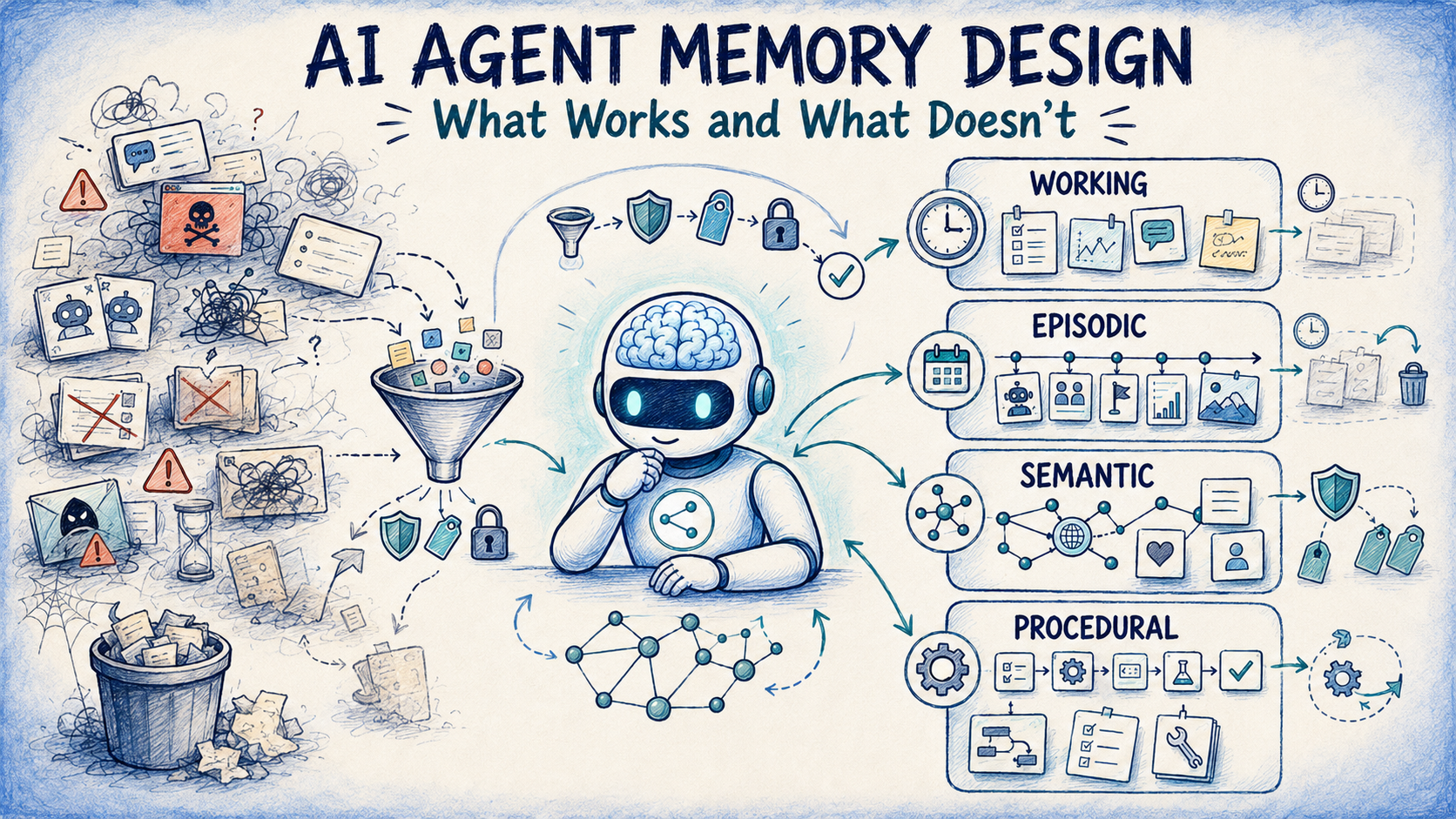
In the context of agentic AI, memory is defined as information written to an external storage layer during runtime and retrieved in subsequent calls, whether across discrete task steps or extended sessions. This is distinct from static knowledge bases or fixed system prompts. Industry experts categorize agent memory into four primary pillars, each requiring a unique storage and retrieval strategy:
- Episodic Memory: Stores chronological events, such as past interactions, task runs, and historical decisions. These are typically managed via vector databases to allow for semantic similarity searches.
- Semantic Memory: Houses facts, user preferences, and domain knowledge that require periodic updates. This layer often utilizes a hybrid approach, combining vector stores for searchability with key-value stores for precise, exact-match retrieval.
- Procedural Memory: Captures "how-to" logic, including successful action patterns and refined workflows. This is often implemented through structured data stores or dynamic prompt injection.
- Working Memory: Maintains active task state, such as intermediate variables or "scratchpad" calculations. This is typically short-lived, high-speed storage, such as an in-memory cache.
Collapsing these distinct types into a single storage bucket is the most common failure point in modern agent design, as it creates noisy, inefficient, and often conflicting retrieval processes.
Scalable Strategies for Memory Management
Engineering a high-performance memory system requires moving beyond simple "log everything" approaches. Advanced systems now employ hierarchical memory structures governed by importance scoring. By assigning a weight to every piece of information before it is committed to long-term storage, developers can ensure that only high-value, durable data—such as confirmed user constraints—is preserved, while transient, low-value information is discarded.
For instance, utilizing a Pydantic model to define MemoryEntry allows developers to assign metadata such as timestamps, confidence scores, and tags to each entry. A should_persist gating function then evaluates this entry against a predefined threshold—for example, requiring an importance score of 0.6 or higher—before writing to a permanent database. This practice significantly reduces noise during future semantic searches, ensuring the agent retrieves relevant context rather than overwhelming its context window with irrelevant history.
The Problem of Multi-Agent Namespace Contamination
In multi-agent systems, a frequent architectural flaw is the implementation of a "flat" shared memory space where every agent has read and write access to the same database. This leads to severe context pollution; for example, a research-oriented agent might write internal, unverified notes into the shared store, which a code-execution agent then interprets as ground truth, leading to catastrophic errors.
The current industry standard for mitigating this is the implementation of scoped memory namespaces. By defining clear boundaries for global access, research-specific namespaces, and execution-specific storage, architects can enforce security and logical isolation. A centralized orchestrator should be the only entity with broad read-write access, while sub-agents are restricted to their own designated namespaces, plus a read-only "shared facts" layer. This structure ensures that if an agent encounters a logic error, the fallout is contained within its specific scope rather than propagating across the entire system.
Provenance and the Risks of Memory Poisoning
A critical, often overlooked element of memory design is provenance—the tracking of an entry’s origin. Without metadata detailing which agent, tool, or user input generated a specific memory, debugging becomes nearly impossible. Recent research into "MemoryGraft" attacks has highlighted a significant security risk: if an agent processes external content containing hidden, malicious instructions, it may store that information in long-term memory.
Because standard retrieval mechanisms often rely on semantic similarity, a poisoned entry—even if small—can be surfaced repeatedly whenever the agent encounters a similar query. To combat this, developers are increasingly adopting "trust-level" tagging for every memory entry. By filtering memories by trust before any high-stakes action is taken, and by sanitizing incoming data for hidden directives, engineers can prevent the systemic degradation of agent behavior.
Why Standard Summarization Strategies Fail
When developers face the challenge of long context, the immediate impulse is to use Large Language Models (LLMs) to summarize history and store that summary as the agent’s "memory." However, this approach is fundamentally flawed for two reasons. First, compression via summarization involves discarding data. The discarded details—often subtle constraints or specific edge cases—frequently prove to be the most critical information for future tasks. Second, summarization risks compounding hallucinations. If a model generates a hallucination during a session, and that hallucination is summarized into long-term memory, it becomes "fact" for all future sessions.
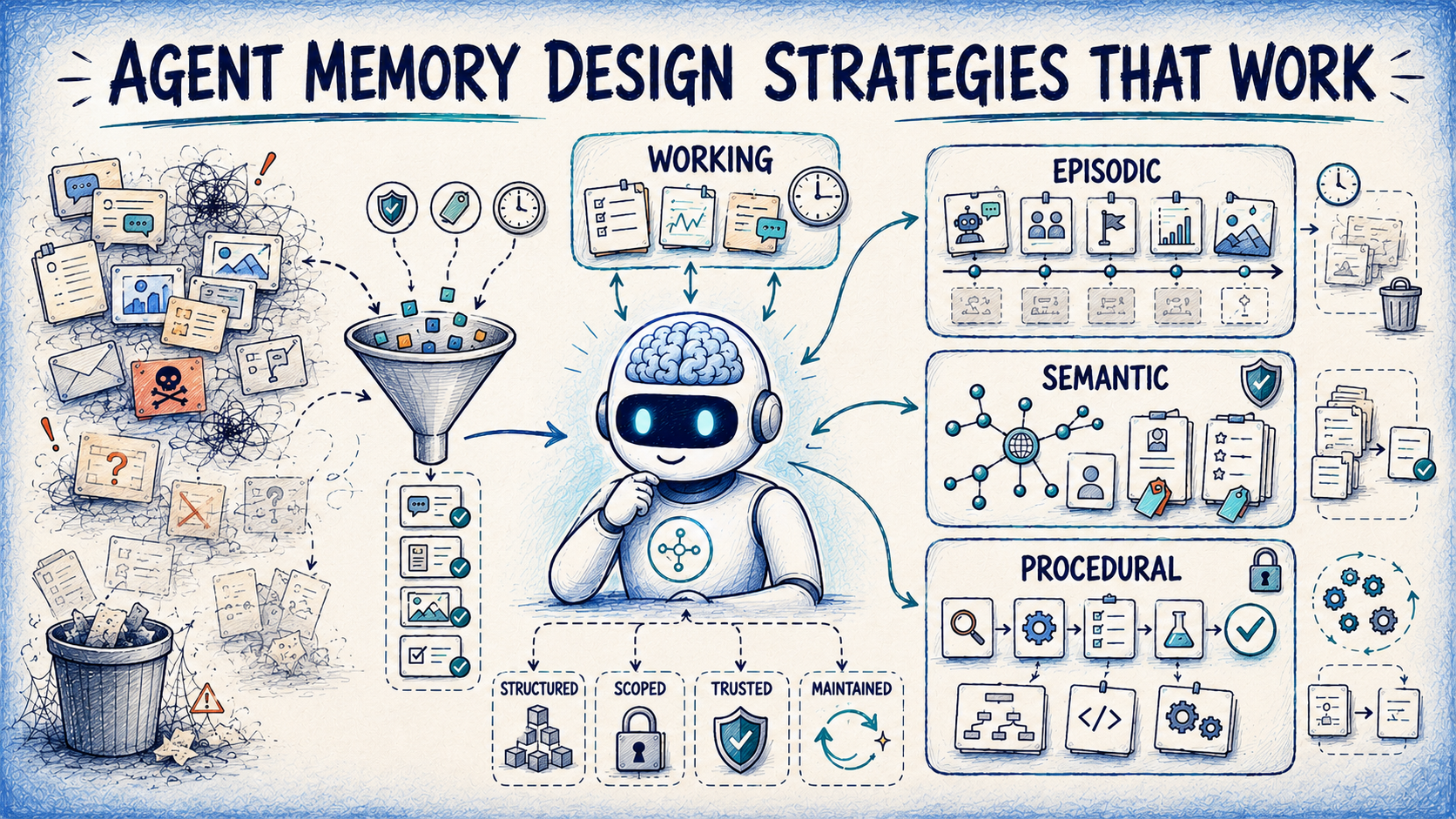
The industry is shifting toward "structured fact extraction" instead of prose-based summaries. By using a schema-constrained extraction prompt, agents can pull specific, verifiable fields—such as "User Preferred Language" or "Database Credentials"—and store those fields in a structured format. This removes the ambiguity of free-form text and provides a verifiable, consistent source of truth.
Maintenance Routines: Preventing Technical Debt
Memory systems are not "set and forget" components. As an agent operates, its memory store will inevitably grow, leading to higher latency, increased costs, and the accumulation of outdated facts. Robust maintenance routines are now considered essential. These include:
- Time-to-Live (TTL) Policies: Automatically expiring short-term memory after a task completes.
- Confidence Decay: Automatically reducing the confidence score of facts as they age, triggering a re-verification process by the agent.
- Deduplication: Periodically scanning the store for redundant or conflicting information.
Broader Implications for AI Development
The evolution of memory systems reflects the broader maturity of the AI agent sector. As businesses move from experimental prototypes to production-grade deployments, the focus has shifted from the capability of the model to the reliability of the system. The transition from "single-layer" storage to complex, multi-layered memory architectures is a direct response to the need for predictability.
Recent data from enterprise deployments suggests that teams implementing scoped, provenance-tracked, and structured memory layers see a 40% reduction in agentic "drift"—the phenomenon where an agent’s behavior becomes increasingly erratic over time. Furthermore, the implementation of trust-level filtering has become a standard compliance requirement for agents interacting with customer data, providing a necessary layer of protection against prompt-injection attacks.
In summary, the design of AI agent memory is a multifaceted engineering challenge that demands a disciplined approach. By rejecting the convenience of monolithic, single-layer storage and embracing granular control through namespaces, structured extraction, and rigorous provenance, developers can build agents that not only learn from their experiences but do so in a way that is secure, verifiable, and scalable. The future of autonomous agents rests not just on the intelligence of the underlying models, but on the reliability of the architectures that support their long-term memory.