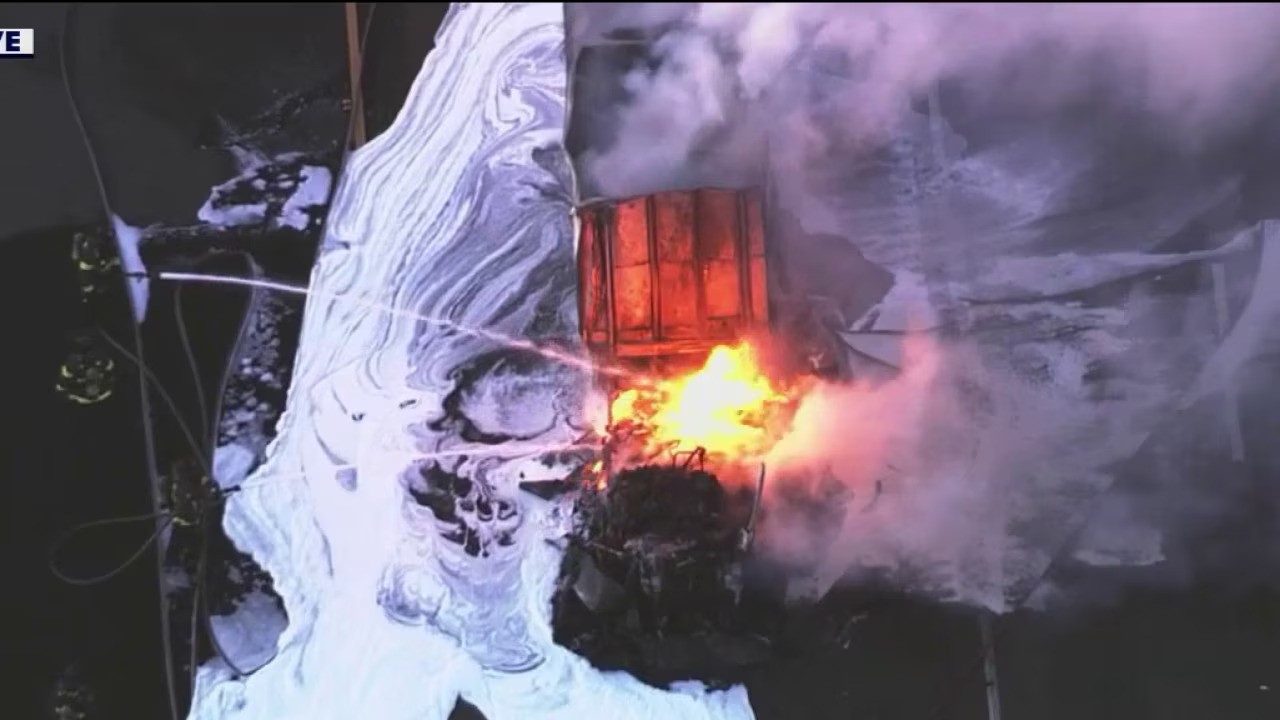
A significant incident involving a Tesla Semi occurred on Tuesday, October 27, 2026, in Hayward, California, prompting a major emergency response and a prolonged closure of a key transit artery. The vehicle, an electric Class 8 semi-truck, caught fire while traveling in the southbound lanes of Interstate 880. The event, which occurred just after 5:30 a.m. local time, necessitated a total shutdown of both directions of the interstate for several hours due to the intensity of the blaze and concerns regarding hazardous chemical smoke generated by the truck’s battery system.
The California Highway Patrol (CHP) confirmed the incident and managed the subsequent traffic diversion, which snarled morning commutes across the Bay Area. While the flames were eventually brought under control, the recovery and clearing process continued well into Wednesday morning, with all lanes officially reopening by 3:30 a.m.
Chronology of the Incident
The timeline of the emergency response underscores the challenges associated with managing fires involving large-scale lithium-ion battery packs. Shortly after the fire broke out at 5:30 a.m. on Tuesday, the CHP arrived on the scene. Given the nature of the combustion, emergency crews faced significant difficulty in suppressing the flames. Lithium-ion batteries, when compromised, can undergo thermal runaway—a process where the temperature within the cell increases rapidly, leading to the release of toxic gases and further heat generation.
By the time the fire was contained, the vehicle had sustained extensive damage. The northbound lanes of I-880 were reopened late Tuesday evening, but the southbound lanes remained closed for several additional hours as crews worked to safely remove the wreckage and ensure that no residual heat or chemical hazards remained. The incident drew immediate attention from industry observers and safety regulators, as it involved one of the most prominent electric heavy-duty vehicles currently in operation.
Preliminary Analysis and Vehicle Identification
While an official investigation into the root cause of the fire is currently underway, visual evidence captured by bystanders and local media has led to widespread speculation regarding the specific unit involved. Industry analysts and social media observers have noted that the charred remains appear to match the design characteristics of an older Tesla Semi—specifically, those produced during the company’s early pilot program.
Tesla began its initial pilot deliveries several years ago before moving toward a revised design for mass production, which officially commenced just last month. The distinction is significant because the newer production models incorporate the latest advancements in battery safety, cooling, and structural integration. Tesla, along with the CHP, has not yet issued a definitive statement regarding whether a mechanical failure, road debris, or other external factors contributed to the ignition.
The Complexity of Electric Heavy-Duty Vehicle Fires
The Hayward fire serves as a stark reminder of the unique challenges first responders face when dealing with commercial electric vehicles. According to industry data, there are between 5,000 and 7,000 fires involving traditional diesel-powered semi-trucks and large commercial vehicles on U.S. roadways annually. These fires are typically fueled by diesel or gasoline, which behave predictably and are generally managed with standard foam or water-based fire suppression techniques.

In contrast, large-capacity battery packs require substantially more water and specialized handling. Officials on the scene indicated that the lithium batteries were "incredibly difficult to extinguish," a sentiment often echoed by fire departments across the country when dealing with high-voltage EV incidents. The chemical energy stored in a Semi’s massive battery pack means that once a fire reaches the stage of thermal runaway, it can persist even after external flames appear to be suppressed. This necessitates prolonged cooling periods and monitoring to prevent reignition, which explains the extended highway closure.
Tesla’s Broader Strategy and Battery Innovation
As Tesla continues to scale its commercial vehicle division, the company is concurrently refining its battery technology to improve both safety and serviceability. Recent developments in Tesla’s robotaxi fleet, specifically the Cybercab, offer a window into how the company is approaching these challenges. Robert Sumpf, Tesla’s director of mechanical design engineering for battery modules and packs, recently noted that the company is designing battery architectures with future-proofing in mind.
In the case of the Cybercab, Tesla has engineered the battery pack to allow for a transition to lithium iron phosphate (LFP) chemistry, which is generally more stable and cost-effective, though it currently has lower energy density than the nickel-based cells Tesla favors for high-performance applications. By modularizing the battery packs, Tesla is moving away from the "structural battery" approach used in some of its earlier consumer vehicles, which were notoriously difficult to repair. The company is now prioritizing serviceability—a shift that is likely to influence future versions of the Tesla Semi as well.
The economic implications of these design choices are substantial. For a commercial operator, a vehicle that remains in the shop for weeks due to an irreparable battery pack represents a significant loss of revenue. Tesla’s focus on modular, repairable packs is designed to mitigate this risk, effectively lowering the total cost of ownership over the vehicle’s lifespan.
The Competitive Landscape: Connectivity and Reliability
While Tesla faces scrutiny regarding the safety and performance of its hardware, other industry players are focusing on service integration to win over commercial and consumer loyalty. For instance, United Airlines has positioned Starlink satellite internet as a major competitive advantage. United CEO Scott Kirby has acknowledged that while this connectivity is currently a "must-have" feature that gives them a lead over rivals like Delta and American Airlines, he expects the advantage to be temporary as LEO (Low Earth Orbit) internet becomes an industry standard.
This broader context of technological integration highlights the pressure on major companies to innovate while maintaining absolute reliability. Whether it is a commercial airliner offering high-speed connectivity or a long-haul electric truck promising zero-emission logistics, the market is increasingly intolerant of service disruptions. For Tesla, the incident in Hayward presents a critical test of its communication and safety transparency. As the company moves from the pilot phase into mass production, the ability to rapidly identify the cause of such incidents and implement corrective engineering will be vital to maintaining the trust of fleet operators.
Future Implications and Investigation
At the time of writing, the California Highway Patrol has not provided further details regarding the investigation. The driver of the Semi, who was uninjured, reportedly provided a statement to authorities but could not offer a definitive explanation for the sudden ignition.
The investigation is expected to focus on several key areas:

- Battery Management System (BMS) logs: Investigators will likely analyze data from the vehicle’s onboard computers to see if the system detected any thermal anomalies prior to the fire.
- External Damage: A forensic analysis of the undercarriage will determine if the fire was initiated by impact with road debris, which could puncture the battery enclosure.
- Hardware Lifecycle: Given the possibility that the vehicle was an older pilot-program unit, engineers will investigate if the aging of the battery cells or specific components within the early-generation packs played a role.
As the electric vehicle transition continues to accelerate, events like this are subject to intense public and regulatory oversight. The National Highway Traffic Safety Administration (NHTSA) often monitors such incidents to determine if there are broader trends that require recall action.
For the logistics industry, the Tesla Semi represents a potential sea change in freight transport. However, that shift is contingent on demonstrating that the technology is not only more efficient and sustainable but also at least as reliable as the legacy diesel systems they are intended to replace. Tesla’s response to this fire—and the speed with which it shares findings from its investigation—will likely serve as a benchmark for how the company handles the inevitable growing pains associated with the electrification of the heavy-duty trucking industry.
As of late Wednesday, the flow of traffic on I-880 had returned to normal, but the conversation regarding the safety and long-term viability of electric freight is far from over. The incident will undoubtedly serve as a case study for both Tesla’s engineering teams and transportation safety officials as they work to ensure that the next generation of logistics is as safe as it is sustainable.