DJI Osmo 360 II Sets a New Benchmark for Professional Panoramic Imaging and Solo Creator Workflows

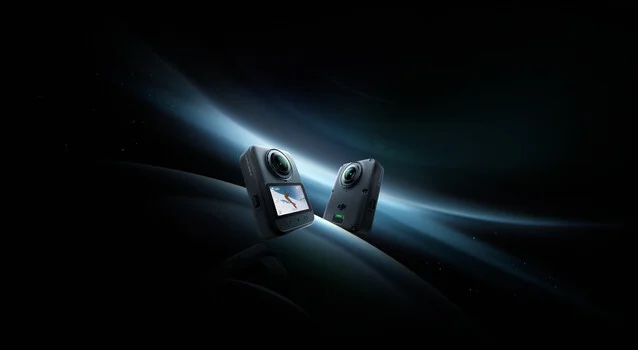
The landscape of 360-degree photography and cinematography has undergone a significant transformation with the launch of the DJI Osmo 360 II. Building upon over 12 years of specialized imaging expertise, this latest iteration from the drone and camera giant represents a calculated move to redefine what a compact, all-in-one panoramic device can achieve for professional creators. By integrating advanced sensor technology, AI-driven tracking, and an optimized post-production ecosystem, the Osmo 360 II effectively positions itself as a tool capable of replacing small-scale production crews for travel, lifestyle, and high-end commercial content creation.
A Legacy of Sensor Innovation
The foundation of the Osmo 360 II lies in the technological breakthroughs established by its predecessor and the specialized Avata 360 drone series. The original Osmo 360 was a market disruptor, introducing a bespoke square CMOS sensor that challenged the status quo. In traditional 360-degree cameras, circular lenses project light onto rectangular sensors, resulting in the waste of approximately 25% of the sensor’s surface area. DJI’s adoption of a dual square 1/1.1-inch sensor configuration maximizes the image field, allowing for native 8K resolution with exceptionally large 2.4μm pixels.
This design philosophy serves a practical purpose: the ability to crop into 360-degree footage without significant loss of clarity. In the context of modern social media and cinematic standards, where content must often be reframed for multiple aspect ratios—from 9:16 vertical mobile clips to 16:9 widescreen presentations—the resolution overhead provided by the square sensor architecture is a critical advantage. The Avata 360 further validated this hardware under rigorous field conditions, demonstrating that such high-fidelity sensors could maintain structural and imaging integrity even during high-speed aerial maneuvers and rapid transitions through narrow, complex environments.
Chronology of Development and Market Reception
The trajectory of DJI’s panoramic imaging technology accelerated rapidly between 2024 and 2026. The initial proof-of-concept phase, characterized by the experimentation with square CMOS integration, evolved into a reliable, high-performance product line. The unveiling of the Osmo 360 II at IFA 2026 marked a transition from a niche experimental product to a flagship production tool.
Following its debut in Berlin, the camera received significant industry recognition, securing 17 "Best of IFA" accolades. Major publications, including CNN Underscored, Tom’s Guide, Mashable, Gizmodo, Digital Trends, and Apple Insider, highlighted the device’s efficiency and image quality. This reception underscored a shift in consumer and professional demand: the market is no longer satisfied with simple 360-degree hobbyist cameras. There is a palpable demand for professional-grade optics, high dynamic range, and seamless workflow integration, all of which the Osmo 360 II addresses.
Technical Specifications and Imaging Capabilities
The Osmo 360 II is defined by a suite of hardware upgrades designed to tackle the limitations of small-form-factor cameras. Central to these improvements is the "SuperNight 2.0" engine, which utilizes advanced algorithms to suppress noise in low-light environments, ensuring that the 2.4μm pixels remain effective even when light levels are suboptimal.
Imaging Performance Metrics
- Dynamic Range: A significant expansion to 14.5 stops, allowing the sensor to capture detail in high-contrast scenes that would typically lead to blown-out highlights or crushed shadows.
- Resolution and Speed: Native 8K video capture at 30 frames per second, with the capability for Super Slow Motion output reaching up to 1920fps at 4K resolution (via AI-assisted frame interpolation and high-speed sensor capture).
- Color Depth: The implementation of 10-bit color depth across all recording modes provides a billion-color palette, essential for professional color grading workflows in environments like DaVinci Resolve.
- Timelapse: 360-degree timelapse capabilities now support resolutions up to 16K, providing immense detail for environmental storytelling.
These specifications are not merely aesthetic; they are functional requirements for creators operating in professional capacities. By providing 10-bit color and high dynamic range, DJI has aligned the Osmo 360 II with the requirements of professional colorists and post-production houses, effectively bridging the gap between "prosumer" gadgets and cinema-grade hardware.
Solving the "Solo Shooter" Dilemma
A recurring challenge in independent content creation is the reliance on a crew for camera operation, lighting, and framing. The Osmo 360 II addresses this through its proprietary "Spotlight Follow" mode. By leveraging onboard AI, the camera identifies and maintains a lock on a subject, regardless of how the physical device is rotated or moved. This feature effectively automates the role of a camera operator, allowing a single creator to capture complex, professional-looking movements without needing a second person to manage the shot.
Furthermore, DJI has focused on the "stitching problem"—the tendency for 360-degree images to show visible seams or misalignments, particularly when subjects are in close proximity to the lens. The third-generation stitching engine in the Osmo 360 II is the result of years of data accumulation, having been trained on thousands of images and spatial calibration datasets. This refinement is particularly evident in near-field scenarios, where the software-hardware synergy successfully hides the transition points between the two lenses.
Streamlining the Post-Production Workflow
The utility of a high-performance camera is often negated by a cumbersome workflow. DJI has mitigated this by integrating NFC connectivity with the updated Mimo app, allowing for rapid file transfers and immediate editing. For mobile creators, the app now includes automated features such as intelligent moment selection, smart transitions, and one-tap video generation.
For those requiring more granular control, the integration with professional non-linear editors (NLEs) is a critical development. DJI Studio provides a native plugin for DaVinci Resolve, allowing creators to import 360-degree files directly and maintain the full 10-bit data stream throughout the editing process. This ensures that the Osmo 360 II can be integrated into existing professional pipelines rather than forcing a reliance on proprietary mobile-only software.
Market Implications and Future Outlook
The launch of the Osmo 360 II occurs at a pivotal juncture in the imaging industry. As the demand for high-quality, short-form content for platforms like YouTube, Instagram, and TikTok continues to grow, creators are increasingly judged by their production value. The ability of a single individual to walk into an event or travel destination and produce footage that rivals a multi-camera setup is a significant competitive advantage.
From a technical standpoint, the Osmo 360 II is a testament to the maturation of 360-degree technology. By prioritizing "ready-to-shoot" readiness—exemplified by the 105 GB of internal storage and the "Instant Snapshot" mode—DJI is positioning the device as a reliable utility rather than a specialized toy. The camera is designed to be the first thing a creator reaches for when a moment presents itself, minimizing the setup time that often causes missed opportunities.
The broader implication for the industry is a shift in the standard for what is considered "professional." As AI-driven framing and advanced sensor technology become more accessible, the barrier to entry for high-quality content production continues to lower. The Osmo 360 II serves as an early indicator of a future where the hardware handles the technical complexities of light, stitching, and framing, leaving the creator to focus exclusively on narrative and composition.
As the Osmo 360 II begins to reach the hands of early adopters and professionals globally, its success will likely depend on the consistency of its firmware updates and the continued expansion of its software ecosystem. However, based on the current feature set and the successful track record of its predecessors, the device is well-positioned to remain a dominant force in the panoramic market for the foreseeable future. The integration of 8K resolution, 10-bit color, and AI-assisted production tools creates a compelling case for the Osmo 360 II as the definitive solution for the modern solo creator.