AMD’s next-gen 10-core ‘Medusa Point’ APU shows up on Geekbench again, with its best score yet —…

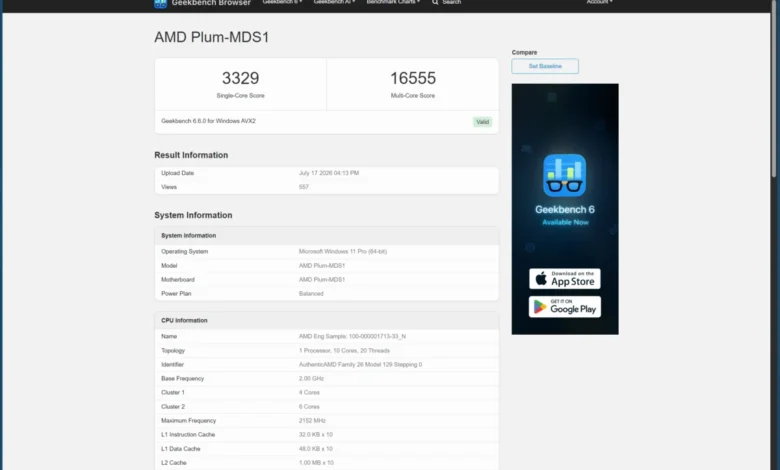
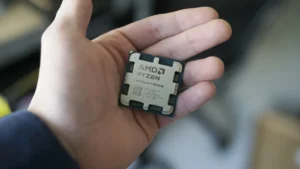
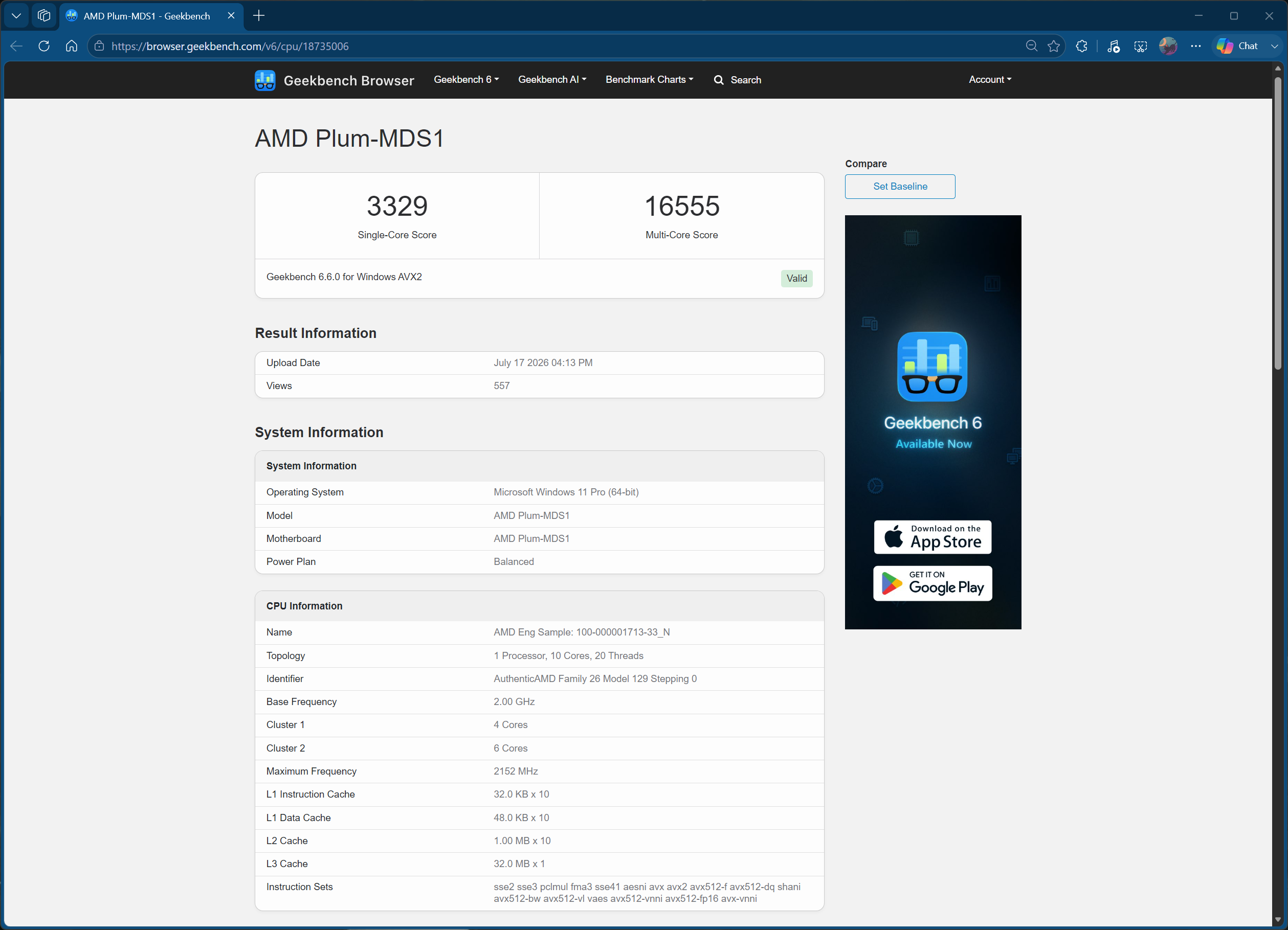
AMD is poised to significantly refresh its mobile processor lineup next year with the introduction of the Ryzen AI 500 series, codenamed "Medusa Point," based on the highly anticipated Zen 6 architecture. A recent Geekbench listing for a 10-core engineering sample from this upcoming mobile family has revealed exceptionally strong performance, posting scores that position it ahead of most existing mobile chips from both Intel and AMD in key metrics. The leaked benchmark shows a single-core score of 3,329 points and a multi-core score of 16,555 points, marking a substantial leap over previous iterations and even challenging some desktop-class processors. This development underscores AMD’s aggressive push into the burgeoning AI PC market and sets the stage for an intensely competitive landscape in 2025.
The Emergence of Medusa Point: A New Performance Benchmark
The specific SKU, identified as "AMD Eng Sample 100-000001713-33_N" and running on a platform dubbed "AMD Plum-MDS1," confirms previous sightings of this 10-core Medusa Point chip. What distinguishes this latest leak is the remarkable improvement in scores: the single-core result is nearly 5% higher, and the multi-core score shows an impressive 9.7% increase compared to earlier Geekbench entries for the identical engineering sample. This consistent upward trend in performance suggests ongoing optimization and refinement as the chip progresses towards its final release.
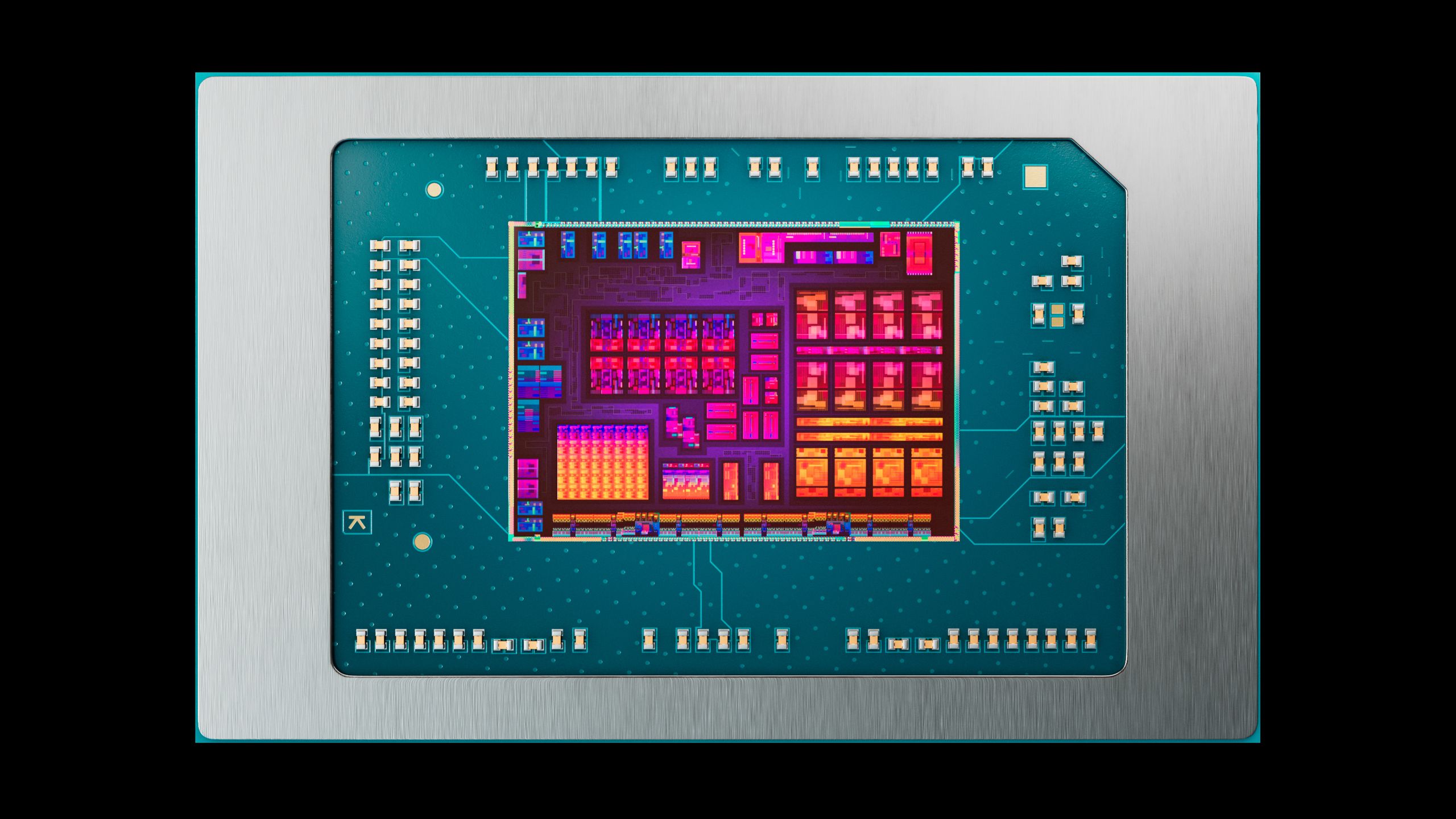
In the crucial single-core test, the Medusa Point sample achieved 3,329 points. This score places it in an elite category, outperforming every mobile processor currently offered by both Intel and AMD, with the sole exception of Qualcomm’s new Snapdragon X2 Elite lineup. The implications of this are significant, as single-core performance remains critical for many common applications, including web browsing, office productivity suites, and gaming. Furthermore, the Medusa Point chip’s single-core prowess brings it remarkably close to the performance of formidable desktop CPUs such as the AMD Ryzen 9 9900X and the Ryzen 7 9800X3D, both of which are high-end desktop parts featuring 12 and 8 cores respectively. This suggests that Zen 6 is bringing substantial Instructions Per Cycle (IPC) gains and efficient clock speed scaling to the mobile segment, potentially blurring the lines between mobile and desktop performance for everyday tasks.
The multi-core score of 16,555 points is equally compelling. For a 10-core mobile processor, this result positions Medusa Point directly alongside the Ryzen AI Max+ 390, a robust chip from AMD’s current Strix Halo lineup. When compared to its direct predecessor in the same core configuration, the Ryzen AI 9 365 (part of the Strix Point family), Medusa Point demonstrates a staggering 33% improvement in multi-core performance. This substantial generational uplift highlights the architectural efficiencies and scaling capabilities of the Zen 6 design, which are paramount for multitasking, content creation, and, crucially, the complex parallel processing demands of artificial intelligence workloads.
The Geekbench listing also provided more accurate clock speed details. While the base frequency is listed at 2.0 GHz, the boost frequency is now reported at a far more plausible 5.37 GHz. This aggressive boost clock, combined with a sophisticated cache hierarchy featuring 10MB of L2 cache and 32MB of L3 cache, indicates a design optimized for both burst performance and sustained operation. The combined cache tally of 42MB is a notable increase over the 34MB combined cache found in the current-generation Ryzen AI 9 465, suggesting a strategy to minimize latency and improve data access for more demanding applications.
AMD’s Strategic Vision: The Zen Architecture Evolution and AI PC Push
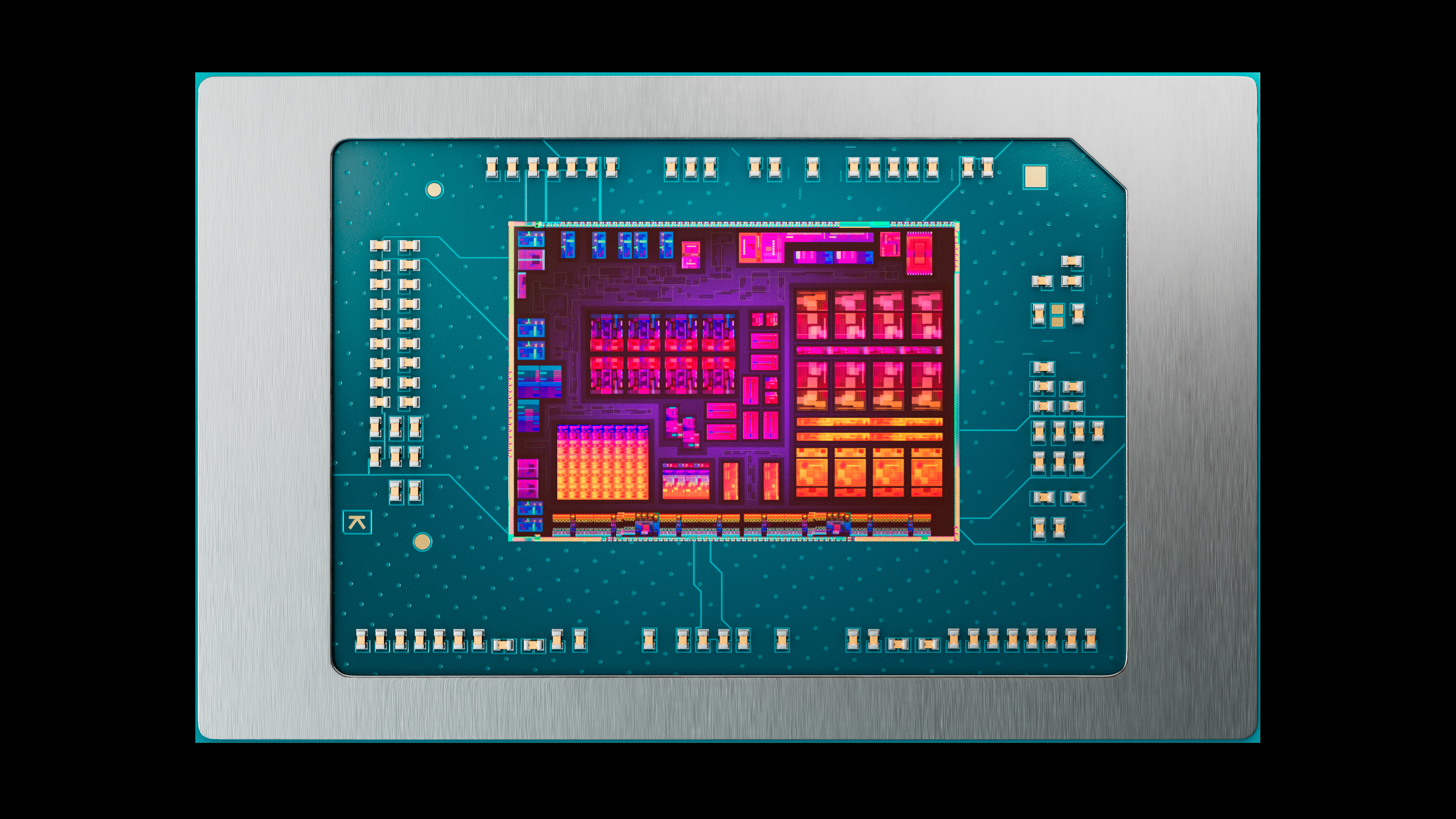
AMD’s commitment to continuous innovation is deeply rooted in its Zen architecture, which revolutionized the CPU market upon its debut in 2017. Each subsequent Zen generation has brought significant performance and efficiency improvements, allowing AMD to reclaim substantial market share in both desktop and server segments.
- Zen 1 (2017): Marked AMD’s return to high-performance CPUs, introducing a modular design (CCX) and competitive multi-core performance.
- Zen 2 (2019): Transitioned to a chiplet design, boosting core counts and efficiency, establishing AMD as a strong competitor across all segments.
- Zen 3 (2020): Refined the core design, delivering substantial IPC gains and solidifying AMD’s gaming performance.
- Zen 4 (2022): Introduced the AM5 platform, DDR5, PCIe 5.0, and a new NPU in mobile variants (Ryzen AI). This marked AMD’s official entry into the AI PC era with its XDNA architecture.
- Zen 5 (2024): Expected with significant IPC improvements and enhanced AI capabilities, forming the basis for Strix Point (Ryzen AI 300 series) and Strix Halo.
- Zen 6 (2025): The architecture underpinning Medusa Point, promised to deliver "expanded AI features" and further architectural advancements, including an "8-wide CPU core with strong vector capabilities." This refers to a wider front-end, enabling the processor to fetch and decode more instructions per clock cycle, significantly boosting parallel processing and overall throughput, which is crucial for modern AI and data-intensive tasks.
The Ryzen AI branding, first introduced with Zen 4c-based mobile processors, signifies AMD’s strategic focus on integrating powerful Neural Processing Units (NPUs) directly onto its APUs. These NPUs are designed to accelerate AI workloads locally on the device, offering benefits such as enhanced privacy (data doesn’t leave the device), lower latency, and reduced power consumption compared to cloud-based AI processing. Medusa Point, as a Zen 6-based chip, is expected to feature a significantly more powerful NPU, potentially exceeding the 50 TOPS (Tera Operations Per Second) found in current Ryzen AI 300 series processors. This enhanced NPU performance will be vital for driving the next generation of AI-powered applications, from real-time language translation and advanced image processing to intelligent virtual assistants and sophisticated creative tools.
Competitive Landscape: The AI PC Battle Heats Up
The strong showing of Medusa Point comes at a time when the AI PC market is rapidly intensifying, with major players vying for leadership.
- Intel: AMD’s long-standing rival, Intel, is also aggressively pursuing the AI PC segment. Following its current Meteor Lake (Core Ultra 1 series) processors, which feature integrated NPUs, Intel is preparing for Lunar Lake and then Panther Lake. Panther Lake, expected to utilize Intel’s advanced 18A process node, is positioned as Intel’s mainstream offering to directly compete with Medusa Point in 2025. Intel’s strategy involves integrating a new generation of CPU cores, enhanced graphics, and a more powerful NPU to deliver competitive AI performance.
- Qualcomm: A formidable newcomer in the Windows PC space, Qualcomm has made significant strides with its Snapdragon X Elite and X Plus processors. These ARM-based chips have demonstrated exceptional single-core performance in some benchmarks, often surpassing current x86 offerings. The Snapdragon X2 Elite, in particular, leads Medusa Point in single-core scores in the Geekbench tables provided, highlighting the ongoing architectural battle between ARM and x86. Qualcomm’s entry marks a significant shift, offering high power efficiency and strong performance, particularly for AI workloads optimized for its Hexagon NPU.
- High-End Mobile: While Medusa Point is positioned as AMD’s mainstream mobile offering, the article alludes to even higher-end CPUs on the horizon. Intel’s Nova Lake mobile and AMD’s own "Gator Range" (potentially Ryzen 10000 series) are expected to cater to the premium and enthusiast segments, likely featuring even higher core counts and maximum performance. This layered product strategy ensures that both companies address a wide spectrum of market needs, from thin-and-light productivity laptops to powerful mobile workstations.
Broader Implications and Market Outlook
The impressive performance of the Medusa Point engineering sample carries significant implications for AMD, its competitors, and ultimately, the end-user.
- For AMD: These leaked benchmarks validate AMD’s Zen 6 architectural direction and its aggressive roadmap. Achieving near-desktop single-core performance in a mobile chip is a major competitive advantage, especially if coupled with good power efficiency. It positions AMD strongly against Intel’s mainstream offerings and helps solidify its "Ryzen AI" brand as a leader in on-device AI acceleration. This could translate into increased market share in the lucrative laptop segment, a critical battleground for processor manufacturers.
- For Intel: Medusa Point’s strong showing will undoubtedly intensify pressure on Intel to deliver compelling performance with Panther Lake. The competition from both AMD and Qualcomm means Intel cannot rest on its laurels and must ensure its 18A process and new core designs translate into real-world advantages. The "AI PC" narrative is central to Intel’s future strategy, and Medusa Point suggests AMD will be a formidable opponent in this space.
- For Qualcomm: While Snapdragon X2 Elite currently holds a lead in single-core performance, Medusa Point’s scores demonstrate that x86 architecture is far from stagnant. The ongoing performance improvements from AMD and Intel will ensure that Qualcomm must continue to innovate rapidly to maintain its competitive edge, particularly in multi-core performance where x86 has traditionally excelled. The "Windows on ARM" ecosystem will also need to mature further to fully capitalize on Qualcomm’s hardware advantages.
- For Consumers: This heightened competition is unequivocally good news for consumers. It drives innovation, leads to more powerful and energy-efficient laptops, and offers a wider array of choices. The promise of faster processors means smoother multitasking, quicker application launches, and, most importantly, a richer and more responsive experience with AI-powered features. From advanced photo and video editing capabilities to more natural voice interactions and smarter personal assistants, the next generation of laptops equipped with chips like Medusa Point will fundamentally change how users interact with their devices. The battle for the "AI PC" crown will result in machines that are not just faster, but genuinely smarter and more capable.
As 2025 approaches, the technology community will eagerly anticipate further details and official announcements regarding Medusa Point and the broader Ryzen AI 500 series. These preliminary benchmarks paint a picture of a highly competitive and innovative future for mobile computing, with AMD firmly establishing itself as a frontrunner in the race to deliver the ultimate AI PC experience. The architectural leap with Zen 6 appears to be delivering on its promise, setting the stage for a thrilling year in processor development.