Mercedes-Benz EQS 450+ Smashes Range Expectations with 539-Mile Real-World Test

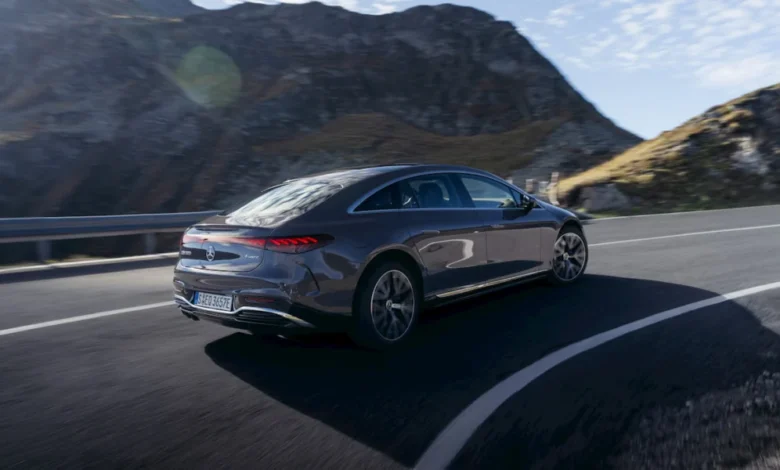
The landscape of electric mobility has reached another significant milestone as the overhauled 2027 Mercedes-Benz EQS 450+ demonstrated unprecedented real-world efficiency during recent industry benchmark evaluations. In rigorous testing conducted by automotive analysts at Edmunds, the luxury electric sedan achieved an astounding 539 miles of continuous driving on a single charge, completely redefining the boundaries of battery-electric vehicle (BEV) endurance. This performance not only outpaced the vehicle’s official Environmental Protection Agency (EPA) estimate by a substantial 72 miles, but it also secured its position as the longest-range electric sedan ever evaluated by the publication.
As automakers race to eliminate consumer hesitation surrounding long-distance travel, this engineering feat underscores a rapid evolution in battery chemistry, thermal management systems, and high-voltage electrical architectures. The latest iteration of the EQS arrives at a critical juncture for the luxury automotive sector, where range capability and rapid replenishment times serve as primary differentiators in an increasingly competitive marketplace.
Engineering Overhaul and Technical Specifications
The foundation of the 2027 Mercedes-Benz EQS 450+’s remarkable endurance lies in a comprehensive mechanical and electrical redesign. Mercedes-Benz engineers transitioned the flagship sedan to an advanced 800-volt electrical architecture, moving away from the conventional 400-volt systems that dominated previous generations. This shift enables higher continuous power delivery, reduced thermal losses during high-output operations, and significantly accelerated charging capabilities.

At the heart of this powertrain is a newly developed 122 kWh high-capacity battery pack. Official EPA testing protocols attribute an impressive 467-mile range to this configuration. However, real-world evaluations frequently capture nuances in aerodynamic efficiency, regenerative braking calibration, and drivetrain optimization that standardized laboratory tests cannot fully replicate.
During the Edmunds EV Range Test—a standardized procedure consisting of 60 percent city and 40 percent highway driving with an average speed of 40 mph and climate control engaged at a steady 72 degrees Fahrenheit—the EQS 450+ demonstrated superior energy consumption figures. The vehicle consumed only 29.6 kWh per 100 miles, improving upon its official EPA efficiency rating of 28 kWh per 100 miles. For context, the predecessor 2025 model year EQS 450+ managed 464 miles on a single charge while consuming 34 kWh per 100 miles during identical testing conditions, highlighting a generational leap in total system efficiency of roughly 13 percent.
Benchmarking Against Industry Competitors
The milestone achieved by the Mercedes-Benz flagship alters the competitive hierarchy among long-range electric vehicles. By clearing the 500-mile hurdle in everyday driving scenarios, the EQS 450+ surpasses notable early pioneers in ultra-long-range engineering, including various configurations of the Lucid Air, which historically held top honors among low-slung sedans.
Presently, within the comprehensive database of standardized real-world testing, the only passenger vehicle to outdistance the new EQS is the Cadillac Escalade IQ, which registered 558 miles on a single charge. However, that performance relies upon a vastly larger, truck-class 205 kWh battery pack, emphasizing the superior aerodynamic and mass-efficiency profile achieved by the Mercedes-Benz sedan design.

Concurrently, broader industry testing demonstrates a wider trend of over-delivery relative to official ratings. In parallel evaluations conducted during the same testing window, the 2027 BMW iX3 50 xDrive exceeded its EPA estimate of 392 miles by covering 436 miles on a single charge, while maintaining an energy consumption rate of 28.3 kWh per 100 miles. Additional vehicles assessed during the cycle included the 2027 Volvo EX60, which achieved 352 miles, and the new 2027 Mercedes-Benz GLC Electric, which recorded 392 miles. These synchronized results indicate that modern thermal management and inverter technologies are yielding systemic improvements across multiple automotive segments simultaneously.
Charging Infrastructure and Replenishment Rates
Beyond sheer range capacity, the transition to an 800-volt electrical framework has fundamentally transformed the refueling experience for owners of the updated EQS. High-voltage architecture permits sustained high-power intake without triggering aggressive thermal throttling, a limitation that historically plagued earlier generation electric vehicles during DC fast-charging sessions.
During evaluation cycles, the 2027 EQS 450+ demonstrated a peak charging rate of 350 kW, exactly aligning with the manufacturer’s engineering projections. More critically, the vehicle sustained an impressive average charging rate of 222 kW throughout the replenishment curve. By comparison, the preceding model generation achieved a peak charging rate of 208 kW and sustained an average of only 175 kW.
Translated into practical metrics, the updated charging performance allows the vehicle to replenish approximately 825 miles of range in a

single hour of connection time. For shorter stops, the sedan can recover 100 miles of driving range in just over seven minutes—effectively cutting the replenishment duration of previous iterations in half. This performance bridges the operational gap between internal combustion vehicles and electric alternatives, offering long-distance travelers the ability to execute rapid, seamless highway pit stops.
Consumer Psychology and the Evolution of Range Anxiety
The introduction of vehicles capable of traveling well over 500 miles on a single charge arrives amid shifting consumer perceptions regarding electric mobility. Industry research consistently highlights a dichotomy between daily driving habits and consumer purchasing requirements.
According to nationally representative data compiled by automotive analysts and survey groups, the vast majority of daily commutes require minimal energy expenditure. Approximately 73 percent of drivers indicate that a daily driving range between 25 and 75 miles adequately covers their routine transit requirements. Nevertheless, psychological barriers persist; roughly 42 percent of prospective buyers state they would demand an absolute minimum range capability of 300 miles before considering a transition to a fully electric platform.
Automotive market researchers suggest that ultra-long-range models like the EQS 450+ serve an important psychological function by neutralizing long-distance anxiety, even if the vehicle’s maximum capacity is rarely exhausted during typical weekly routines. Furthermore, expanding public charging networks and the proliferation of high-output chargers continue to reinforce consumer confidence. Survey metrics indicate that 53 percent of potential buyers would view electric vehicles with significantly higher favorability if infrastructure could consistently deliver 150 miles of range in approximately 10 minutes—a threshold that the updated EQS architecture successfully clears.

Broader Economic and Industrial Implications
The commercial success of high-efficiency, long-range luxury sedans carries significant implications for the wider automotive supply chain. As manufacturers refine battery chemistry, optimize inverter efficiency, and adopt silicon-carbide components, the mass-to-energy ratio of electric powertrains continues to improve.
While flagship models such as the EQS showcase bleeding-edge engineering, the underlying technological advancements invariably filter down into higher-volume, mainstream vehicle segments over subsequent model years. Reduced energy consumption per mile directly translates to smaller required battery capacities for equivalent ranges, which in turn lowers production costs, conserves critical raw materials like lithium and cobalt, and ultimately drives down vehicle acquisition costs for broader consumer demographics.
The ability of luxury electric sedans to surpass 500 miles in real-world conditions signifies that range anxiety is transitioning from a legitimate mechanical limitation to a historical relic of early-generation EV development. As charging speeds accelerate and infrastructure matures, the automotive industry moves steadily toward a paradigm where electric vehicle utility matches—and in many operational metrics exceeds—that of traditional internal combustion competitors.
Related posts: