LTTStore TrueSpec cables finally solve the persistent mystery of USB-C hardware performance specifications

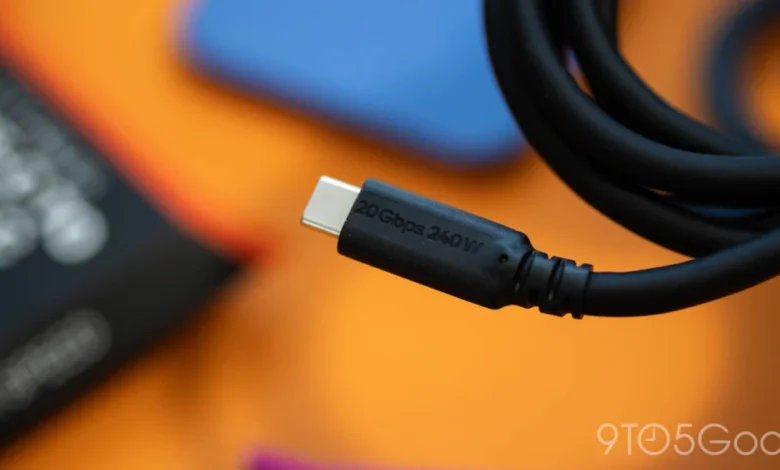
The evolution of the Universal Serial Bus (USB) standard has been marked by a significant dichotomy: while the physical USB-C connector has successfully achieved near-ubiquity across smartphones, laptops, tablets, and gaming peripherals, the underlying capabilities of these cables remain notoriously opaque to the average consumer. For years, the market has been flooded with cables that share identical physical aesthetics but possess vastly different electrical and data-transfer architectures. A solution to this industry-wide ambiguity has recently emerged from an unconventional source, as LTTStore—the merchandise arm of the Linus Tech Tips media organization—has introduced its "TrueSpec" line of USB-C cables, which feature prominent, laser-etched labels detailing their specific power and data transfer thresholds.
The Problem of Standardized Ambiguity
Since the introduction of the USB-C connector, the industry has struggled with a "specification gap." USB-C is a physical interface standard, not a functional one. A single cable may support USB 2.0 data speeds (480 Mbps) and minimal power delivery, while another—physically indistinguishable—might support USB 4.0 data throughput (up to 40 Gbps or 80 Gbps) and 240W Power Delivery (PD) 3.1 charging.
This lack of visual differentiation has led to widespread consumer confusion. Historically, manufacturers have often opted for minimalist, unbranded designs that prioritize aesthetics over utility. Without distinct markings, a user attempting to charge a high-performance workstation laptop with a cable intended for low-power mobile devices may experience "slow charging" warnings or, in more extreme scenarios, hardware performance throttling. This issue is compounded in professional and creative environments where the wrong cable can bottleneck high-speed SSD transfers or prevent the operation of 4K or 8K external displays.
![It took way too long for someone to make USB-C cables that say what they can actually do [Gallery]](https://9to5google.com/wp-content/uploads/sites/4/2026/09/ltt-truespec-cables-1.jpg?quality=82&strip=all&w=1600)
A Chronology of the USB-C Specification Struggle
The journey toward a more transparent cable ecosystem has been slow and often hindered by the rapid iteration of the USB Implementers Forum (USB-IF) standards:
- 2014: The USB-C connector is officially introduced, promising a "reversible" and "universal" future.
- 2016–2019: The proliferation of USB-C leads to a market saturation of non-compliant or "mystery" cables, many of which fail to meet advertised speeds or power standards, leading to occasional reports of device damage.
- 2021: The USB-IF attempts to standardize consumer-facing marketing, introducing "Certified USB" logos, though adoption among third-party accessory manufacturers remains inconsistent.
- 2024–2025: Regulatory pressure from the European Union, which mandated a common charging port for mobile devices, forces a renewed conversation regarding cable interoperability and safety.
- 2026: LTTStore introduces the TrueSpec line, marking a shift toward permanent, physical labeling of cable capabilities directly on the hardware.
Data-Driven Performance and Design
The TrueSpec initiative centers on the principle of "self-documentation." By laser-etching the power rating (e.g., 100W, 240W) and data transfer speed (e.g., 10Gbps, 40Gbps) onto the connector housing, the cables provide an immediate reference point for users.
From an engineering perspective, the implementation of such labels addresses the "guesswork" that has historically plagued the peripheral market. Current industry data suggests that nearly 40% of consumer-level tech support inquiries regarding "failed" device connectivity or charging speeds are directly attributed to the use of incompatible or under-specced cables. By eliminating the need for digital testing or manual tracking of individual cables, TrueSpec-style labeling acts as a passive diagnostic tool.
While the build quality of these cables, characterized by heavy-duty rubber sheathing, offers durability, it introduces a trade-off in portability. The increased mass and volume of high-specification, shielded cables often conflict with the modern consumer desire for lightweight, minimalist tech kits. However, industry analysts note that the trade-off is often necessary to prevent electromagnetic interference (EMI) at higher data transfer speeds.
![It took way too long for someone to make USB-C cables that say what they can actually do [Gallery]](https://9to5google.com/wp-content/uploads/sites/4/2026/09/ltt-truespec-cables-2.jpg?quality=82&strip=all&w=800)
Official Guidelines and Industry Response
The USB-IF has, for years, provided documentation—such as the USB Type-C Cable and Connector Specification—that encourages manufacturers to include clear labeling. However, these guidelines are frequently treated as voluntary suggestions rather than mandates.
Larger OEMs, such as Lenovo and Apple, have experimented with color-coding or subtle markings, yet these efforts often remain proprietary. The TrueSpec approach is notable not because it is technologically groundbreaking, but because it represents a high-visibility, third-party adoption of best practices that the broader industry has failed to implement consistently.
Industry experts suggest that the success of such products may force a "market standard shift." As consumers become accustomed to identifying cable specs at a glance, manufacturers who continue to ship unlabelled, ambiguous cables may face increased scrutiny. The expectation is that, over the next 24 to 36 months, more accessory brands will move toward permanent labeling to compete with the transparency offered by this new category of "pro-consumer" cables.
Broader Implications for Hardware Maintenance
Beyond simple connectivity, the rise of "true specification" hardware extends to the maintenance of consumer electronics. The use of high-quality, spec-compliant cables is essential for the longevity of lithium-ion batteries. Inconsistent power delivery, often caused by degraded or non-compliant cables, can lead to uneven charging cycles, which are a primary contributor to "spicy pillows"—the industry term for swollen, failing smartphone batteries.
![It took way too long for someone to make USB-C cables that say what they can actually do [Gallery]](https://9to5google.com/wp-content/uploads/sites/4/2026/09/ltt-screwdrivers.jpg?quality=82&strip=all)
The integration of professional-grade tools—such as precision screwdriver kits—alongside these cable solutions reflects a growing movement toward the "Right to Repair" and improved device longevity. By providing users with the tools to both connect their devices safely and maintain them physically, companies are catering to a more technically literate consumer base that prioritizes sustainability and hardware lifespan over the frequent replacement of devices.
Economic and Market Outlook
The pricing model for these cables—ranging from approximately $17 to $22—places them in the premium tier of the accessory market. This price point reflects the cost of high-quality materials and, significantly, the R&D required to ensure that each cable adheres strictly to the advertised specifications.
While budget-conscious consumers may continue to opt for cheaper, unbranded alternatives, the professional and enthusiast markets are showing a clear trend toward "spec-assured" accessories. The long-term implication is a bifurcation of the USB-C market: one segment dominated by low-cost, disposable cables for basic charging, and a second, more stable segment of verified, labeled cables designed for high-performance data and power delivery.
As the industry moves toward 2027 and beyond, the success of initiatives like TrueSpec will likely be measured by how quickly these labeling standards are adopted by the major retailers and accessory OEMs. If the current trajectory continues, the "wild west" era of USB-C may finally be coming to a close, replaced by a more transparent, standardized, and user-friendly ecosystem. The burden of knowledge is shifting from the consumer, who previously had to research and track specifications, to the manufacturer, who is now being held accountable for clearly communicating the capabilities of their hardware at the point of use.