Farwave transforms the global audio landscape through immersive 3D planetary exploration

In an era where digital content consumption is often confined to algorithmic feeds and static library lists, a new application titled Farwave is attempting to redefine the user experience by grounding audio discovery in a spatial, globe-spanning interface. Farwave, which recently debuted on the Apple App Store, leverages 3D visualization to allow users to navigate live radio broadcasts, podcasts, and personal music libraries as if they were exploring a digital cosmos. This shift from list-based interfaces to an interactive, spherical model marks a significant departure from standard media players, signaling a growing trend in software design that prioritizes discovery and exploration over passive consumption.
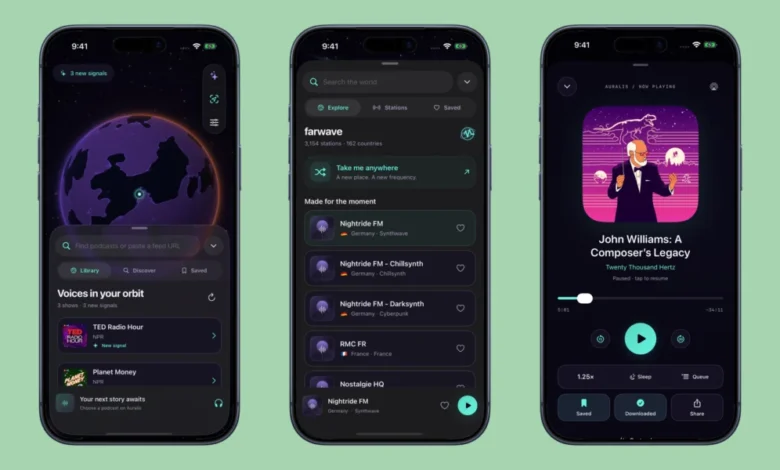
The application’s primary interface functions as a digital globe. By rotating this 3D model, users can pinpoint specific geographic regions to access local radio stations, effectively turning the smartphone into a global receiver. This spatial approach to audio is not merely an aesthetic choice; it serves to recontextualize the global nature of radio, transforming the act of tuning in from a mechanical search into a sensory-driven journey.
Chronology of Audio Discovery Evolution
The history of audio discovery has moved through distinct technological phases, each defining how listeners engage with the medium. In the mid-20th century, radio was constrained by the physical range of terrestrial transmitters, tethering listeners to the immediate geography of the broadcast signal. The arrival of the internet in the late 1990s and early 2000s broke these physical barriers, leading to the rise of web-based directories like TuneIn and Radio Garden. These services provided access to thousands of global stations but were largely relegated to two-dimensional, grid-based catalogs or map-pin overlays.
Farwave represents the latest iteration in this timeline. By integrating high-fidelity 3D rendering—a feature made possible by the increased graphical processing power of modern iPhones and iPads—the app moves beyond the map-pin paradigm. It allows for a more fluid interaction where the physical act of "traveling" across the globe is synchronized with the audio feed. For developers in the indie space, this represents a pivot toward "experiential software," where the UI is intended to be as engaging as the content it delivers.

Functional Architecture and Feature Set
At its core, Farwave is structured into three distinct spheres: Radio, Podcasts, and Music. Each category is represented by its own visual planet, ensuring that the user’s interface remains organized while maintaining a cohesive, science-fiction-inspired aesthetic.
The Radio sphere is the app’s flagship feature. It provides an unfiltered window into the world’s radio infrastructure. A "Take me anywhere" function serves as a stochastic discovery tool, allowing users to bypass geographic browsing in favor of a randomized global station selection. This randomness mimics the serendipity of traditional analog radio tuning, where a listener might stumble upon a language or musical genre they would not have otherwise sought out in a curated playlist.
The Podcast and Music segments operate with a different logic. Within the Podcast sphere, the app facilitates traditional RSS-based discovery. Users can search for specific programs or manually add feeds. The technical implementation here includes support for offline downloads, adjustable playback speeds, and a robust queuing system, catering to the needs of power users who require reliable, offline-capable performance.
The Music sphere, while distinct from streaming services like Apple Music or Spotify, serves a niche for audiophiles who prefer to curate their own libraries. By allowing users to import audio files directly from the Files app or a connected computer, Farwave treats local music as a personal data archive. Each artist and album is mapped to the "Music" planet, ensuring that the user’s offline collection is visualized in the same spatial format as global radio broadcasts.
Technical and Market Implications
The decision to avoid integration with major streaming giants like Apple Music is a strategic limitation that defines the app’s target demographic. By focusing on manual file imports and RSS feeds, Farwave positions itself as a tool for the "sovereign listener"—someone who prioritizes data privacy, file ownership, and a non-algorithmic listening experience.

From an industry perspective, the rise of apps like Farwave highlights a growing fatigue among users regarding the "recommendation engine" era. Modern streaming platforms rely heavily on proprietary algorithms to predict and dictate user tastes. In contrast, Farwave returns control to the user, emphasizing manual discovery and spatial orientation. Data suggests that niche audio applications—particularly those focused on global radio and high-quality podcast management—are seeing a resurgence as users seek to diversify their media consumption habits beyond the echo chambers created by mainstream recommendation algorithms.
The application’s technical requirements reflect its high-end visual design. It requires iOS 18 or later, which indicates a reliance on the latest Metal graphics frameworks provided by Apple. This performance-first requirement allows for the smooth, low-latency 3D rendering that defines the user experience, ensuring that the globe rotates with the responsiveness expected of a modern interactive tool.
Economic Model and Accessibility
Farwave employs a freemium model that is increasingly common in the independent developer community. The basic version, available for free on the App Store, provides access to the primary radio discovery features. To unlock the full suite—including the podcasting infrastructure, music library imports, and enhanced playback controls—users must subscribe to FarWave Pro. The pricing structure, set at $2.99 per month or $14.99 per year, positions the app as an affordable utility for users who value a distraction-free and highly customizable audio environment.
This subscription model is crucial for independent developers, as it provides a predictable revenue stream necessary for the ongoing maintenance of server-side data for radio stations and the continuous updates required to keep pace with Apple’s annual iOS release cycle. Unlike massive corporate-backed streaming services that rely on advertising data or platform-wide subscriptions, Farwave’s model is predicated on a direct value exchange between the developer and the end-user.
Impact on the Indie Developer Ecosystem
The emergence of Farwave serves as a case study for the current health of the indie app ecosystem. Despite the dominance of tech conglomerates, individual developers are successfully identifying gaps in the market—specifically in UI/UX innovation. While major platforms are often slow to iterate on their interfaces due to the massive scale of their user base, indie apps are capable of taking risks with radical interface designs like the 3D planetary model.

The industry at large has taken note of this trend. Analysts suggest that the next wave of successful consumer applications will likely be defined by "interface-first" innovation, where the way a user interacts with data is just as important as the data itself. Farwave’s success, or lack thereof, will be a bellwether for whether the mainstream market is ready to embrace more abstract, spatial UI designs in daily-use productivity and media applications.
As mobile hardware continues to evolve, incorporating more advanced augmented reality and spatial computing capabilities, apps that have already transitioned to 3D interfaces—like Farwave—will be better positioned to adapt to future hardware shifts. Whether through future integration with vision-based operating systems or continued refinement of the touch-based 3D interface, Farwave represents a deliberate effort to make digital audio feel more tangible and, ultimately, more human.
In conclusion, Farwave is not simply a radio player; it is a re-imagining of how we relate to the soundscape of our world. By replacing the flat, list-oriented interfaces of the past with an interactive, spatial environment, it offers a refreshing alternative to the algorithmic status quo. For those seeking to reclaim the sense of wonder associated with discovery, Farwave provides a sophisticated, well-engineered, and visually striking platform that elevates the simple act of listening into an immersive, global experience.