Best-in-Class Cooling: A Comprehensive Analysis of the Top Air Conditioners Tested and Evaluated for 2024

The landscape of residential climate control has undergone a significant transformation over the last five years, driven by a convergence of stricter energy regulations, the integration of smart home ecosystems, and a shift in consumer demand toward specialized cooling solutions. As global temperatures continue to fluctuate and urban heat islands intensify, the necessity for efficient, reliable, and adaptable air conditioning has never been more acute. In an extensive series of real-world evaluations, a diverse range of models—from budget-friendly window units to high-tech portable systems designed for off-grid use—were rigorously tested to determine their efficacy, noise levels, and overall value in the modern market.
The Evolution of Residential Cooling Technology
The cooling industry is currently in the midst of a technological pivot. Historically, window and portable air conditioners were characterized by high energy consumption and disruptive noise levels. However, the introduction of inverter technology has revolutionized the category. Unlike traditional compressors that operate on an "all-or-nothing" basis—turning on at full power and then shutting off once a temperature threshold is reached—inverter-driven compressors can vary their speed. This allows for more precise temperature maintenance, significantly reduced noise, and a higher Combined Energy Efficiency Ratio (CEER).
This technological shift is mirrored in the aggressive market entry of electronics giants like TCL. Known primarily for its dominance in the television sector, TCL has spent the last half-decade applying its high-volume, high-value manufacturing model to air conditioning. This strategy has forced established legacy brands to innovate more rapidly, particularly in the realm of "Smart" connectivity, where Matter—a universal smart home standard—is beginning to replace proprietary apps, albeit with varying degrees of success.
Window Units: Balancing Performance and Value
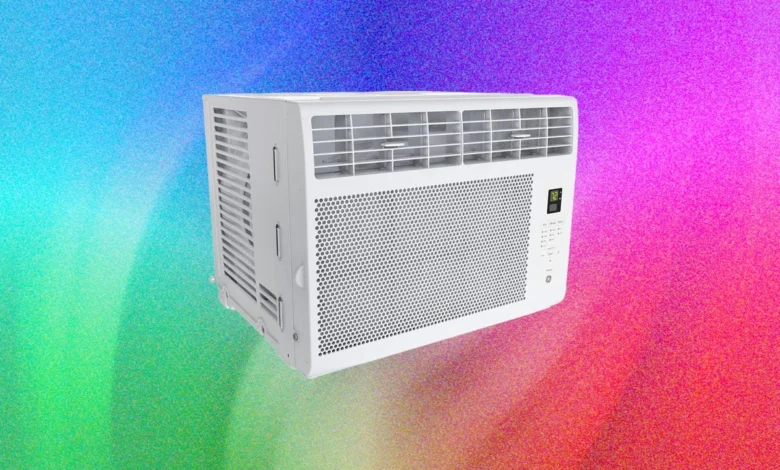
For many homeowners and renters, the window-mounted air conditioner remains the gold standard for efficiency and space-saving. Among the most notable performers in recent testing is the TCL Q-Series 10,000 BTU unit. Priced at approximately $369, it represents a direct challenge to premium models. In a controlled test within a 120-square-foot upstairs bedroom—a space typically underserved by central HVAC systems—the Q-Series demonstrated its capability by dropping the ambient temperature from 78 degrees to 68 degrees in three hours. While its 60-decibel operating volume is audible, it is considered acceptable for a unit of its power class.
The TCL unit’s CEER rating of 15.0 places it at the top of its class, equaling the efficiency of the highly-regarded Midea U-Shaped model while retailing for significantly less. However, testing revealed that the TCL unit still struggles with the nascent Matter connectivity standard, highlighting a broader industry trend where hardware often outpaces the software intended to control it.
For consumers with more modest needs or tighter budgets, the GE AWAS05BBA 5,000 BTU unit offers a functional, no-frills solution. Retailing for $231, it lacks remote control and smart app integration, and its airflow is limited to horizontal adjustments. Despite these limitations, it proved surprisingly quiet and efficient for small spaces up to 150 square feet. This unit represents the "budget" tier of the market, where reliability and low entry cost are prioritized over advanced features.
In contrast, the LG 12,000 BTU Smart Window unit is designed for larger living areas, capable of cooling up to 550 square feet. At $379, it offers substantial power-to-price value, though its 90-pound weight necessitates professional installation and dedicated mounting brackets. While its white-on-white aesthetic allows it to blend into modern interiors, testing indicated that its proprietary app remains laggy, suggesting that even major manufacturers are still refining their digital interfaces.
Premium Solutions and Security-Focused Engineering
At the high end of the window unit spectrum is the Friedrich Kuhl series. With a price point exceeding $1,200, this unit is not intended for the casual consumer but rather for those seeking longevity, air purity, and security. The Friedrich Kuhl features a heavy-duty metal chassis, which serves a dual purpose: it allows for easier maintenance access and provides a robust deterrent against break-ins for residents on the ground floor.
Beyond security, the Kuhl model emphasizes health, allowing for the integration of MERV 13 filtration—a standard typically reserved for high-end central air systems. This allows the unit to scrub the air of fine particulates and allergens while cooling. Despite its premium build, it is not immune to the connectivity issues plaguing the industry, as its smart app currently only supports 2.4 GHz signals, which can be a bottleneck in modern dual-band or mesh Wi-Fi environments.

The New Generation of Portable Air Conditioners
The portable air conditioner market has long been criticized for inefficiency due to the "negative pressure" effect, where single-hose units exhaust indoor air outside, inadvertently pulling warm air into the room through cracks and gaps. The latest generation of portables, such as the Dreo 740S (10,000 BTU), addresses this through dual-hose configurations and smart inverter technology.
Priced at $700, the Dreo 740S achieved a 12 CEER rating, which is exceptional for a portable unit. Its evaporative cooling technology eliminates the need for frequent manual drainage, a common pain point for older models. Portable units have become a vital solution for solo residents who cannot safely lift heavy window units or for those living in buildings with non-standard window shapes, such as casement or slider windows. While the Dreo is bulky, its ability to provide "instant" cooling in difficult-to-access spaces like home offices makes it a top contender in the portable category.
Specialized and Off-Grid Cooling Solutions
A burgeoning niche in the market involves ultra-portable, battery-powered units designed for camping, vans, or emergency use. The EcoFlow Wave 2, retailing for $1,299, is a leader in this space. Offering 5,100 BTUs of cooling and 6,100 BTUs of heating, it is a versatile year-round tool. Its ability to run off a standard AC outlet, an add-on battery, or solar panels provides a level of independence previously unavailable in the cooling market.
Similarly, the Zero Breeze Mark II and Mark III units cater to the outdoor enthusiast. The Mark II, at 2,300 BTUs, is lightweight (17 pounds) and optimized for small, enclosed spaces like tents. The newer Mark III increases the cooling power to 5,280 BTUs but also increases the weight to 22 pounds. These units represent a shift toward "lifestyle" cooling, where the goal is not to chill a large room but to provide a "cool zone" in environments where traditional power is unavailable.
Technical Data and Consumer Guidance: Navigating BTUs and Efficiency
Selecting the correct air conditioner requires an understanding of two primary metrics: BTUs (British Thermal Units) and CEER. BTUs measure the heat-removal capacity of the compressor. The general rule of thumb provided by the US Department of Energy is 20 BTUs for every square foot of living space. However, this is a baseline; factors such as ceiling height, insulation quality, and solar gain (sunlight exposure) can increase the requirement by up to 25%.
| Room Size (Sq. Ft.) | Recommended BTU |
|---|---|
| 100 – 150 | 5,000 |
| 150 – 250 | 6,000 |
| 250 – 350 | 8,000 |
| 350 – 450 | 10,000 |
| 450 – 550 | 12,000 |
The CEER rating is equally critical for long-term cost management. As energy prices rise, the difference between a unit with a 9.0 CEER and one with a 15.0 CEER can manifest as hundreds of dollars in annual savings on utility bills. Consumers are increasingly encouraged to look for the Energy Star certification, which ensures the unit meets specific efficiency benchmarks set by the federal government.
Broader Market Impact and Environmental Implications
The proliferation of high-efficiency, localized cooling units has significant implications for urban planning and energy grids. As more households adopt room-specific cooling rather than whole-house central air, peak energy demand may become more manageable, provided the units are of high efficiency. Furthermore, the industry is under pressure to transition to refrigerants with lower Global Warming Potential (GWP), such as R-32, which is becoming the standard in newer models from LG and TCL.
However, the "smart" revolution in cooling remains a work in progress. While the promise of scheduling AC use via a smartphone to save energy is enticing, the reality often involves "janky" app interfaces and connectivity hurdles. The industry’s move toward the Matter standard is a positive step toward interoperability, but as testing of the TCL and Friedrich units showed, hardware manufacturers still have significant work to do to ensure a seamless user experience.
In conclusion, the 2024 cooling market offers a solution for nearly every scenario, provided the consumer is willing to balance the trade-offs between initial cost, energy efficiency, and feature sets. Whether it is the budget-conscious GE, the high-value TCL, or the off-grid versatility of the EcoFlow, the modern air conditioner is no longer just a luxury—it is a sophisticated piece of environmental engineering essential for navigating an increasingly warmer world.