Google AI Ultra subscribers gain access to Genie 4 and advanced interactive world-building tools through Project Genie.

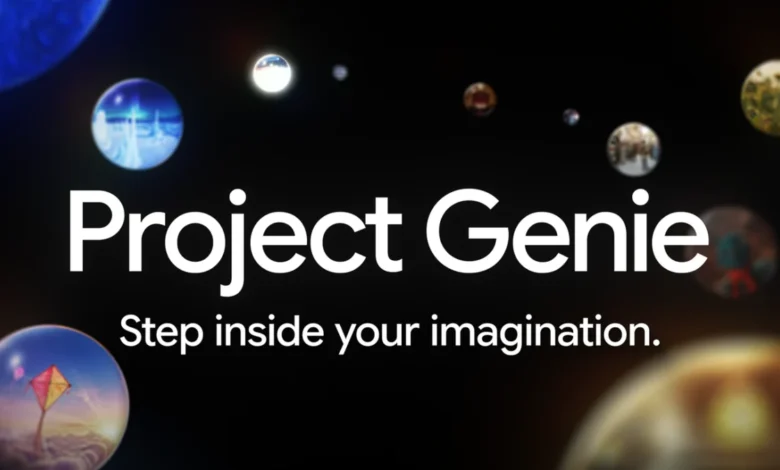
The landscape of generative artificial intelligence and interactive digital media has reached a significant milestone with the official rollout of Project Genie’s latest platform update. Spearheaded by Diego Rivas, Group Product Manager at Google DeepMind, and Pavan Kumar, Group Product Manager at Google Labs, the revamped experience brings together cutting-edge frontier world models and Google’s suite of multimodal Gemini architectures. This integration allows users to transition from passive consumers of digital media to active architects of complex, real-time simulated environments directly within their web browsers.
At the core of this release is Genie 4, hailed by developers as the most realistic and responsive interactive world model produced to date. Alongside Genie 4, the platform introduces substantial upgrades to Genie 3, an intelligent Project Genie creation agent designed to streamline universe generation through natural language, and a robust community gallery meant to foster collaboration, discovery, and remix culture.
Evolution of Project Genie and Chronology of Development
Project Genie first entered the public consciousness earlier in the year when Google DeepMind introduced it as an experimental research prototype. The initial release was designed to test the limits of generative world simulation, allowing users to input basic text or image prompts and step into rudimentary interactive spaces. However, early user feedback highlighted critical areas for improvement. Testers consistently demanded deeper, more granular control over in-world physics, enhanced narrative consistency, and a streamlined mechanism for sharing user-generated content with a broader audience.
Responding to this feedback, engineering teams across Google DeepMind and Google Labs accelerated their research timelines. The culmination of these efforts is the mid-November update, which bridges the gap between passive video generation and active, responsive simulation. By combining the high-fidelity rendering capabilities of Genie 4 with the structural longevity and panorama-seeded grounding of Genie 3, Google has effectively constructed a dual-engine architecture capable of supporting both short, highly reactive bursts of simulation and expansive, continuous virtual journeys.
Core Technical Advancements: Genie 4 Versus Genie 3
The introduction of Genie 4 fundamentally alters how users interact with AI-generated environments. Unlike previous iterations that required users to restart or re-prompt from scratch to alter a scene, Genie 4 supports mid-session promptability. As a user navigates a self-created world, they can type dynamic updates into the prompt bar to modify the environment in real time. For instance, shifting weather patterns, summoning non-player characters, or abruptly altering the fundamental laws of motion can now be executed seamlessly while movement continues.
Furthermore, Genie 4 addresses one of the longstanding challenges in generative simulation: native audio synchronization. The model pairs its visual output with real-time, adaptive audio that reacts organically to the unfolding narrative. Ambient soundscapes shift dynamically based on environmental cues, and character dialogue adjusts to contextual interactions.
While Genie 4 pushes the boundaries of visual fidelity, physics simulation, and audio synthesis, Genie 3 remains a vital component accessible via the platform’s model picker. Genie 3 excels in scenarios requiring long-duration runs and 360-degree panorama grounding. Recent updates to Genie 3 enable real-time promptable events, allowing users to stitch disparate environments—such as dense forests, submerged ancient ruins, and freezing seas—into a single, continuous journey. Panorama grounding ensures that complex architectural structures, such as archaeological canyons or historical facades, maintain structural integrity and visual consistency as the camera pans around them.
Democratizing Creation Through the Project Genie Agent
Creating immersive digital environments has historically required specialized programming knowledge, 3D modeling expertise, and sophisticated game engine familiarity. Project Genie seeks to lower these barriers significantly through the implementation of the Project Genie agent.
The agent operates on conversational natural language principles. Rather than manipulating parameters or manually coding asset behaviors, users simply describe their desired universe to the agent. The underlying system orchestrates Google’s multimodal models to generate initial visuals that establish the aesthetic baseline of the world, complete with customized background scores tailored to the requested mood.
Additionally, Gemini models can be invoked dynamically during an active session. The multimodal model continuously observes on-screen activity, offering context-aware suggestion chips to guide exploration or automatically triggering in-world events as the user progresses through the narrative. This transforms exploration into an interactive storytelling medium where the boundaries between user input, AI generation, and narrative direction blur.
The Community Gallery and Creator Collaborations
To foster a vibrant ecosystem, the updated platform launches with a comprehensive community gallery featuring both curated institutional experiences and user-generated remixes. Notable pre-built environments include "Living Memory," which transforms personal photographs into explorable volumetric spaces; "Dino Field Guide," an educational prehistoric habitat rooted in 360-degree panoramas; and "Rock Paper Scissors," where Gemini acts as an active real-time referee for themed objects competing on a desk.
Google has also partnered with pioneering digital creators to showcase the practical potential of Genie 4. Creative technologist Will, known professionally as BLVCKL!GHT, collaborated with the team to build "Villa Giallo," an atmospheric, room-by-room mystery set inside an interactive gothic manor. Similarly, acclaimed filmmaker Anand Gandhi partnered with Google to develop "The Life of Ants," utilizing the photorealistic capabilities of Genie 4 to allow users to navigate a complex colony from an ant’s perspective.
Users are not limited to exploring these curated worlds; the platform allows individuals to remix any public gallery experience. By leveraging the Project Genie agent, creators can tweak underlying physics structures, alter soundtracks, modify rules, and publish their customized variations back to the community gallery for others to explore.
Responsible Development, Safety Protocols, and Limitations
As generative AI models grow increasingly capable of producing hyper-realistic visual and auditory content, concerns regarding safety, misinformation, and intellectual property have intensified. Google has implemented robust safeguards within Project Genie to address these concerns proactively.
All video and audio assets generated through the platform incorporate SynthID watermarking technology, allowing for the reliable cryptographic identification of AI-generated media. Furthermore, all user-submitted prompts and model-generated outputs are subjected to automated and manual safety screenings to prevent the proliferation of harmful, inappropriate, or unauthorized material.
Despite these advancements, Google DeepMind remains transparent regarding the experimental nature of the technology. Both Genie 3 and Genie 4 are categorized as frontier research models. Current technical hurdles that engineers are actively working to overcome include reducing camera latency, refining intricate physical interactions between multiple objects, enhancing real-time audio precision, and achieving long-term scene permanence over extended sessions. Detailed analyses of these limitations and ongoing research milestones are documented in Google’s official model research overviews.
Broader Industry Implications and Market Availability
The commercial and creative implications of Project Genie extend far beyond casual entertainment. By demonstrating that complex, interactive 3D simulations can be generated on-demand via natural language prompts, Google is laying the groundwork for future paradigms in game development, virtual reality training simulations, architectural visualization, and digital education. The ability to prototype interactive environments in seconds rather than months could drastically reduce production costs and lower barriers to entry for independent creators.
Regarding availability, the new Project Genie experience is rolling out immediately to eligible Google AI Ultra subscribers. Members of the Google AI Pro tier can join the platform waitlist through the official Google Labs portal. As computing infrastructure scales and frontier research progresses, platforms like Project Genie indicate that the future of digital consumption will be defined not by pre-rendered media, but by dynamically generated, infinitely malleable virtual worlds.