Famed British political figure Count Binface has issued a public demand to Sega, urging the gaming giant to cease its perceived "horsing around" and finally deliver Shenmue 4. In a characteristic blend of political satire and genuine fan sentiment, the Count suggested that if Sega does not move with sufficient haste, the company could face nationalization by the UK government. This audacious proposition, delivered via a social media clip amplified by the Shenmue Dojo fan community, highlights the enduring and fervent desire of the gaming community for the continuation of the beloved, yet notoriously protracted, Shenmue saga.
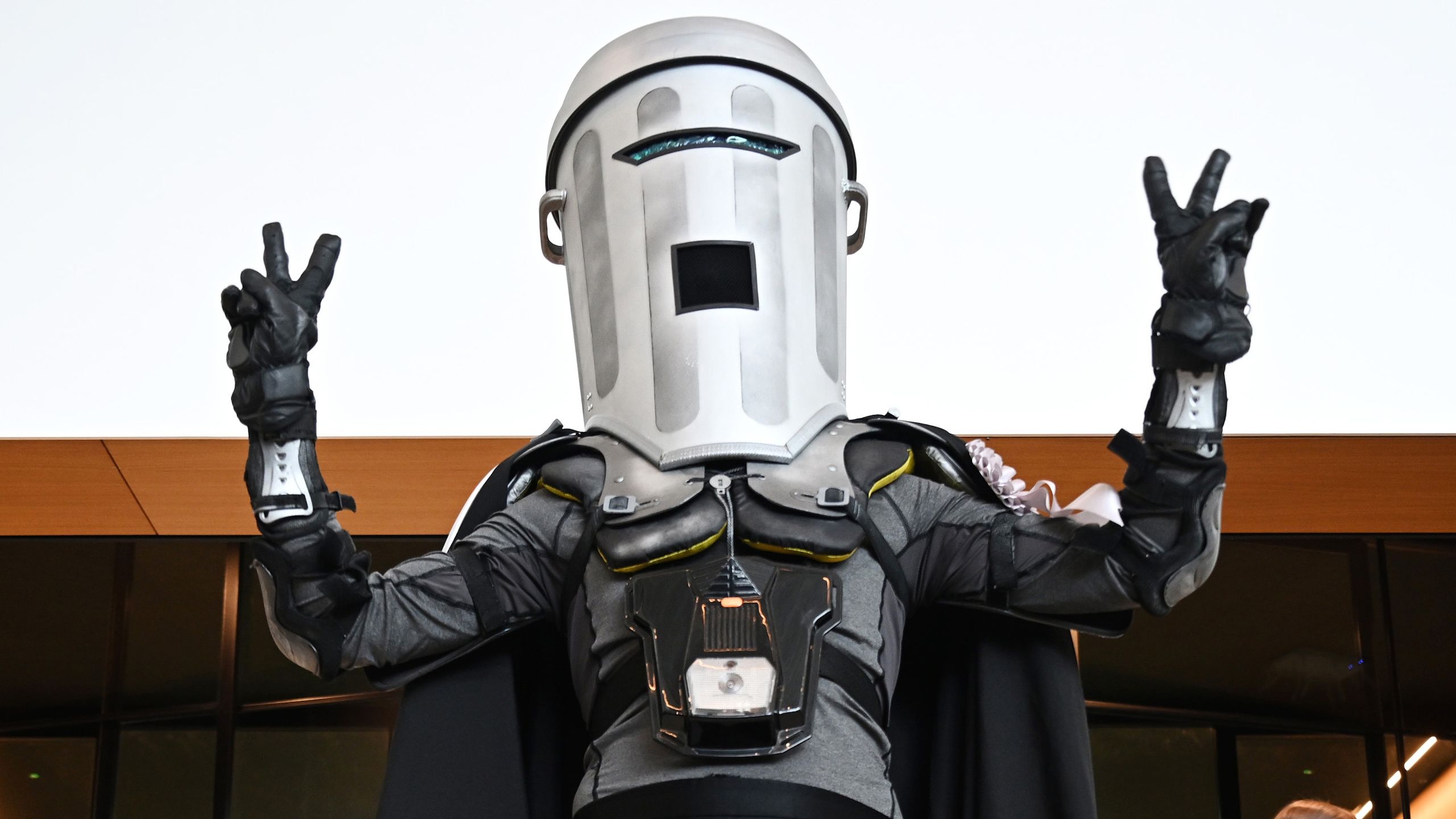
For those unfamiliar with the eccentric political landscape of the United Kingdom, Count Binface is not a traditional political candidate. He operates as a satirical figure, often compared to a more eccentric Darth Vader with a distinctive trash can-like helmet. His policy platform is as unconventional as his attire, featuring proposals such as banning noisy snacks in cinemas, imposing a strict £1 price cap on croissants, nationalizing the Grammy-winning artist Adele, and addressing the minor but persistent issue of a poorly positioned hand dryer in a specific Uxbridge pub restroom. Despite the whimsical nature of his campaign promises, Count Binface is a registered candidate who participates in actual UK elections. He recently garnered attention for his engagement in the Clacton by-election, where he faced off against prominent political figure Nigel Farage, a key architect of Brexit. This electoral participation, coupled with his consistent presence in public discourse, lends a unique platform to his pronouncements, even when they concern the development cycles of video games.
The man behind the mask of Count Binface is Jonathan David Harvey, a writer who operates as a novelty politician. Even amidst his demanding electoral campaigns, the Count has found time to articulate the frustrations of the Shenmue fanbase. In a recently circulated video, he directly addressed Sega: "I need to say a galactic ‘hello’ to Sega on behalf of the Shenmue fans. Now, I’m not just saying ‘hello,’ Sega. I’ve got a little bone to pick with you, because the fans would like to campaign for an update from you, Sega, about Shenmue 4." This direct appeal underscores the widespread anticipation for a sequel that has been in development limbo for years.
The sentiment was further amplified on social media platform Bluesky, where the Shenmue Dojo account shared a post stating: "BREAKING: @countbinface.bsky.social has cast his vote for Shenmue and now he has a message for @sega-west.bsky.social and @sega.jp The campaign continues. The people have spoken. #LetsGetShenmue4." This collaborative effort by a prominent fan community and a recognized satirical political figure demonstrates a concerted push to bring the issue of Shenmue 4 to the forefront of public and corporate attention.
The Unresolved Cliffhanger and Sega’s Development Purgatory
Count Binface articulated a key point of contention for many fans: the unresolved cliffhanger that marked the end of Shenmue 3. "After a quick complaint about Shenmue 3 ending on a cliffhanger that remains unresolved," the Count continued, "I wonder whether Sega needs to be nationalized along with Adele. What do you say? Shall we harness the power of the Shenmue to ensure that there is no delay with updates ever again? I quite like the sound of that. I’d like to reboot Sega World in London’s Trocadero and have old Sonic the Hedgehog back in his prime. Oh, that would be wonderful. But hey, I digress."
This lament about Shenmue 3’s abrupt conclusion is a sentiment echoed across online forums and fan discussions. Released in 2019, Shenmue 3 concluded Ryo Hazuki’s journey in China, leaving his quest for revenge against Lan Di and the recovery of the Dragon Mirror still very much in progress. The game, funded through a highly successful Kickstarter campaign that raised over $6 million, was seen by many as a passionate but ultimately incomplete chapter in Ryo’s story. The original vision for Shenmue was a sprawling saga, and the perceived lack of closure in the latest installment has left a significant portion of the fanbase yearning for resolution.
The history of Shenmue’s development is as complex and lengthy as the narrative itself. The original Shenmue, released in 1999 for the Dreamcast, was a groundbreaking title, renowned for its detailed open world, realistic character interactions, and cinematic presentation. It was also one of the most expensive games ever made at the time, reportedly costing over $70 million. Shenmue II followed in 2001, continuing Ryo’s story but ending on another cliffhanger. For over a decade, the series remained dormant, with fans pleading for its return. This long hiatus, punctuated by a fake Shenmue 4 trailer that emerged in 2025 and was quickly debunked by the developers, has only intensified the desire for concrete news. The developers of Shenmue 3, Ys Net, have been notably tight-lipped regarding future installments, further fueling speculation and fan anxiety.
A History of Satire and Sega’s Nostalgic Appeal
Count Binface’s suggestion to "reboot Sega World in London’s Trocadero and have old Sonic the Hedgehog back in his prime" taps into a rich vein of nostalgia for Sega’s past. His manifesto from his 2021 mayoral campaign for London indeed included a pledge to "turn the Trocadero back into a truly top-notch video arcade." This indicates a consistent theme in his political persona – a desire to revive iconic entertainment landmarks and experiences. Sega World London, a popular indoor amusement park that operated within the Trocadero from 1996 to 2000, was a significant cultural touchstone for a generation of gamers. Its closure marked the end of an era for many, and the idea of its revival, coupled with a return to form for classic Sega characters, resonates with those who grew up with the brand.
The mention of nationalizing Sega alongside Adele is, of course, a satirical flourish, but it highlights a broader commentary on the perceived inaction of major entertainment corporations. The reference to Adele, a global music superstar whose career has seen immense success and significant commercial appeal, serves as a parallel to Sega’s own iconic intellectual property. The implication is that if a nationalized entity can manage the success of an artist like Adele, perhaps a similar approach could galvanize the development of long-awaited gaming sequels.
The Business of Campaigns and the Economics of Game Development
While Count Binface’s pronouncements are often infused with humor and satire, there’s an underlying economic reality to political campaigning. As noted by Metro, the video featuring Count Binface’s demand for Shenmue 4 did not initially appear on his personal social media channels, leading to speculation that the entire endeavor might have been a form of paid promotion or "op." Count Binface does maintain a Cameo page, a platform where celebrities and public figures offer personalized video messages for a fee. Political campaigns, even satirical ones, incur significant costs, from advertising and event organization to campaign staff and travel. Therefore, it is plausible that such public statements could be a means to generate revenue or raise awareness for his broader political activities, leveraging the widespread interest in Sega and the Shenmue franchise.
However, even if the proposition is partly transactional, it addresses a legitimate concern within the gaming community. Shenmue 3, despite its critical reception which was generally positive but not overwhelmingly so, left many questions unanswered. The game’s Kickstarter success indicated a strong demand, yet the subsequent silence from Ys Net regarding Shenmue 4 has left fans in a state of perpetual anticipation. The lack of official announcements or substantial progress updates for Shenmue 4, seven years after its predecessor’s release, is a significant point of frustration. The gaming industry is characterized by rapid technological advancements and evolving player expectations. Long development cycles, while sometimes necessary for ambitious projects, can also lead to games feeling dated upon release or losing momentum in the public consciousness.
Implications for Sega and the Future of the Shenmue Franchise
The intervention of a public figure like Count Binface, even a satirical one, draws attention to Sega’s strategic decisions regarding its intellectual properties. The company has a rich history of beloved franchises, and the continued dormancy of Shenmue 4, especially after the significant investment and fan support for Shenmue 3, raises questions about Sega’s long-term commitment to the series. The success of other narrative-driven, open-world games in recent years, such as "The Witcher 3," "Red Dead Redemption 2," and "Cyberpunk 2077," demonstrates a clear market for ambitious storytelling and immersive gameplay. The potential for Shenmue 4 to capitalize on these trends, while staying true to its unique identity, is significant.
Sega’s approach to its legacy franchises has varied over the years. While some, like Sonic the Hedgehog, have seen continuous releases (albeit with mixed results), others have been placed on extended hiatus. The economic viability of a project like Shenmue 4, which historically has been very expensive to produce, is undoubtedly a major consideration for the company. The development of Shenmue 3 itself was a testament to the perseverance of its creator, Yu Suzuki, and the dedication of its fanbase. However, the financial risks associated with such a large-scale undertaking, particularly in the current competitive gaming landscape, cannot be understated.
The broader implication of Count Binface’s statement is the power of sustained fan engagement. The Shenmue community, though perhaps smaller than those of some other blockbuster franchises, is remarkably passionate and organized. Through social media campaigns, fan art, and community hubs like Shenmue Dojo, they have consistently kept the dream of Shenmue 4 alive. The Count’s vocalization of these desires, using his unique platform, serves as a reminder to Sega that the demand for a conclusion to Ryo Hazuki’s story remains strong.
While an edict from Count Binface is unlikely to directly compel Sega to greenlight Shenmue 4, it amplifies the existing pressure and highlights the ongoing dialogue between developers and their audience. In an era where player feedback and community sentiment can significantly influence a game’s success, such public pronouncements, however satirical, play a role in shaping the narrative around game development and release. The hope for Shenmue fans is that this renewed attention will encourage Sega to seriously consider the future of the franchise and, perhaps, finally bring the epic tale of Ryo Hazuki to a satisfying close. The journey may be long, and the waiting arduous, but the voice of the fans, amplified by unexpected allies, continues to echo in the halls of game development.
Related posts: