Court-Ordered Domain Seizure of Radaris.com Marks a Landmark Enforcement Action Under New Jersey Privacy Statute


The digital landscape of consumer data brokerage experienced a seismic shift when a New Jersey court ordered the transfer of the high-traffic people-search domain Radaris.com, alongside more than a dozen associated properties, to data privacy plaintiffs. This unprecedented legal maneuver represents a severe blow to an enterprise that has notoriously stonewalled removal requests and skirted regulatory oversight for over a decade. Driven by aggressive litigation from Atlas Data Privacy Corp under the stringent provisions of New Jersey’s Daniel’s Law, the seizure underscores the growing friction between commercial data aggregators and state-level privacy protections designed to shield law enforcement, judicial personnel, and government officials from targeted harassment and safety threats.
For years, Radaris operated as an impenetrable fortress of consumer information, harvesting public records, social media data, and directory listings to compile comprehensive digital dossiers on millions of Americans. While privacy advocates long criticized the commercial harvesting of sensitive personal identifiable information (PII), data brokers relied on a complex web of international shell corporations, shifting jurisdictions, and procedural attrition to dodge accountability. The recent enforcement action, however, demonstrates that determined legal strategies coupled with rigorous investigative journalism can pierce the corporate veil of opaque online data empires.
A Decade of Evasion and Corporate Shell Games
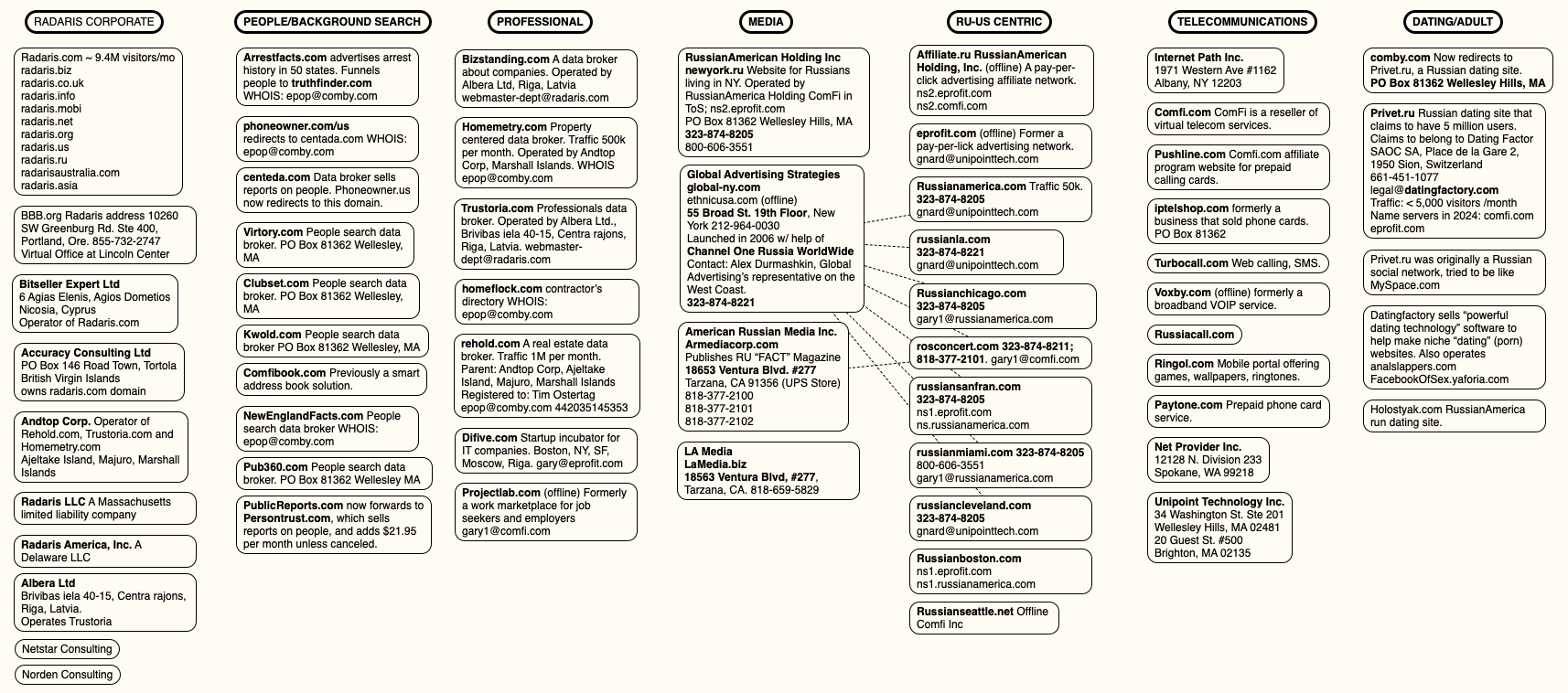
The operational blueprint behind Radaris.com has long relied on obscurity and jurisdictional shifting. Investigative reports published by security researcher Brian Krebs revealed that the sprawling network of people-search companies was masterminded by Igor and Dmitry Lubarsky, Russian-born brothers residing in Massachusetts. Despite controlling a vast array of people-search engines, Russian-language dating portals, and affiliate marketing programs, the brothers utilized a succession of corporate facades and fictitious executive personas—such as a fabricated CEO named "Gary Norden"—to distance themselves from the enterprise.
As regulatory scrutiny intensified, the Radaris corporate apparatus engaged in what Atlas Data Privacy Corp CEO Matt Adkisson aptly described as an "island-hopping phase." As legal threats mounted, the company’s terms of service and administrative ownership records frequently migrated across international tax havens, including Cyprus, the Marshall Islands, the British Virgin Islands, and the Seychelles.
When plaintiffs attempted to hold the entities legally accountable, defense counsel routinely played procedural shell games. Entities that ostensibly managed specific domains were dissolved or swapped out just as judgments neared, leaving litigants grappling with phantom corporations. For instance, when Radaris updated its terms to designate a newly minted Marshall Islands entity as its manager, private investigators discovered that the named corporation did not even legally exist at the time of the designation. This strategy of attrition and procedural delay had successfully protected the underlying principals for over ten years, discouraging plaintiffs from pursuing costly cross-border litigation.
The Catalyst: Daniel’s Law and the Genesis of Atlas Data Privacy
The legal reckoning for Radaris began in February 2024, when Atlas Data Privacy Corp initiated a high-stakes lawsuit alleging systemic violations of Daniel’s Law. Named in honor of Daniel Anderl—the late son of U.S. District Judge Esther Salas, who was tragically murdered at her home in 2020 by an assailant holding a grudge over a court case—the New Jersey statute establishes rigorous protections for vulnerable public servants.
Daniel’s Law explicitly mandates that commercial data brokers and people-search services completely purge the personal addresses, phone numbers, and identifying details of state law enforcement officials, judicial personnel, and government employees upon request. Crucially, the statute arms affected individuals with strong enforcement mechanisms, levying statutory fines of $1,000 per violation against companies that ignore or willfully delay compliance.
Recognizing the systemic threat that un-redacted public directories pose to public safety, Atlas committed substantial legal resources to target non-compliant data brokers. Following an initial lawsuit filed in early 2024, Atlas expanded its legal campaign in June 2025, drastically broadening the scope of the litigation to encompass the entire family of Radaris-affiliated data broker domains. Despite repeated threats of defamation litigation and aggressive pushback from Radaris attorneys—including Boston Law Group attorney Val Gurvits and later counsel Victor Worms—the plaintiffs maintained their course, utilizing discovery mechanisms to uncover the inner workings of the enterprise.
Inside the Corporate Machinery: Evidence and Revenue Streams
Through the course of litigation, Atlas secured more than 10,000 internal emails, financial records, and operational documents that provided an unprecedented look into the mechanics of the Radaris empire. These documents verified previous investigative findings, demonstrating that nominally independent legal entities—such as Radaris America Inc., Bitseller Expert Limited, Digital Orbit Corp, Core Solutions Group Inc., and Veripages Inc.—were controlled by the exact same core group of administrators.
The evidentiary corpus revealed that approximately twenty-five distinct people-search properties were funneled through a centralized administrative, financial, and technical infrastructure centered around the difive.com mail domain and its successors. Financial records independently generated by payment processors, banks, and hosting providers illustrated a highly lucrative enterprise. Radaris.com alone pulled in an estimated $42,000 per month, while sister site Veripages.com generated roughly $45,000 monthly through partnerships with major marketing and advertising conglomerates like the Lifetime Value Company, which operates brands such as PeopleLooker, PeopleSmart, and Bumper.

Furthermore, the document discovery exposed symbiotic financial relationships between Radaris and other prominent privacy entities. The network reportedly garnered tens of thousands of dollars monthly through partnerships with Onerep, a privacy service that purportedly assists individuals in scrubbing their data from people-search directories. Such overlapping partnerships exposed a pervasive industry paradox where companies simultaneously profit from publishing personal dossiers and charging consumers to remove them.
The Court-Ordered Seizure and Immediate Aftermath
Faced with persistent stonewalling, missed court appearances, and failures to mount substantive defenses against the Daniel’s Law violations, the New Jersey court lowered the boom. On August 26, the presiding judge ruled that the defendants had been afforded ample opportunity to defend the claims and had systematically squandered those chances through non-compliance.
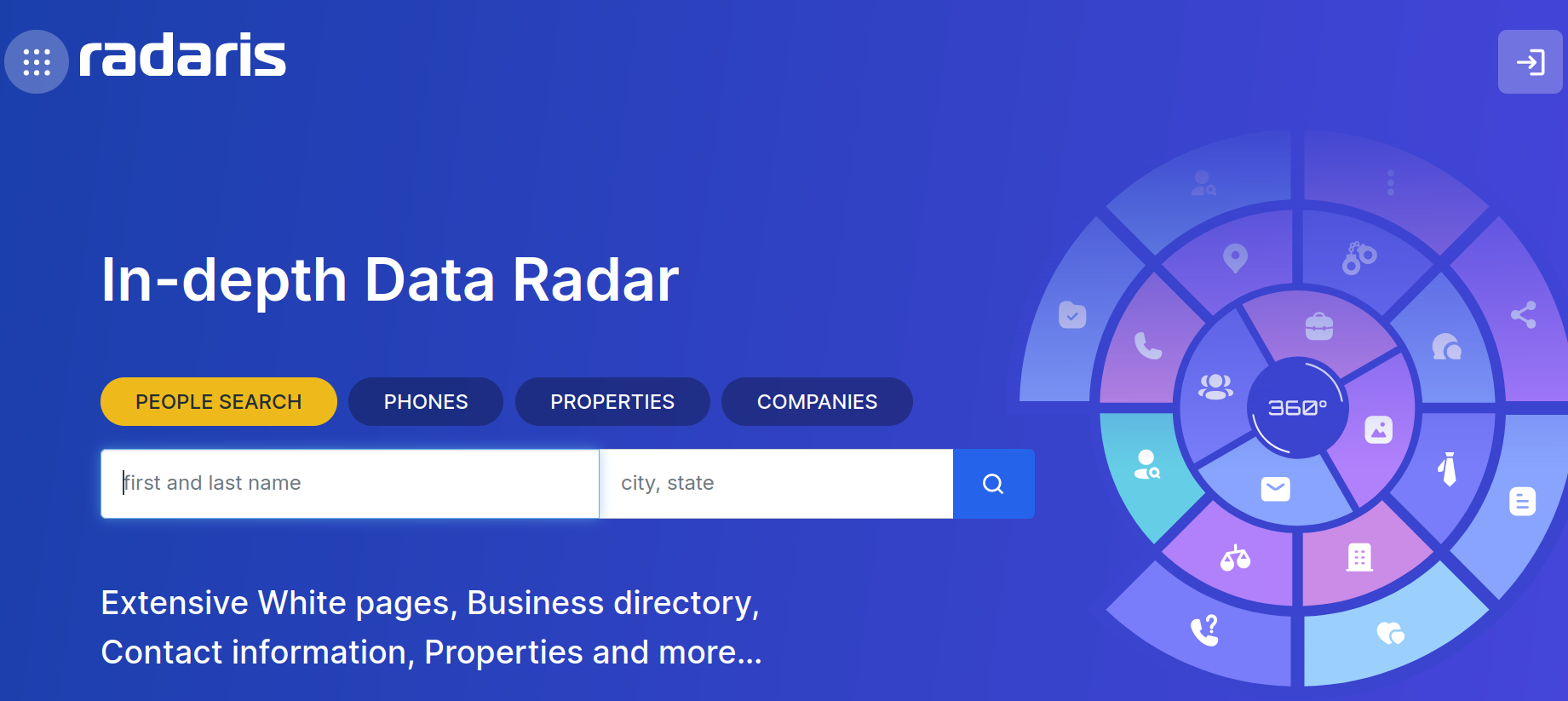
Consequently, the court ordered domain registries, including Verisign, to transfer fourteen domain names belonging to the Radaris network directly to Atlas. Radaris.com was immediately redirected to an informational notice managed by Atlas detailing the court-ordered transfer and providing links to investigative reporting on the enterprise.
Legal representatives for the defendants pushed back against the ruling. Attorney Victor Worms filed motions to vacate the default judgment, arguing that the judgment was legally void because "Radaris.com" is a domain name rather than a formal legal entity capable of being sued. Counsel also indicated intentions to pursue appeals, asserting that the domain seizure constitutes an unconstitutional forfeiture of property in violation of due process rights. Despite these legal maneuvers, the operational infrastructure of Radaris.com has been severely disrupted, halting the immediate sale of detailed personal dossiers through its primary web portal.
Broader Legal Battles: The Constitutional Challenge to Daniel’s Law
While the Radaris seizure represents a monumental victory for data privacy advocates, the broader future of Daniel’s Law remains embroiled in high-stakes constitutional litigation. In response to aggressive enforcement actions by Atlas and other plaintiffs, the broader data broker industry has launched a coordinated counter-offensive, moving dozens of pending Daniel’s Law lawsuits into federal court.
Industry trade groups and data broker defendants argue that statutes like Daniel’s Law are overly broad and infringe upon First Amendment protections regarding the dissemination of lawfully acquired public records. A federal district court in West Virginia ruled a similar state-level privacy statute facially unconstitutional under the First Amendment, setting a contentious precedent that data brokers hope to replicate nationwide.
The ultimate constitutional fate of Daniel’s Law now rests with the U.S. Court of Appeals for the Third Circuit, with legal analysts widely anticipating that the dispute will ultimately reach the U.S. Supreme Court. Meanwhile, the regulatory landscape is shifting rapidly; at least fourteen other states have enacted privacy legislation modeled after New Jersey’s statute, and numerous others are actively weighing similar measures.
The Systemic Failure of U.S. Data Privacy Policy
Experts emphasize that targeted state-level statutes, while effective in specific enforcement scenarios, serve merely as band-aids on a systemic wound rooted in the absence of comprehensive federal privacy legislation. Privacy scholar and author Justin Sherman points out that the U.S. digital economy operates within a regulatory vacuum heavily influenced by intense lobbying from big tech, social media conglomerates, cryptocurrency advocates, and artificial intelligence proponents.
Sherman notes that state-level privacy laws routinely carve out sweeping exemptions for records deemed "public" or "government" documents, encompassing voting registries, property deeds, marriage licenses, motor vehicle data, court filings, and professional licensing databases. Because these baseline records remain freely accessible or easily obtainable by scrapers, commercial data brokers can continuously rebuild and refresh their people-search repositories.
Without federal baseline protections that restrict how corporations acquire, aggregate, and monetize personal data—such as the massive driver’s license databases vulnerable to dark web exploitation, evidenced by recent high-profile breaches—American consumers remain entirely exposed to pervasive commercial surveillance. As state battles continue to wind through federal appellate courts, the core structural vulnerabilities of the American digital privacy ecosystem persist, leaving the defense of personal data largely dependent on aggressive private litigation rather than proactive federal oversight.
Related posts: