Audi Has Patented A Clever Retractable Physical Button Panel That Hides Behind A Touchscreen

The automotive industry’s high-stakes gamble on all-touchscreen interiors is officially hitting a wall. For the past decade, automakers have rushed to strip cabins of tactile switches, knobs, and buttons, replacing them with seamless glass panels and piano-black digital displays in the name of modern minimalism and cost efficiency. However, a major consumer and regulatory backlash has forced legacy manufacturers to rethink this digital-first approach. Volkswagen recently confirmed it is bringing back physical buttons following widespread criticism of its haptic-heavy steering wheels and center consoles, while Mercedes-Benz executives have openly admitted that the industry may have gone too far in eliminating tactile controls.
Now, Audi is preparing to join the counter-revolution with a uniquely ingenious compromise. A newly uncovered patent from the German Patent and Trade Mark Office reveals that Audi has developed a technology allowing physical buttons and knobs to physically retract and hide behind a touchscreen. This system promises to satisfy both traditionalists who demand tactile feedback and tech enthusiasts who prefer a clean, uncluttered dashboard aesthetic.
Inside the Mechanics of Audi’s Retractable Button Panel
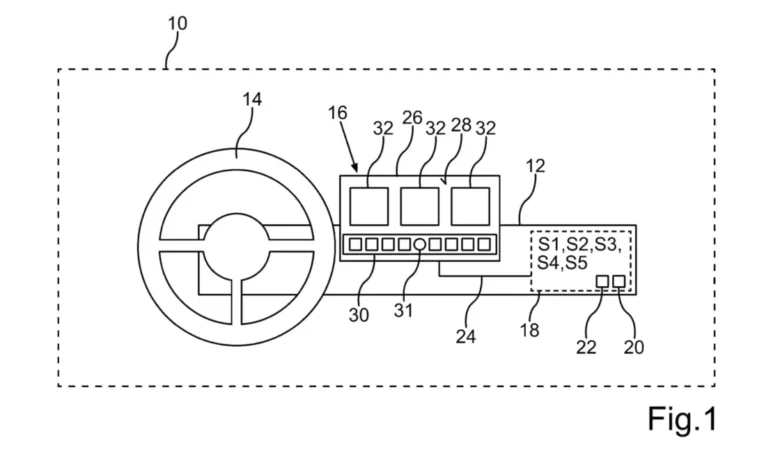
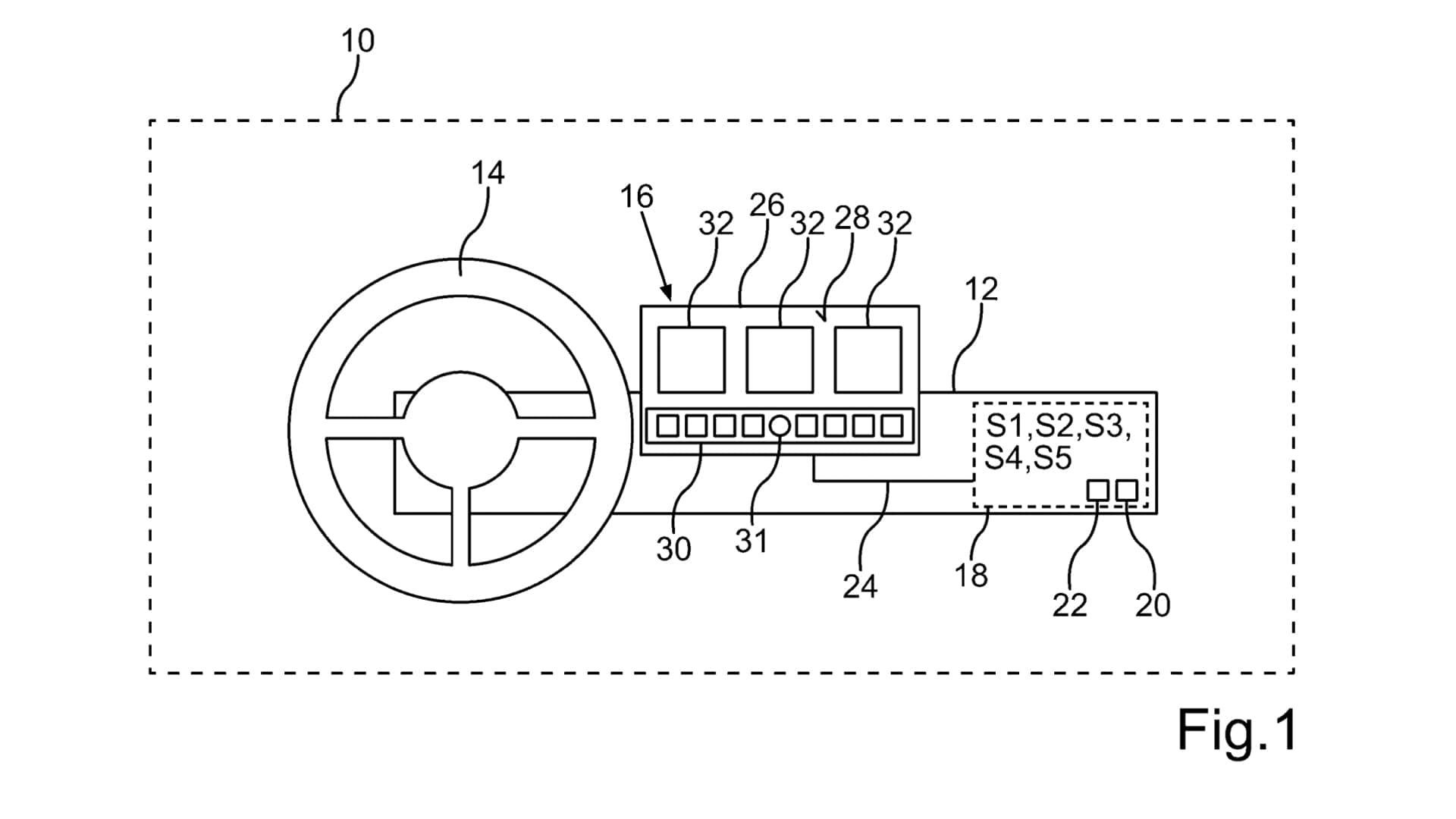
Discovered by automotive researchers, the newly published patent details a dedicated control bar positioned directly beneath the primary infotainment touchscreen. This strip houses a physical configuration of buttons flanked by what appears to be a central rotary knob—intuitively designed for primary functions such as audio volume or climate control adjustments.
Unlike conventional fixed layouts, this physical control bar is motorized or mechanically actuated. Upon a driver’s command—triggered either by a dedicated soft key, a physical press, or an advanced voice-recognition prompt—the entire button assembly smoothly retracts and vanishes behind the lower portion of the touchscreen.
To ensure that functionality is never compromised when the physical controls are concealed, the software logic of the touchscreen dynamically adapts. As the physical panel recedes, the display instantly projects a duplicate set of virtual icons along the bottom edge of the screen, mirroring the exact layout and commands of the hidden physical buttons. This dual-mode interface allows users to alternate seamlessly between a tactile, analog experience and a purely digital, minimalist environment within seconds.
The Golden Age of Audi Ergonomics Versus the Piano-Black Backlash
To understand the significance of Audi’s new patent, one must look back at the brand’s hard-earned reputation for interior ergonomics. Throughout the 1990s, 2000s, and early 2010s, Audi was widely considered an industry gold standard for interior switchgear. Vehicles from this era featured heavily weighted rotary knobs, damped climate control dials, and satisfyingly clicky toggle switches that provided instant, tactile confirmation without requiring the driver to take their eyes off the road.
In stark contrast, modern interior design trends have favored capacitive touch surfaces and glossy piano-black plastics. While visually striking on a showroom floor, these materials quickly accumulate fingerprints, smudge easily under daily use, and—most critically—force drivers to look away from the road to locate basic controls. Operating a touch-sensitive slider or searching for a buried menu item on a flat glass screen lacks the intuitive muscle memory afforded by a physical knob. For longtime brand loyalists, the eradication of traditional switches felt like a significant downgrade in everyday usability and perceived luxury.
Balancing Two Philosophies: The Ergonomic Imperative
Audi’s latest patent highlights a fundamental challenge facing modern automotive designers: the sheer volume of features packed into contemporary vehicles makes a purely analog dashboard impossible. Modern cars manage hundreds of functions, ranging from advanced driver-assistance system (ADAS) calibrations and multi-zone climate settings to sophisticated ambient lighting and connectivity menus. Replicating every single sub-menu function with a dedicated physical button would result in a chaotic, button-strewed dashboard reminiscent of a commercial airliner.
However, automotive psychologists and safety advocates agree that core, frequently used driving functions—such as volume control, defroster activation, and temperature adjustments—belong on physical switches. These primary controls require rapid, eyes-free operation to minimize distracted driving.
By engineering a disappearing physical interface, Audi’s patent offers a pragmatic resolution to the touchscreen versus button debate. It recognizes that consumer preferences are deeply polarized. Drivers who favor high-tech minimalism can keep the control panel tucked away, relying on voice commands or screen gestures. Conversely, motorists who prioritize ergonomic safety and tactile satisfaction can leave the physical buttons deployed for immediate, effortless interaction.
Industry-Wide Shift Away from Touch-Everything Cabins
Audi’s patent is part of a broader, industry-wide recalibration regarding human-machine interface (HMI) design. For years, Silicon Valley tech trends heavily influenced automotive boardrooms, dictating that physical buttons were outdated remnants of the analog past. Tesla’s success in popularizing minimalist, screen-centric cabins inspired legacy automakers to slash production costs by consolidating physical controls into centralized touchscreens.
The pendulum, however, has officially swung back. Euro NCAP, the independent safety body for European vehicles, announced plans to dock safety ratings for cars that
lack physical stalks and buttons for essential functions like hazard lights, turn signals, wipers, and horn activations starting in 2026. This regulatory pressure, combined with vocal consumer dissatisfaction, has catalyzed a swift design retreat across the Volkswagen Group and its German competitors.
Volkswagen’s recent product announcements, including updates to the ID. Buzz and upcoming core models, explicitly highlight the return of physical steering wheel controls. Similarly, Mercedes-Benz leadership has openly acknowledged that purging too many buttons created an overly complex and frustrating user experience, particularly for older demographics or drivers navigating rough road conditions where precise touchscreen inputs are difficult.
The Road Ahead for Audi’s Patent
As with any automotive patent, it remains to be seen whether this retractable button mechanism will transition from conceptual blueprints to mass-production vehicles. Engineering a motorized, moving physical interface requires rigorous durability testing to withstand extreme cabin temperatures, dust, liquid spills, and hundreds of thousands of actuation cycles without mechanical failure or rattling.
Nevertheless, the filing demonstrates that Audi is actively investing in innovative solutions to correct the ergonomic missteps of the past decade. If successfully brought to market, this technology could redefine interior flexibility, proving that automakers do not have to choose between futuristic digital aesthetics and the timeless, functional superiority of a well-engineered physical button.