Tesla Deepens Roots in German Engineering Sector with Strategic Move Toward Humanoid Robot Mass Production

Tesla has registered a new corporate entity in Germany, signaling an aggressive acceleration of its ambitions to mass-produce the Optimus humanoid robot. Official records from the Munich district court identify the newly formed company as Tesla Machining Technologies Management SE. Operating with €120,000 in share capital, the enterprise is registered at Austraße 24 in Salach—the corporate home base of EMAG, a historic German machine-tool manufacturer that has faced severe financial headwinds amid an industry-wide automotive manufacturing slowdown.
Although neither Tesla nor EMAG has officially confirmed an acquisition or formal partnership, corporate filings, local municipal reporting, and personnel movements point to a deeper integration between the two industrial giants. The potential transaction highlights Tesla’s growing reliance on specialized German manufacturing prowess to overcome critical engineering hurdles in high-precision robotics, specifically the mass production of specialized actuators and gear systems essential for the dexterity and mobility of the Optimus platform.
Corporate Paper Trail and Leadership Structure
The corporate footprint of Tesla Machining Technologies Management SE reveals a calculated maneuver characteristic of Tesla’s historical expansion strategy in Europe. Public registry data indicates that the corporate entity was originally established on August 26 as "Blitz 26-299 SE," a pre-registered shelf company. Legal and corporate service providers frequently utilize these entities to streamline the incorporation process, allowing corporate buyers to circumvent weeks of administrative paperwork. Tesla officially renamed the shell company earlier this month.
Leadership appointments within the newly registered entity provide substantial insight into its intended operational scope. According to notices published in the German federal gazette and reported by Business Insider Germany, the enterprise is managed by a trio of executives: Maximilian Stromberger, the 33-year-old head of sales for Tesla Germany; an American robotics engineer; and the head of human resources at Tesla’s sprawling Gigafactory Grünheide near Berlin.
The inclusion of a dedicated human resources director is considered a telling indicator by corporate analysts. While passive financial investments or holding structures do not necessitate on-site human resources leadership, active operational entities slated for workforce integration invariably require dedicated personnel management. Local reporting from the regional publication Stuttgarter Nachrichten indicates that approximately 220 employees from EMAG’s Salach facility are expected to transition to Tesla as part of the unfolding arrangement.

EMAG’s Strategic Pivot Toward Robotics
Founded in 1867, EMAG boasts a storied history as a premier manufacturer of turning, grinding, and gear-cutting machinery. For decades, the company’s primary market has been the automotive sector, supplying complex production equipment utilized to manufacture transmissions, gearboxes, and internal combustion engine drivetrains. However, the broader structural contraction within the European automotive industry placed immense financial pressure on the manufacturer.
Approximately one year ago, EMAG announced comprehensive restructuring plans involving 455 job cuts across Germany, with roughly 300 reductions concentrated at its Salach headquarters—representing nearly one-third of its domestic workforce. Financial reports indicate that the company suffered a net loss of €42 million on €496 million in revenue for fiscal year 2024, prompting prolonged discussions with external investors regarding strategic partnerships or financial bailouts.
Concurrently, EMAG has sought to diversify its portfolio by targeting the emerging market for advanced automation and humanoid robotics. The company’s technical literature highlights specialized manufacturing solutions tailored for humanoid robot actuator components, including flexsplines, wave generators, and planetary gears. These components form the foundation of strain wave gears—compact, high-reduction gearboxes critical for the joints of humanoid robots—as well as larger planetary gear systems capable of handling heavier structural loads. EMAG’s machinery is engineered to maintain stringent quality standards, achieving ISO 1328 Class 4 gear precision with runout tolerances of less than five micrometers under high-volume production conditions.
Resolving the Optimus Hardware Bottleneck
Tesla’s apparent convergence with EMAG’s manufacturing expertise directly addresses the primary engineering obstacle currently facing the Optimus program: scalable actuator reliability and precision manufacturing. During Tesla’s third-quarter earnings call, CEO Elon Musk explicitly identified the mechanical hand of the Optimus robot as its most significant hardware challenge, drawing attention to custom gear manufacturing as a critical reliability concern.
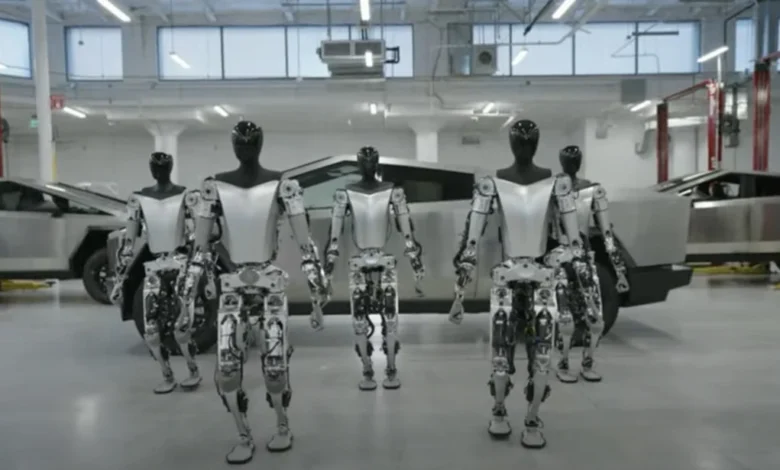
The production volume targets set by Tesla require unprecedented manufacturing scalability. The current iterations of the Optimus design utilize 28 structural actuators per robot. With Tesla establishing a dedicated production line in Fremont, California, designed with a theoretical capacity of one million units annually, the aggregate demand reaches tens of millions of precision actuators each year. Fabricating these components to the requisite tolerances has historically proved difficult for traditional supply chains, motivating Tesla to pursue vertically integrated manufacturing capabilities.
The German market has increasingly become the epicenter of Tesla’s advanced manufacturing and automation acquisitions. In July, Tesla initiated recruitment efforts in Reutlingen to establish a specialized engineering hub dedicated to the development and production of Optimus components, including advanced sensors, gearboxes, actuators, and the automated machinery required to build them at scale. The Reutlingen facility occupies the former site of Manz AG, an automation engineering firm that filed for insolvency before being acquired by Tesla in early 2025, a transaction that absorbed roughly 300 former Manz employees.

Precedent for European Industrial Integration
Tesla’s current approach in Salach mirrors previous strategic acquisitions designed to secure proprietary engineering talent and manufacturing infrastructure in Germany. In late 2016, Tesla acquired Grohmann Engineering, based in Prüm, subsequently renaming the entity Tesla Automation and integrating its technical capabilities into automotive and energy production lines. Similarly, the assimilation of the Manz facility in Reutlingen underscored Tesla’s preference for absorbing established German engineering firms to accelerate its technological roadmaps.
Other regional ventures, such as the short-lived acquisition of wireless charging startup Wiferion in 2023—where Tesla subsequently divested the commercial product line while retaining the core engineering talent—demonstrate the company’s willingness to execute targeted asset acquisitions to secure specialized intellectual capital. These moves occur alongside massive capital investments, such as the €3 billion allocation dedicated to expanding production infrastructure at Giga Berlin for upcoming vehicle and automation platforms.
Chronology of Events
- Late 2023: EMAG announces domestic restructuring initiatives and workforce reductions amid declining automotive sector demand.
- Early 2025: Tesla completes the acquisition of bankrupt automation firm Manz AG in Reutlingen, absorbing approximately 300 employees to bolster European engineering operations.
- July 2025: Tesla initiates targeted recruitment in Reutlingen focused on the research, development, and manufacturing of Optimus robot components and automation machinery.
- August 26, 2025: The corporate shell entity "Blitz 26-299 SE" is registered at the Munich district court.
- October 2025: During the Q3 earnings call, Elon Musk highlights hand dexterity and custom gear reliability as the primary remaining hardware challenges for the Optimus program.
- November 16, 2025: EMAG conducts a large-scale staff meeting at its Salach headquarters to brief employees regarding ongoing discussions with potential investors and strategic partners.
- November 23, 2025: Regional media outlets, including Stuttgarter Nachrichten, report mounting indicators of a corporate takeover or partnership involving Tesla and EMAG.
- Early December 2025: The shell company "Blitz 26-299 SE" is officially renamed Tesla Machining Technologies Management SE, with a registered address matching EMAG’s Salach headquarters and executive leadership shared between Tesla’s German sales division, human resources, and robotics engineering teams.
- Mid-December 2025: Reports surface indicating an anticipated workforce transition of approximately 220 EMAG employees to Tesla, pending formal institutional confirmation.
Market Implications and Future Outlook
The alignment between Tesla and EMAG—should formal integration be completed—underscores the shifting economic realities of traditional European manufacturing sectors. As legacy automotive suppliers face margin compression from the transition to electric mobility and slowing vehicle demand, technological expertise in high-precision gearing and robotics has become a valuable commodity for companies leading the humanoid automation race.
For Tesla, securing domestic European infrastructure capable of producing high-precision strain wave and planetary gears de-risks the supply chain for the Optimus deployment timeline. While analysts project that widespread deployment of general-purpose humanoid robots in domestic and commercial environments remains years away, the foundational manufacturing equipment is being established today. By integrating specialized personnel and production facilities into its corporate ecosystem, Tesla continues to build the industrial foundation necessary to transition Optimus from a research prototype into a mass-manufactured commercial product.