Epic Games CEO Tim Sweeney Claims Valve and Steam Have Held PC Gaming Back Through Walled Gardens

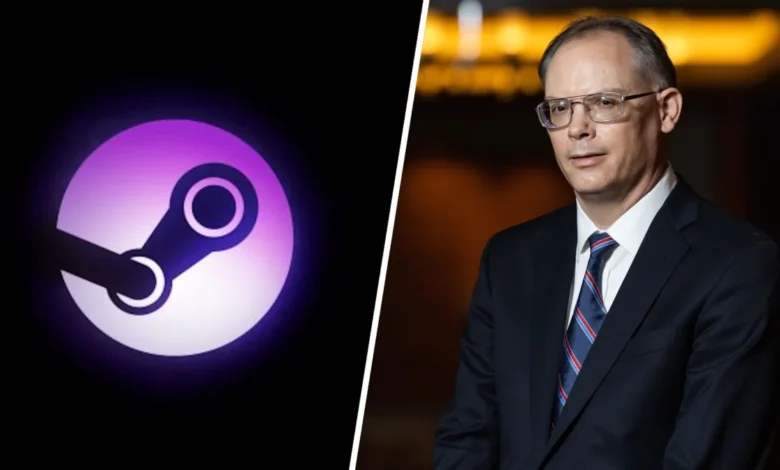
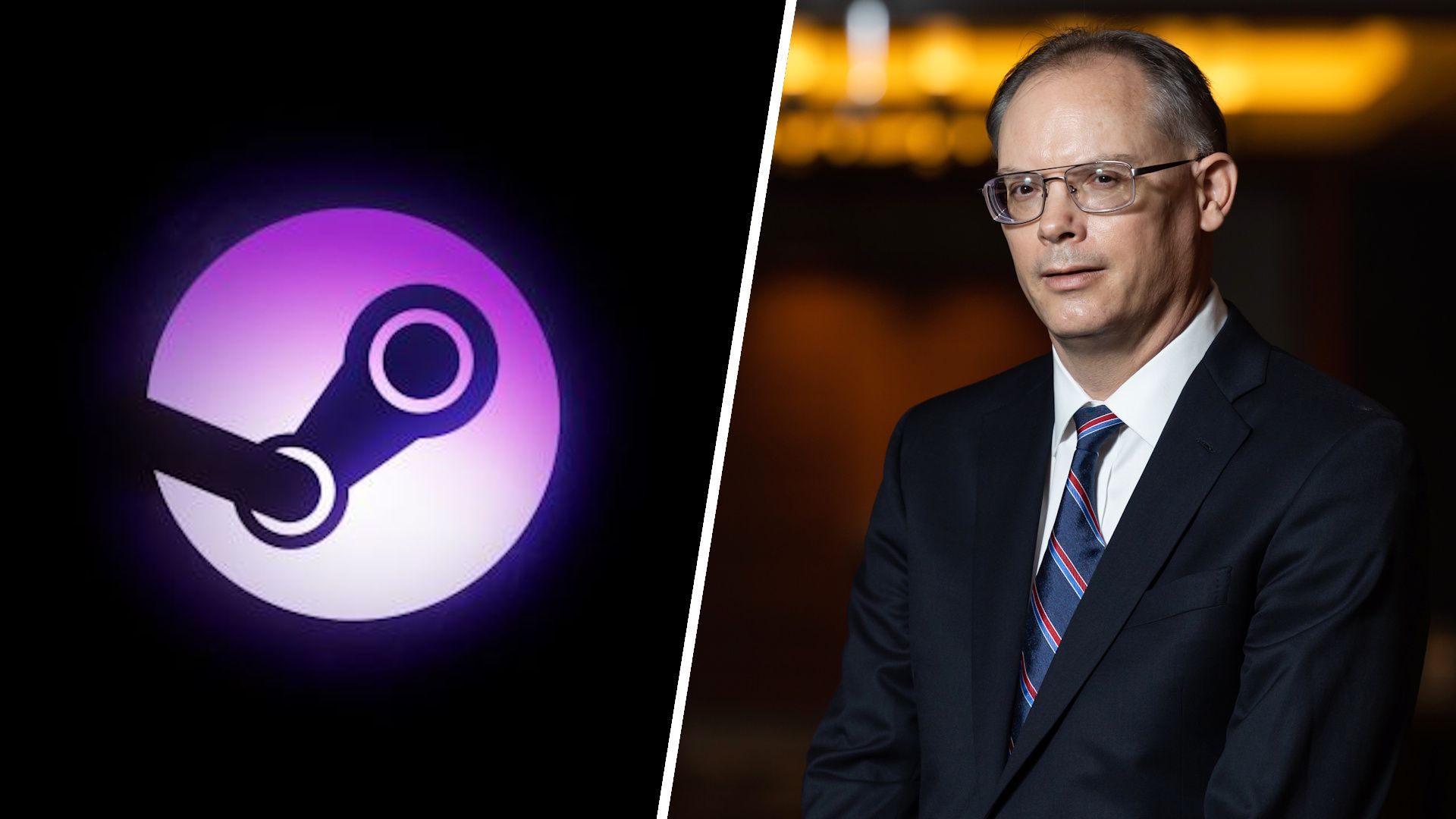
Epic Games Chief Executive Officer Tim Sweeney has renewed his fierce criticism of Valve Corporation, asserting that the dominant digital storefront, Steam, has hindered the advancement of the personal computer gaming industry for years. Sweeney’s latest remarks, delivered via social media platform X, target Steam’s integration of the Steamworks developer toolkit and its enduring industry standard of a 30% revenue commission on digital game sales. This critique is the latest chapter in a long-standing ideological and economic conflict between Epic Games and Valve, two titans of the modern PC gaming landscape.
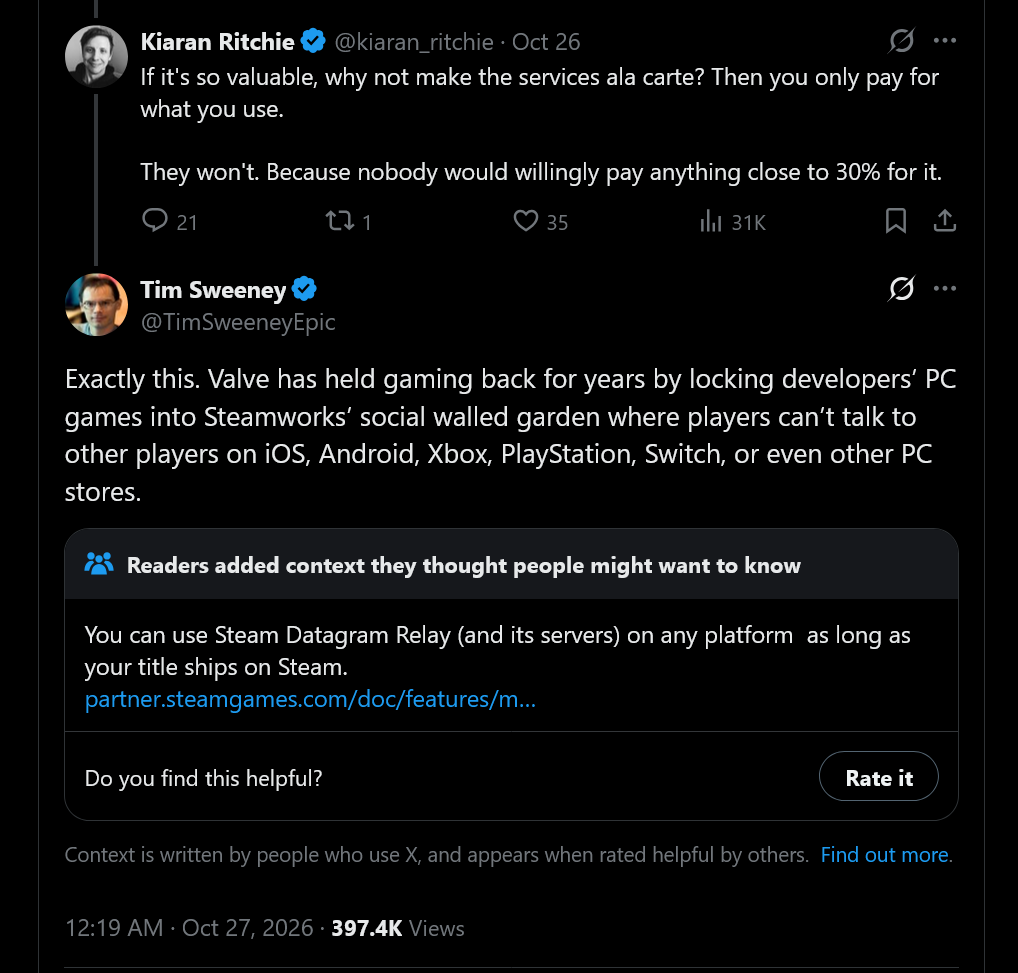
The debate reignited following commentary from Kiaran Ritchie, a former principal animation programmer at Epic Games, who publicly criticized the traditional 30% revenue share demanded by major distribution platforms. Ritchie argued that the basic technological infrastructure required to host and distribute digital games is inexpensive, pointing out that modern content delivery networks and cloud egress pricing have effectively neutralized the high operational costs historically associated with running a digital storefront. Ritchie suggested that developers would experience far greater financial success and creative freedom if alternative distribution models allowed them to retain a larger percentage of their earnings.
Sweeney quickly amplified Ritchie’s sentiments, broadening the scope of the criticism to focus specifically on Steamworks—Valve’s proprietary suite of software development tools. According to the Epic Games CEO, the deep integration of Steamworks creates a "social walled garden" that isolates players within the Steam ecosystem. Sweeney contended that this architecture prevents seamless cross-platform communication and matchmaking between PC players on Steam and users on rival storefronts, mobile operating systems such as iOS and Android, and major video game consoles including the PlayStation 5, Xbox Series X/S, and Nintendo Switch.
Background Context of the Epic-Valve Rivalry
The rivalry between Epic Games and Valve is rooted in fundamentally different business philosophies regarding digital distribution economics. Valve launched Steam in 2003 primarily as a digital delivery and patch management system for its own titles, eventually opening the platform to third-party publishers. Over the past two decades, Steam evolved into the undisputed heavyweight of PC game distribution, capturing the vast majority of the desktop gaming market share through continuous feature expansion, community building, and user trust.
Conversely, Epic Games disrupted the market in December 2018 with the launch of the Epic Games Store. Seeking to challenge Steam’s near-monopoly, Epic introduced an aggressive revenue split of 88% to developers and 12% to the platform, significantly undercutting Valve’s standard 30% cut. To attract users away from Steam’s entrenched ecosystem, Epic implemented a high-profile strategy of securing exclusive publishing rights for major titles and offering free weekly video games to consumers, investing hundreds of millions of dollars in user acquisition.
Despite these substantial financial investments, the Epic Games Store has struggled to achieve overall profitability on digital game sales alone, relying heavily on the immense financial success of its proprietary title, Fortnite, and the Unreal Engine licensing business. Meanwhile, Steam’s user base has continued to grow, fueled by hardware initiatives like the Steam Deck and sustained consumer preference for its robust social features, review systems, and unified game libraries.
Technical Counterarguments and Industry Perspectives
Sweeney’s assertions regarding Steamworks quickly drew pushback from developers and community members on social media. Critics pointed out that developers are not contractually forced to use Steamworks tools to distribute games on Steam. Many indie and AAA studios utilize Steam merely as a storefront for transactional purposes while implementing independent backends for cross-play and multiplayer matchmaking.
Community notes appended to Sweeney’s posts highlighted that technologies such as the Steam Datagram Relay are often utilized strictly for network optimization and authentication rather than locking users into proprietary social networks. In response, Sweeney acknowledged that Valve does not physically coerce developers into utilizing Steamworks, but argued that market pressure, consumer expectations, and the threat of review bombing effectively leave studios with little practical choice if they wish to remain competitive on the platform.
To counter platform lock-in, Epic Games has promoted its own alternative infrastructure, Epic Online Services (EOS). Offered to developers completely free of charge, EOS provides cross-platform identity, party management, matchmaking, and voice chat capabilities that function across multiple storefronts and console ecosystems without tying developers to the Epic Games Store itself.
Implications for the PC Gaming Ecosystem
The ongoing public dispute between Epic Games and Valve highlights deeper structural questions concerning market dominance, anti-competitive practices, and monetization models within the software industry. Economists and antitrust regulators have increasingly scrutinized digital marketplaces that enforce mandatory payment systems and high revenue commissions, a legal battle prominently highlighted by Epic Games’ high-profile antitrust litigation against Apple and Google in mobile app markets.
While Sweeney frames his criticisms as advocacy for developer welfare and open ecosystems, industry analysts note that consumer behavior remains the primary barrier to change. For millions of PC gamers, Steam functions not merely as a store, but as a centralized digital library, social hub, and community archive built over nearly twenty years. The convenience of maintaining a unified library often outweighs the abstract economic arguments surrounding platform revenue splits.
As the digital distribution landscape continues to evolve alongside emerging technologies like cloud gaming and generative artificial intelligence, the debate over open standards versus proprietary ecosystems remains central to the future of interactive entertainment. Whether alternative models promoted by Epic Games can successfully erode Steam’s market dominance will depend less on executive rhetoric and more on the industry’s collective willingness to embrace decentralized distribution infrastructure.