Epic Games Doubles Down on Generative AI Integration for Unreal Engine 6 and Fortnite Development

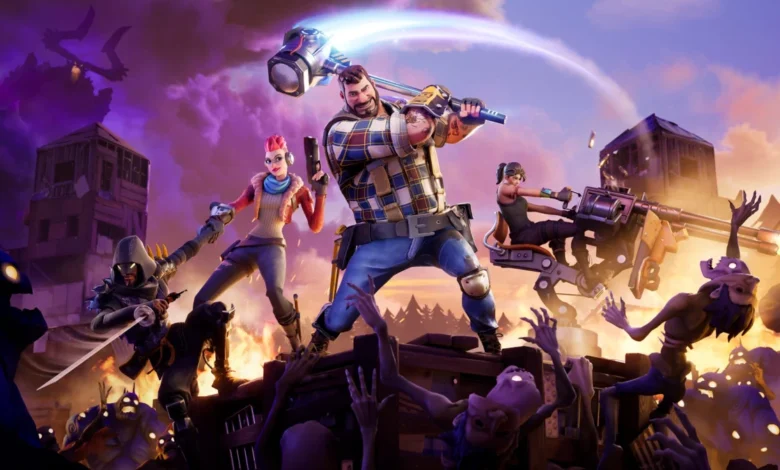
Epic Games has officially confirmed its aggressive transition toward generative artificial intelligence, signaling a fundamental shift in how the company approaches the development of its flagship titles and its industry-standard software suites. As the gaming giant prepares for the release of Unreal Engine 6, leadership has made it clear that AI-assisted programming—colloquially referred to as "vibe-coding"—will be the cornerstone of their future pipeline. This strategy, which prioritizes rapid iteration and automated feature deployment, positions Epic at the vanguard of a technological transformation that continues to polarize the global game development community.
The directive to integrate generative AI is not merely a theoretical ambition but an operational mandate currently influencing live development streams for Fortnite, the Unreal Editor for Fortnite (UEFN), and the nascent architecture of Unreal Engine 6. Marcus Wassmer, Executive Vice President of Development at Epic Games, has characterized this move as an existential necessity, arguing that the velocity of technological advancement necessitates a departure from traditional, manual software engineering practices.
A Chronology of Epic’s AI Adoption
The integration of generative AI within Epic Games has progressed in distinct, increasingly public stages. While the company has long utilized machine learning for internal optimization, the shift toward generative large language models (LLMs) for core feature development became apparent over the last 18 months.
The trajectory began with internal experiments designed to reduce the overhead of repetitive coding tasks. By mid-2023, reports began to surface regarding the utilization of AI tools in the development of unannounced projects, including titles involving major intellectual property partners like Disney and Marvel. These early deployments were reportedly aimed at accelerating art asset production and boilerplate code generation.
The strategy reached a tipping point earlier this month when Epic publicly acknowledged that the latest iteration of the Epic Games Launcher was developed largely through AI-assisted processes. The company framed this as a pragmatic response to the complexities of modern software maintenance, stating that the move was intended to achieve performance gains that would allow the launcher to operate with higher efficiency than competitors such as Valve’s Steam.
Following this, the recent statements from the company’s leadership regarding the development of Unreal Engine 6 represent the most significant expansion of this policy to date. By applying these methods to the engine itself—the foundation upon which thousands of external developers rely—Epic is effectively mandating that the next generation of games built on its platform will be the product of a human-AI collaborative workflow.
The Methodology of "Vibe-Coding"
In industry discourse, "vibe-coding" refers to a process where engineers leverage AI to generate complex code structures based on high-level natural language prompts. Rather than writing individual lines of logic, developers act as architects, guiding the AI toward specific functional outcomes.
According to Marcus Wassmer, this does not mean the end of human oversight. Epic’s engineers continue to define the architectural requirements, ensuring that the resulting code remains within the necessary memory and performance envelopes. The goal, according to the company, is to minimize the "one-shot" generation of code—a process prone to errors—and instead utilize an iterative loop where AI suggests implementations that are then refined, tested, and audited by human teams.
Proponents of this methodology suggest that it significantly reduces the time-to-market for complex software features. By automating the creation of boilerplate code, engineers are theoretically freed to focus on high-level system design and creative innovation. However, this shift raises critical questions regarding the long-term maintainability of codebases generated by AI, particularly when those systems are intended to support the global developer ecosystem.
Industry Tensions and Regulatory Friction
The aggressive pursuit of AI integration has not been without significant resistance. Epic Games, led by CEO Tim Sweeney, has found itself at the center of a growing ideological divide regarding the transparency and ethics of AI in software development.
The conflict reached a public impasse during debates over Valve’s updated policies for the Steam store. Valve requires developers to disclose the use of generative AI in their titles, a policy intended to address concerns regarding copyright, plagiarism, and the provenance of training data. Tim Sweeney has been a vocal critic of such requirements, suggesting that they serve to fuel reactionary movements and create unnecessary administrative burdens for developers.
This clash highlights a broader tension between platform holders and developers. While companies like Valve seek to implement safeguards to protect against intellectual property infringement and to maintain transparency for consumers, Epic Games appears to view these regulations as obstacles to progress. Epic’s stance is that the competitive landscape is moving too quickly for the industry to adopt a "halfway approach." They argue that transparency is best managed through the sharing of internal best practices rather than through mandated, standardized disclosures.
Implications for the Developer Ecosystem
The impact of Epic’s policy shift extends far beyond its own internal projects. As the creator of Unreal Engine, Epic sets the standard for how games are built. If Unreal Engine 6 is fundamentally designed using AI-centric workflows, the entire industry may be forced to adapt to these tools, whether they are ready or not.
Several critical implications merit analysis:
- Talent Requirements: The role of the "game programmer" is undergoing a rapid evolution. The ability to articulate technical requirements to an AI model is becoming as valuable as traditional proficiency in C++ or Python. This necessitates a massive re-skilling of the existing workforce.
- Quality Assurance: As AI takes on a larger role in code generation, the burden on QA teams will likely increase. Ensuring that AI-generated code is free from security vulnerabilities and performance bottlenecks requires a sophisticated understanding of the underlying engine architecture.
- Environmental and Ethical Concerns: The computational cost of running large-scale AI models is a point of concern for sustainability advocates. Furthermore, the reliance on models trained on potentially copyrighted data remains a legal and ethical gray area that could lead to future litigation.
- Competitive Dynamics: By moving faster than its competitors, Epic aims to solidify its position as the premier game development platform. If their AI-driven updates result in a demonstrably superior and more efficient engine, other companies may feel pressured to follow suit, regardless of their internal reservations.
Corporate Philosophy and Future Outlook
Epic Games has made it clear that they prioritize the risk of stagnation over the risk of public or professional skepticism. The company’s leadership views generative AI not as a temporary trend, but as the next logical evolution in the history of software development, comparable to the transition from assembly language to high-level programming languages.
"We don’t think it’s viable to take a halfway approach to AI in development," Wassmer reiterated. This sentiment suggests that the company is prepared to weather the backlash, confident that the performance and feature-set improvements afforded by AI will eventually become the industry standard.
As Unreal Engine 6 continues its development, the industry will be watching closely to see if Epic can successfully navigate the complexities of AI-integrated production without sacrificing the reliability and stability that the Unreal ecosystem is known for. The company’s willingness to experiment with its own launcher and live-service titles like Fortnite serves as a testing ground for these methodologies.
Ultimately, the shift represents a pivotal moment for the gaming industry. As Epic Games doubles down on its AI strategy, it is effectively setting the tempo for the next decade of digital entertainment. Whether this leads to a new era of creative efficiency or a period of technical and legal instability remains to be seen, but the company’s path is set: the future of Unreal Engine will be, in large part, written by the machines.