Anker Launches 25W Qi2.2 Portable 3-in-1 Charging Station to Maximize iPhone 16 and Newer Performance

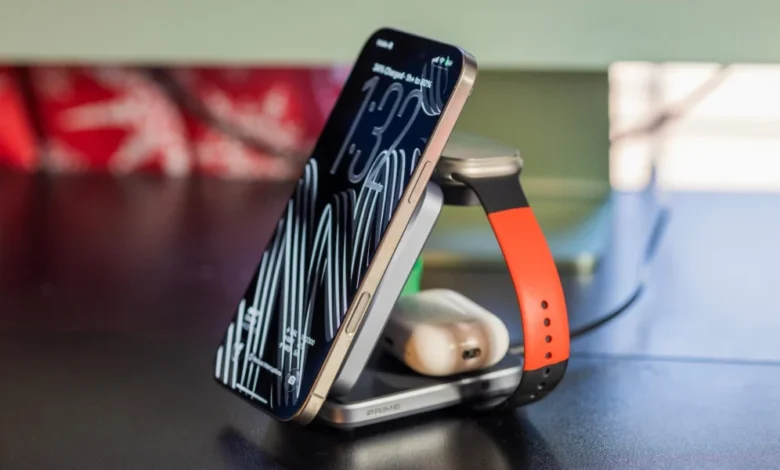
The landscape of consumer wireless charging technology has undergone a significant transformation throughout 2025 and into 2026, driven largely by the transition to the Qi2.2 standard. As high-speed wireless charging becomes a consumer expectation rather than a luxury, hardware manufacturers are racing to balance high-wattage power delivery with thermal management. Anker, a dominant player in the mobile power accessory market, has released its latest solution to this technical challenge: the 25W Prime MagSafe 3-in-1 charging station. Designed specifically to leverage the full 25W wireless charging capabilities of the iPhone 16 series and subsequent models, this device aims to bridge the gap between desktop power solutions and the portability requirements of modern travelers.
The Evolution of Qi2.2 and High-Wattage Wireless Charging
The Qi2 standard, introduced by the Wireless Power Consortium (WPC), was designed to unify the wireless charging experience by integrating Apple’s MagSafe magnetic alignment technology into a broader, cross-platform ecosystem. While initial Qi2 devices focused on the 15W threshold, the recent update to Qi2.2 has unlocked higher power transfer capabilities.
![Anker’s 25W MagSafe 3-in-1 packs active cooling in a travel-sized design [Hands-on]](https://9to5mac.com/wp-content/uploads/sites/6/2026/02/IMG_1339.jpg?quality=82&strip=all&w=1600)
Throughout the latter half of 2025, the industry saw a pivot toward 25W wireless charging. This shift was largely necessitated by the increasing power demands of high-end mobile processors and the consumer desire for parity between wired and wireless charging speeds. Achieving 25W wirelessly, however, presents significant engineering hurdles—most notably, heat dissipation. According to thermodynamics principles applied to inductive charging, as power transfer increases, so does the generation of waste heat. Excessive heat can degrade lithium-ion battery health over time, which is why active cooling has become the industry standard for any accessory attempting to deliver sustained 25W power.
Technical Specifications and Performance Metrics
The Anker Prime 3-in-1 charger is built around a foldable, compact architecture intended for mobility. The device includes a dedicated magnetic surface for the iPhone, a charging module for Apple Watch, and an additional surface for AirPods or other Qi-compatible peripherals.
Key technical specifications include:
![Anker’s 25W MagSafe 3-in-1 packs active cooling in a travel-sized design [Hands-on]](https://9to5mac.com/wp-content/uploads/sites/6/2026/02/IMG_1333.jpg?quality=82&strip=all&w=1024)
- Power Delivery: 25W maximum wireless output for compatible iPhones.
- Thermal Management: Integrated active cooling system to regulate surface temperature during high-speed charging cycles.
- Input Requirements: Bundled with a 45W GaN (Gallium Nitride) wall adapter and a high-speed USB-C cable.
- Charging Efficacy: Laboratory testing indicates the ability to charge an iPhone 18 Pro from 0% to 50% in approximately 27 minutes, a performance benchmark that matches or exceeds several wired charging configurations.
The integration of a 45W brick is a deliberate choice by the manufacturer to ensure that the station can simultaneously manage the peak power draws of all three devices without throttling the charging speed of the primary iPhone mount.
A Chronology of Portable Power: From MagSafe Duo to Modern Solutions
To understand the market positioning of this new product, one must look back at the trajectory of Apple’s own accessory line. In 2020, Apple released the MagSafe Duo, a product that established the form factor for "foldable" portable wireless chargers. While the MagSafe Duo was praised for its minimalist design and portability, it faced criticism for its limitations: it was capped at lower wattage speeds and lacked the versatility to act as a vertical stand for interactive use.
Apple discontinued the MagSafe Duo in 2023 as it transitioned toward the USB-C standard and higher-wattage Qi2 compatibility. Since then, the market has been flooded with various third-party alternatives. Anker’s latest iteration attempts to address the two primary pain points of the original MagSafe Duo: the lack of multi-device charging capacity beyond two devices and the inability to position the phone in a "StandBy" mode orientation. By incorporating a spring-loaded watch charger that retracts when not in use, the new unit manages to maintain a low profile while closed, yet expands into a fully functional multi-device stand.
![Anker’s 25W MagSafe 3-in-1 packs active cooling in a travel-sized design [Hands-on]](https://9to5mac.com/wp-content/uploads/sites/6/2026/02/IMG_1349.jpg?quality=82&strip=all&w=1024)
Market Implications and Industry Standards
The widespread adoption of 25W charging represents a maturation of the wireless power sector. For the average consumer, this means the traditional trade-off between the convenience of wireless charging and the speed of wired charging is effectively disappearing. However, this shift places greater pressure on manufacturers to adhere to strict safety certifications.
Industry analysts note that as devices like the iPhone 18 Pro push the limits of battery intake, the role of "Made for MagSafe" (MFM) or Qi2-certified hardware becomes critical. Non-certified chargers often lack the sophisticated handshake protocols required to communicate battery temperature and voltage requirements between the charger and the phone. By utilizing the Qi2.2 standard, Anker ensures that the charger operates within the safety parameters defined by the Wireless Power Consortium, reducing the risk of battery degradation that can occur with unregulated high-wattage charging.
Official Positioning and Availability
Anker has positioned the Prime 3-in-1 as a premium travel accessory. In a market where many budget chargers offer only 7.5W or 15W, the $99 price point serves as a reflection of the hardware complexity required to deliver 25W safely.
![Anker’s 25W MagSafe 3-in-1 packs active cooling in a travel-sized design [Hands-on]](https://9to5mac.com/wp-content/uploads/sites/6/2026/02/IMG_1357.jpg?quality=82&strip=all&w=1024)
From an economic standpoint, the current pricing strategy reflects a stabilization in the cost of GaN components and cooling hardware. During the initial rollout of 25W wireless chargers in late 2025, prices for comparable stations were often 20% to 30% higher. The current competitive landscape suggests that the component costs for active cooling modules have decreased due to economies of scale, allowing manufacturers to offer high-performance charging at a sub-$100 price bracket.
The Role of Active Cooling in Battery Longevity
A frequent subject of debate among power-user communities is the impact of active cooling on device longevity. Wireless charging at 25W inherently generates more heat than charging at lower wattages. Without active cooling, the internal circuitry of a phone would likely trigger a thermal throttle, reducing the charge speed significantly once the device reaches a specific temperature threshold.
By incorporating a fan-based cooling system, the Anker charger maintains the temperature of the internal induction coil and the phone’s back glass within an optimal range. This ensures that the phone can maintain the 25W input for a longer duration. This is not merely a feature for speed; it is a feature for safety. Maintaining a cooler temperature during the energy conversion process is widely regarded as beneficial for the long-term health of the iPhone’s internal battery, as heat is the primary catalyst for chemical degradation in lithium-ion cells.
![Anker’s 25W MagSafe 3-in-1 packs active cooling in a travel-sized design [Hands-on]](https://9to5mac.com/wp-content/themes/ninetofive/dist/images/google-preferred-source-badge-dark.png)
Future Outlook for Wireless Infrastructure
The launch of this 3-in-1 station is a microcosm of the broader trend toward wireless-first infrastructure. As Apple and other manufacturers continue to refine their device designs—moving toward port-less or port-minimized iterations—the importance of robust, high-speed, and portable charging solutions will only grow.
Future developments are expected to focus on "resonance" charging, which could eventually allow for charging across greater distances without direct contact, though current market standards remain firmly rooted in inductive Qi2.2 technology for the immediate future. Until then, foldable, active-cooled stations like the one introduced by Anker serve as the current apex of mobile charging technology.
For the consumer, the choice of a 25W charger is now effectively a future-proofing measure. With the hardware specifications of the iPhone 16, 17, and 18 series clearly favoring the 25W standard, investing in a charger that supports this protocol is a logical step for those seeking to maximize the utility of their mobile devices. Whether for professional travel, home office setups, or nightstand use, the combination of high-speed charging, compact industrial design, and safety-focused thermal management represents the new baseline for premium mobile accessories in 2026.