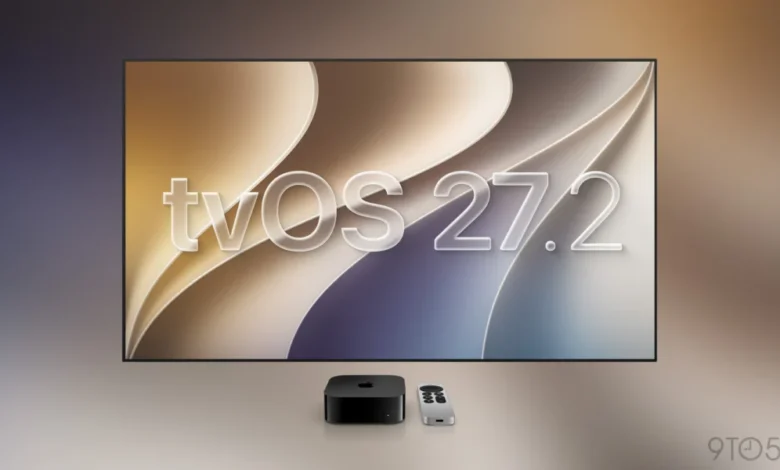
With the highly anticipated November 13 launch date for the fourth-generation Apple TV 4K fast approaching, Apple has deployed a specialized software update to ensure the hardware is ready for the consumer market. Today, the company released a new build of tvOS 27.2, designated as version 24K154, specifically tailored for the upcoming device. This move differentiates the software environment for the new hardware from the previous iteration, version 24K122, which was released just last week alongside the wider suite of Apple’s operating system updates.
The timing of this release is critical. As the tech industry observes the final countdown to the latest Apple TV’s retail debut, this secondary build serves as a crucial bridge between internal development testing and public availability. While initial reports indicated that the release notes for this specific build remained identical to the previous version, subsequent investigation and community feedback have shed light on the primary motivation behind the update: the activation of advanced artificial intelligence features.
A Chronology of the tvOS 27.2 Rollout
The current software landscape for Apple’s home entertainment ecosystem has been defined by a rapid series of deployments over the past three weeks. On October 20, Apple introduced the initial feature set for tvOS 27.2, signaling a focus on personalization and accessibility. This update brought several quality-of-life enhancements to the platform, most notably a sophisticated Shuffle option for screen savers, which allows for a more dynamic viewing experience. Furthermore, users were granted granular control over photo selection for these displays, alongside the inclusion of American and British Sign Language support for select media, marking a significant step forward in accessibility standards for the living room.
Following the initial release, Apple synchronized this update with its broader ecosystem on October 26, pushing tvOS 27.2, alongside corresponding updates for iOS, iPadOS, macOS, watchOS, and visionOS. This comprehensive deployment reinforced Apple’s strategy of maintaining a unified experience across all hardware platforms. However, the discovery of build 24K154 today highlights that the upcoming fourth-generation Apple TV 4K requires a distinct software path, likely due to the unique hardware components integrated into the new chassis.
Technical Implications of the New Build
The distinction between build 24K122 and the new 24K154 is more than mere nomenclature. It represents the inclusion of hardware-specific drivers and feature flags that are essential for the operation of the new device’s specialized capabilities. Reports originating from technical analysts and early observers, specifically @itspdfu on the X platform, have confirmed that this new build enables Siri AI on the fourth-generation Apple TV 4K.

Previously, the Siri AI functionality—a marquee feature of this hardware iteration—was restricted to internal testing environments. By including this functionality in the public-facing build 24K154, Apple is effectively green-lighting the most advanced voice-control system ever seen on a streaming device. This suggests that the fourth-generation model is not just a hardware refresh, but a software-defined evolution of the platform. The fact that this feature was gated suggests a rigorous final-stage testing process, ensuring that the heavy processing demands of Siri AI do not compromise the stability of the tvOS interface.
The Hardware Landscape: What to Expect on November 13
The fourth-generation Apple TV 4K, arriving at a retail price of $299, represents a significant investment in the future of the home media center. Beyond the software advancements, the device introduces several hardware-level shifts. Among the most discussed upgrades is the integration of far-field microphones directly into the unit. This change removes the reliance on the remote control for voice input, enabling a true hands-free experience that aligns with modern smart home expectations.
Furthermore, the new model introduces a sophisticated surround sound architecture. By allowing users to pair four compatible HomePods as a collective array of front and rear speakers, Apple is positioning the device as a legitimate competitor to dedicated, high-end home theater audio systems. This capability requires significant low-latency processing, which is likely supported by the updated firmware contained within the new tvOS build.
The inclusion of the fourth-generation Siri Remote further enhances the user experience. Equipped with Precision Finding technology, the remote now allows users to locate it through the Find My network, emitting an audible sound to prevent loss. The backward compatibility of this remote with older Apple TV 4K models and the Apple TV HD provides a welcome layer of longevity for existing users who may choose to upgrade their controller without replacing their entire console.
Broader Impact and Market Analysis
The release of a specialized build for the new Apple TV 4K raises questions regarding the future of older hardware. While the current 24K122 build remains the standard for existing Apple TV models, the fact that the latest Siri AI features are currently exclusive to the new hardware may create a tiered user experience. Industry analysts suggest that Apple faces a delicate balance: providing enough incentive to upgrade to the latest model while maintaining software parity for legacy devices.
The delay in deploying Siri AI to older units may be a matter of hardware constraints rather than software policy. The new Apple TV 4K likely features an upgraded neural engine capable of handling the sophisticated queries required by the latest iteration of Siri. If the processing requirements for these AI tasks exceed the capacity of the chips in older Apple TV models, a full rollout across the ecosystem may be impossible. However, if the features are merely software-gated, it is possible that Apple will eventually release a firmware update for older devices, though perhaps with limited functionality compared to the new 2026 hardware.

This development also underscores the increasing convergence of AI and consumer electronics. By embedding Siri AI directly into the streaming interface, Apple is shifting the Apple TV from a content consumption device to a central hub for home intelligence. The ability to command complex actions—such as searching for content, managing smart home devices, and executing multi-step requests—via voice is the new standard for the living room.
Looking Ahead
As the November 13 launch date approaches, the software situation remains fluid. The release of build 24K154 is a strong indicator that the final production units are being flashed with this version, ensuring that when customers unbox their devices, they will have immediate access to the full suite of advertised features.
For current Apple TV owners, the focus remains on the stability provided by the existing 24K122 build. While there is anticipation that Apple will eventually provide a unified build that brings feature parity across the product line, the company has not issued any official statement regarding the timeline for such an update. Users are advised to monitor their device settings for future software notifications.
In the competitive landscape of streaming hardware, Apple’s focus on deep integration between hardware and software continues to be its primary differentiator. While competitors often focus on hardware specs alone, Apple’s strategy of using proprietary builds to unlock specific, high-value software features ensures that its devices maintain a distinct place in the market. The upcoming launch will be the ultimate test of this strategy, as the market evaluates whether the integration of Siri AI and advanced audio capabilities justifies the $299 price point.
As the industry prepares for the November release, the technical community will be watching closely for any further revisions to these builds. With the foundation now laid for the fourth-generation Apple TV 4K, the path for a successful rollout appears to be clear. Whether or not these AI capabilities will eventually permeate the rest of the Apple TV catalog remains the single most important question for the millions of users who currently rely on older versions of the hardware. For now, the latest software build serves as a testament to the ongoing evolution of the living room, marking the next chapter in Apple’s commitment to home entertainment.
Related posts: