This 90s Arcade Game Looked Like Dragon Ball Z Meets Aliens: Thunder Hoop Collection

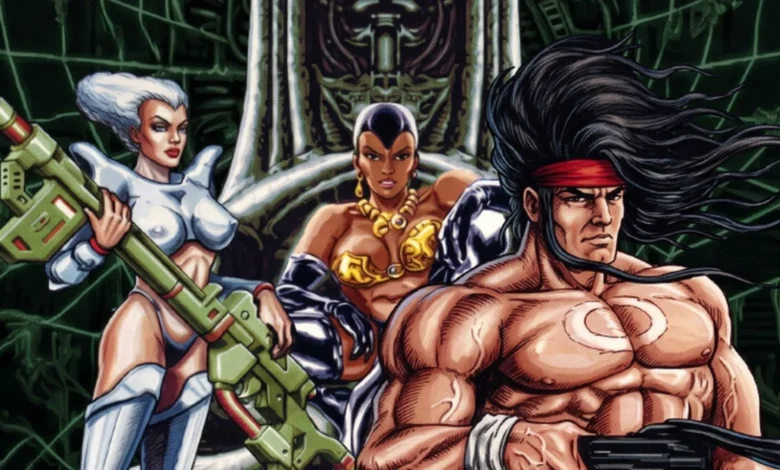
Retro game preservation specialists QUByte Interactive are preparing to launch the Thunder Hoop Collection on Steam, bringing two largely overlooked arcade titles from the early 1990s to modern gaming platforms. Scheduled for release on October 8, the bundle features the arcade platformer Thunder Hoop (1992) and its sequel, TH Strikes Back (1994). Developed originally by the Spanish video game company Gaelco—historically renowned for electronic dartboards and the breakout arcade hit World Rally—these titles have remained obscure outside of Spain and select European arcades. The upcoming release aims to expose a new generation of digital enthusiasts to a unique era of European arcade development characterized by chaotic action, bizarre character design, and heavy pop-culture pastiche.
The Origins of Gaelco and the 1990s Arcade Landscape
During the early 1990s, the global coin-op arcade market was dominated by Japanese giants such as Capcom, SNK, and Sega. However, European developers occasionally managed to carve out localized niches. Based in Barcelona, Spain, Gaelco S.A. was founded in 1985 and initially focused on the design and manufacture of electronic dartboards before transitioning into coin-operated video games. While the company achieved international commercial success with 1993’s World Rally—thanks in part to its real-time cooperative multiplayer and recognizable car brands—many of its other arcade ventures struggled to find distribution outside of Southern Europe.
Thunder Hoop, released in 1992, represented Gaelco’s attempt to capture the lucrative action-platformer market popularized by titles like Contra, Strider, and Ghosts ‘n Goblins. The game featured a visual style that blended traditional anime aesthetics with industrial science fiction tropes. Players assumed control of the titular protagonist, a genetically engineered superhuman tasked with dismantling the operations of the villainous Dr. Genbreak and his mutant armies. Despite its striking visual presentation and competent gameplay mechanics, the game’s limited global distribution relegated it to cult-classic status, known primarily by dedicated arcade historians and regional players who frequented smoke-filled European arcades during the twilight years of the coin-op boom.
Evolution of a Franchise: From 1992 to 1994
The trajectory of the Thunder Hoop series offers a fascinating glimpse into how arcade developers iterated on their intellectual properties under commercial pressure during the mid-1990s. The original 1992 game was a standard side-scrolling platformer. The protagonist, introduced as a teenager, fought through a variety of conventional environments, ranging from futuristic urban cityscapes to subterranean sewer networks and aquatic stages. Combat relied heavily on the character’s innate ability to project energy blasts from his hands, destroying waves of cartoonish mutants, cyborgs, and mechanized bosses.
When Gaelco released the sequel, TH Strikes Back, in 1994, the industry had shifted. Fighting games and aggressive run-and-gun titles were dominating arcade floors, heavily influenced by media like Dragon Ball Z and sci-fi action cinema such as Aliens and Terminator 2: Judgment Day. In response, the developers radically overhauled the franchise’s tone and visual identity.
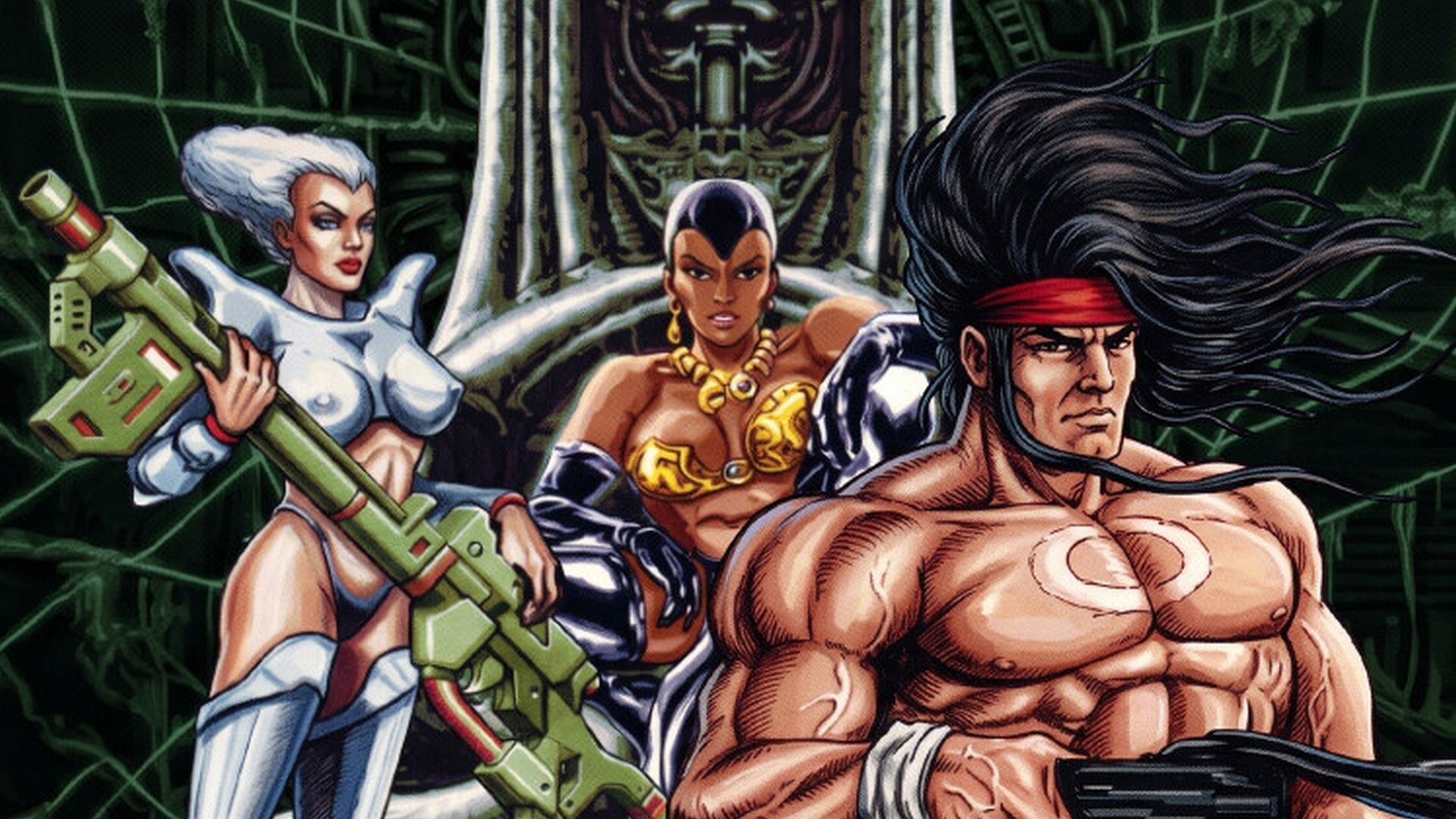
In TH Strikes Back, the protagonist was aged up into a hyper-muscular adult who eschewed shirts entirely in favor of an aggressively utilitarian combat aesthetic. The gameplay shifted further away from traditional platforming toward relentless, fast-paced action reminiscent of Metal Slug or Contra. The sequel introduced surreal narrative leaps, most notably a sequence where the protagonist achieves a glowing, spiky-haired transformation explicitly invoking Super Saiyan tropes before launching into a vertically and horizontally scrolling space shooter segment styled after classic shoot ’em ups like Konami’s Gradius. Furthermore, the sequel leaned heavily into B-movie sci-fi iconography, pitting the hero against armored mercenaries, biomechanical horrors, and latex-clad femme fatales.
Modern Preservation and Quality-of-Life Enhancements
QUByte Interactive, a Brazilian development studio and publisher recognized for its expertise in retro porting and digital game preservation, has equipped the Thunder Hoop Collection with standard modern conveniences expected by contemporary PC gamers. Emulation of arcade hardware from this era often presents technical hurdles regarding input latency, aspect ratios, and visual clarity on modern high-definition displays.
To address these challenges, the collection includes:
- Save States: Allowing players to save their progress at any point, mitigating the notoriously high difficulty and coin-eating design philosophy inherent to 1990s arcade machines.
- Rewind Functionality: Providing the ability to reverse gameplay moments to recover from sudden enemy attacks or platforming mistakes.
- Customizable CRT Filters: Offering authentic visual overlays and scanline filters designed to replicate the look of vintage cathode-ray tube monitors.
- Multiplayer Integration: While the original 1992 Thunder Hoop required players to take turns during multiplayer sessions due to hardware limitations of the era, TH Strikes Back features native local cooperative play, allowing two users to combat Dr. Genbreak’s forces simultaneously.
These features align with modern industry standards for retro compilations, mirroring efforts by companies like Digital Eclipse and Hamster Corporation to make historical, friction-heavy arcade games accessible and enjoyable for modern audiences without sacrificing their historical integrity.
Industry Implications and the Rise of Digital Retro Archives
The release of the Thunder Hoop Collection highlights a broader trend within the video game industry: the systematic digital preservation of obscure, regional arcade libraries. For decades, games that failed to secure North American or extensive Asian distribution risked being lost entirely to physical hardware degradation, board failures, and the closure of independent arcade operators.
Publishers specializing in digital curation have increasingly turned their attention to the European arcade sector of the late 1980s and 1990s. Companies like Gaelco possess catalogs that remain largely unexplored by mainstream distribution platforms. By bringing titles such as Thunder Hoop and TH Strikes Back to Steam, developers like QUByte Interactive not only cater to niche enthusiast markets but also contribute to academic and cultural archiving efforts.
From an economic perspective, these low-cost digital collections provide a sustainable revenue stream for vintage intellectual properties while requiring minimal overhead compared to full-scale remakes or remasters. For historians and game developers alike, studying titles like Thunder Hoop offers valuable insight into how non-Japanese studios absorbed and reinterpreted dominant artistic trends from manga and anime during an era of rapid globalization in entertainment media.
The Thunder Hoop Collection is slated for release on Steam on October 8, inviting digital archaeology enthusiasts and fans of classic arcade action to experience a unique, hyper-stylized corner of 1990s gaming history.
Related posts: