Fitbit Sense & Versa losing 3rd-party watch faces this month, existing downloads remain

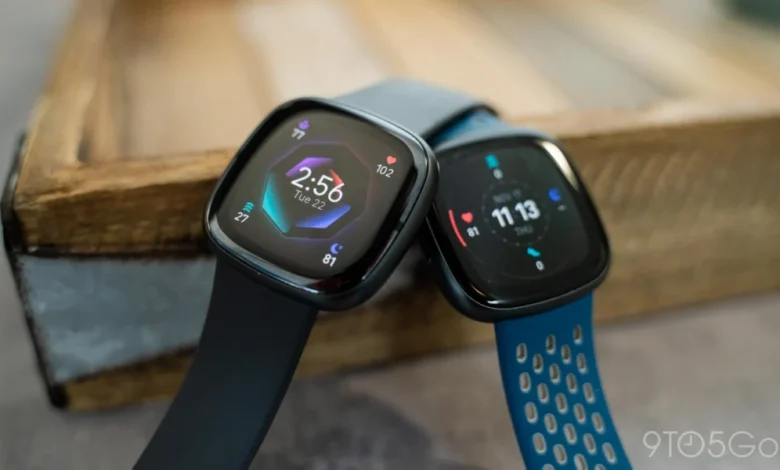
The policy change impacts a wide array of legacy and relatively modern hardware, specifically the Versa, Versa 2, Versa 3, and Versa 4, alongside the Sense and Sense 2. While users who currently have third-party apps or clock faces installed will retain access to them, the platform will no longer support the acquisition of new content or the modification of existing installations. Crucially, if a user decides to delete an app or performs a factory reset on their device after the November 28 deadline, those third-party assets will become permanently unavailable for re-installation.
The Shift Toward a Closed Ecosystem
Following the November 28 cutoff, the Fitbit App Gallery will undergo a functional transformation. It will exclusively feature applications and watch faces developed internally by Fitbit and Google. For third-party developers, the announcement serves as a final notice: the ability to upload new software or push updates to existing applications on these devices will be terminated entirely. This decision effectively ends the development lifecycle for the Fitbit OS platform, a move that has been anticipated by industry analysts since Google’s acquisition of Fitbit was finalized in early 2021.
The integration of Fitbit into the Google hardware portfolio has been a multi-year project characterized by a gradual migration away from proprietary Fitbit software toward the more robust and versatile Wear OS platform. By narrowing the focus of the Fitbit App Gallery to first-party offerings, Google is effectively limiting the utility of the Sense and Versa lines to core health and fitness tracking, while steering consumers interested in broader smartwatch functionality—such as deep app integration and third-party software ecosystems—toward the Pixel Watch series.
Chronology of the Fitbit Transition
The evolution of Fitbit’s software strategy is best understood through the timeline of the company’s integration into Google. When Google completed its $2.1 billion acquisition of Fitbit in January 2021, many industry observers speculated that the proprietary Fitbit OS would eventually be superseded by Wear OS.

- 2021: Google completes the acquisition of Fitbit, pledging to maintain cross-platform compatibility while integrating health tracking into its ecosystem.
- 2022: The launch of the Pixel Watch signaled the first major hardware departure for Google, utilizing Wear OS instead of the Fitbit operating system.
- 2022-2023: Continued support for the Sense 2 and Versa 4 is maintained, though users noted a more limited app experience compared to earlier iterations of the platform.
- 2024: Google begins the process of sunsetting certain legacy services, including the community-focused Fitbit Challenges and Adventures, and eventually, the third-party developer support for the App Gallery.
- November 28, 2024: The definitive deadline for the removal of third-party app and clock face support for the Sense and Versa lines.
This progression highlights a strategic move to standardize the software experience across Google’s wearable portfolio. By moving away from a fragmented landscape where different watch lines run on different, incompatible software stacks, Google is attempting to create a more cohesive user experience—even if that means sacrificing the versatility of the Fitbit hardware for legacy users.
Analyzing the Impact on Developers and Users
The decision to cease third-party support has sparked a debate regarding the lifecycle of consumer electronics. Developers who invested time in creating specialized widgets, custom exercise trackers, or aesthetic clock faces for Fitbit OS now face the obsolescence of their work. For the end user, the loss of third-party app support limits the "smart" capabilities of their devices. While the Sense and Versa are marketed primarily as health-focused trackers, the inclusion of third-party apps previously allowed these devices to act as basic conduits for smart home control, productivity tools, and specialized fitness logging.
From a data-centric perspective, the active user base for Fitbit’s legacy devices remains significant. Despite the rise of the Pixel Watch, many consumers continue to favor the Fitbit Versa and Sense lines due to their multi-day battery life, which often exceeds the daily charging requirements of Wear OS-based devices. By restricting the app gallery, Google is essentially "freezing" these devices in time, turning them into dedicated health-tracking tools that are no longer meant to evolve with the software landscape.
Broader Implications for Google’s Hardware Strategy
The sunsetting of Fitbit OS third-party support is a logical, albeit controversial, step in Google’s broader hardware roadmap. For years, the Fitbit App Gallery struggled to attract the same level of developer attention as Apple’s watchOS or Google’s own Wear OS. The fragmentation of the smartwatch market meant that developers were often forced to choose between building for proprietary platforms or focusing on market leaders.
By consolidating its efforts, Google is reducing the operational overhead of maintaining multiple app galleries and security protocols for different operating systems. However, this comes at a cost to consumer trust. Critics argue that limiting the functionality of devices that are still sold at retail—such as the Sense 2 and Versa 4—presents a difficult value proposition. If a product is sold as a "smartwatch," consumers generally expect an evolving feature set. By removing the ability to expand that feature set via third-party apps, the device effectively shifts classification from "smartwatch" to "fitness tracker."

Official Stance and Market Reaction
Google’s communication regarding this change has been framed as an "important update," focusing on the prioritization of the first-party experience. The company’s support pages suggest that by focusing on apps created by Fitbit and Google, they can ensure a more stable and high-quality experience for the user.
While the company has not issued a formal press release addressing the public outcry from long-time power users, the move is consistent with previous software lifecycle management seen in other Google product lines. When the company feels that a specific platform or service has reached its natural conclusion, it is often retired to focus resources on future-proof alternatives. In this case, the future-proof alternative is clearly the Pixel Watch and the Wear OS ecosystem, which boasts a significantly larger library of applications and a more aggressive update cadence.
The Future of the Fitbit Brand
The transition also raises questions about the long-term viability of the Fitbit hardware brand itself. As Google continues to blend the Fitbit health-tracking algorithms into the Pixel Watch, the need for a separate line of "Fitbit-branded" smartwatches becomes less clear. The Sense and Versa lines have served as a bridge between traditional fitness trackers and modern smartwatches. As that bridge is dismantled, the industry is left to wonder if the Fitbit name will eventually be relegated solely to the Charge and Inspire series of fitness bands, or if it will simply disappear as a hardware brand in favor of the Google Pixel moniker.
For current owners of the Sense 2 and Versa 4, the immediate takeaway is the need for caution. Users should avoid factory resetting their devices if they rely on specific third-party clock faces or applications, as these will be irretrievable after the November deadline. Furthermore, prospective buyers should take note of these limitations. While the hardware remains highly capable for heart rate monitoring, sleep tracking, and blood oxygen measurement, its potential for software-based expansion has been effectively shuttered.
Ultimately, this development serves as a reminder of the inherent risks in the connected device market. Software-defined hardware is only as capable as the company behind it is willing to support. When a company decides to pivot, the consumer’s device—despite its physical integrity—is subject to the same lifecycle constraints as a purely digital service. As Google continues its march toward a unified hardware ecosystem, the sunsetting of Fitbit OS functionality will likely go down as a defining moment in the integration of the world’s most popular fitness tracker into the monolithic Google platform.
Related posts: