Nvidia RTX 5090 Supply Vanishes Online as Third-Party Prices Skyrocket Past $9,000

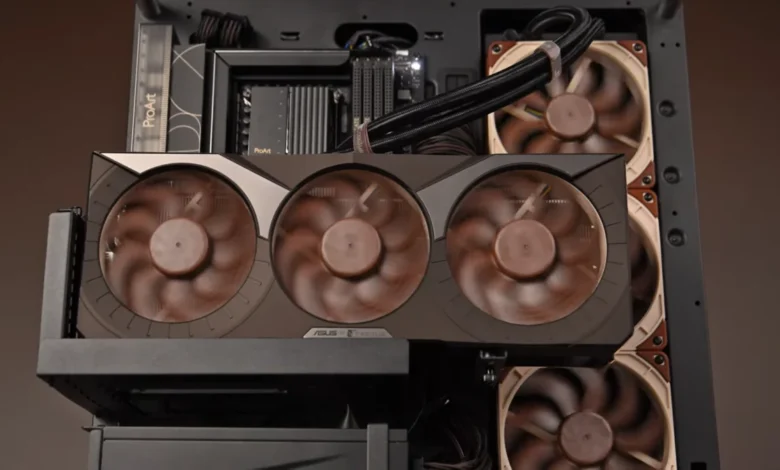
Nvidia’s flagship consumer graphics card, the GeForce RTX 5090, has experienced an unprecedented squeeze in online retail availability, driving market prices to astronomical heights. Over the past several weeks, mainstream e-commerce platforms like Amazon and Newegg have seen their native stocks of the high-end GPU completely dry up. Consequently, prospective buyers are left at the mercy of third-party marketplace vendors, where prices for Team Green’s most powerful hardware are regularly commanding anywhere from $6,500 to upwards of $9,500.
This dramatic escalation in pricing highlights a volatile confluence of soaring enterprise demand, constrained manufacturing pipelines, and opportunistic scalping. For enthusiasts tracking the high-end PC component market, the current landscape represents one of the most severe supply crunches in recent GPU history, echoing historical shortages but driven by distinct modern market forces.
Current Marketplace Realities and Escalating Costs
A scan of major online storefronts reveals just how distorted the consumer graphics card market has become for Nvidia’s crown jewel. At Newegg, the lowest-priced listing for an RTX 5090 features the MSI Ventus 3X, offered by a relatively new third-party vendor named Slava Computers for $6,449. Meanwhile, Amazon listings feature options such as the Asus TUF Gaming OC priced at $6,395 through independent storefronts like Joes Tech Shop. However, these listings are fraught with risk; consumer feedback for these specific third-party vendors often includes troubling reviews regarding unfulfilled orders and subpar customer service.
At the upper end of the spectrum, pricing quickly breaks away from any semblance of standard retail logic. Prominent placement listings on Newegg for the MSI Ventus 3X OC have surfaced with staggering price tags reaching $8,699.
This upward trajectory represents a steep and rapid climb over a compressed timeline. Back in June, market metrics placed the median price for an RTX 5090 at a still-inflated $4,299. By the beginning of September, industry price trackers logged the lowest available online price at $5,199. In less than two weeks following that milestone, direct retail stock vanished entirely, leaving third-party resellers to artificially inflate costs to figures that double and triple the card’s intended baseline value.
A Chronology of Price Escalation and Scams
To understand how the market reached this juncture, it is necessary to examine the steady tightening of supply throughout the year. The RTX 5090 has faced persistent inventory deficits since its initial launch window.
Timeline of the RTX 5090 Market Crunch:
- January: Initial launch and early wave distribution. High demand leads to immediate inventory depletion. Concurrently, online scammers target desperate consumers, notably executing a high-profile "fanny pack bait-and-switch" scam on Amazon where 42 buyers lost money on a fraudulent $999 RTX 5090 listing.
- June: The median street price for the flagship GPU stabilizes around $4,299 as small shipments intermittently trickle into the consumer market.
- Early September: Price trackers record a low online threshold of $5,199. Industry analysts note that standard retail channels are struggling to maintain baseline stock.
- Mid-September (Current): Direct retail inventory completely evaporates online. Third-party marketplace vendors take over, pushing minimum entry prices past $6,300 and extreme listings toward $9,500. Additionally, reports emerge of fraudulent secondhand sellers offloading stripped "phantom" cards—units with the core and memory physically removed—near MSRP prices.
Industry analysts and consumer advocacy groups have repeatedly issued warnings regarding these marketplace perils. Given the high financial stakes of purchasing enterprise-grade gaming hardware, bad actors have capitalized on consumer desperation. The January incident, which victimized 42 Amazon customers with inexpensive accessories substituted for multi-thousand-dollar GPUs, serves as a stark reminder of the risks involved in purchasing high-ticket items from unverified third-party marketplace accounts.
The Micro Center Exception: Brick-and-Mortar Resilience
Amidst the online desert, physical retail storefronts have presented a stark contrast. The notable exception to the widespread inventory drought is regional hardware retailer Micro Center.
Unlike online platforms susceptible to automated scraping bots and third-party reseller exploitation, Micro Center has maintained a strict in-person purchasing policy for high-demand graphics cards over the past several years. Hardware checks at physical locations reveal that localized stock remains available at much more reasonable price points. For instance, the lowest in-stock RTX 5090 option at a physical Micro Center branch was recorded at $4,299—aligning closely with the median historical pricing rather than the inflated figures seen across web browsers.
This brick-and-mortar insulation strategy has effectively shielded local consumers from the automated scalping rings that routinely clear digital shelves within seconds of a restock event.
The AI Factor: Why Demand Remains Insatiable
The fundamental driver behind the relentless demand for the RTX 5090 extends far beyond traditional PC gaming. At its heart, the card houses the formidable GB202 graphics processor paired with a massive 32GB pool of high-speed GDDR7 memory.
For enterprise developers, independent researchers, and small-scale data scientists, these hardware specifications represent an extraordinarily cost-effective entry point into artificial intelligence development and localized machine learning workloads. To contextualize this phenomenon, Nvidia’s enterprise-focused RTX Pro 5000 48GB workstation card features the same underlying GPU architecture—albeit with roughly one-third fewer shader units enabled and lower memory bandwidth—yet commands retail prices ranging strictly between $7,000 and $9,000.
When viewed through this lens, purchasing a consumer-grade RTX 5090 for $5,000 or more to construct a localized AI inference or training server becomes a financially viable alternative for professionals priced out of strict enterprise hardware tiers. The intersection of raw computational capability and memory capacity makes the card a prime target for non-gaming acquisition.
Gaming Performance and DLSS 5 Integration
Despite its heavy adoption in professional AI workflows, the RTX 5090 stubbornly retains its crown as the undisputed king of consumer gaming performance. According to comprehensive hardware testing and GPU benchmark hierarchies, no competing consumer silicon matches its raw rendering capabilities.
This performance dominance has been further underscored by the recent rollout of Nvidia’s DLSS 5 Neural Rendering technology. The RTX 5090 is uniquely positioned to maximize the potential of DLSS 5, harnessing advanced neural processing pipelines to deliver unprecedented visual fidelity and frame rate scaling in modern titles. While testing indicates that lower-tier Blackwell architecture cards can achieve playable performance scaling at 1080p resolutions, the flagship 5090 handles the heavy computational load of DLSS 5 effortlessly across higher resolutions, cementing its status as the ultimate enthusiast gaming asset.
Broader Industry Implications and Future Outlook
The current trajectory of the RTX 5090 market highlights persistent vulnerabilities in global semiconductor distribution and retail security. As consumer electronics increasingly double as dual-purpose enterprise tools, flagship components face unique demand pressures that standard manufacturing forecasts struggle to anticipate.
The capitalization on hardware scarcity by predatory third-party vendors underscores the urgent need for enhanced marketplace vetting by platform operators like Amazon and Newegg. Furthermore, the reliance on localized, brick-and-mortar safeguards—as demonstrated by Micro Center—suggests that physical retail models may see a resurgence among consumers seeking to bypass digital scalping networks.
As of press time, hardware manufacturers have not outlined immediate supply-side interventions to flood the consumer pipeline with additional inventory. Industry observers have reached out to Nvidia for official commentary regarding production outlooks and potential supply stabilization initiatives. Until structural inventory replenishment occurs, consumers are strongly advised to exercise extreme caution, avoid inflated third-party marketplace listings, and remain vigilant against sophisticated hardware scams.