Ford F-150 To Add Hands-Free BlueCruise Towing Feature Starting With 2027 Model Year

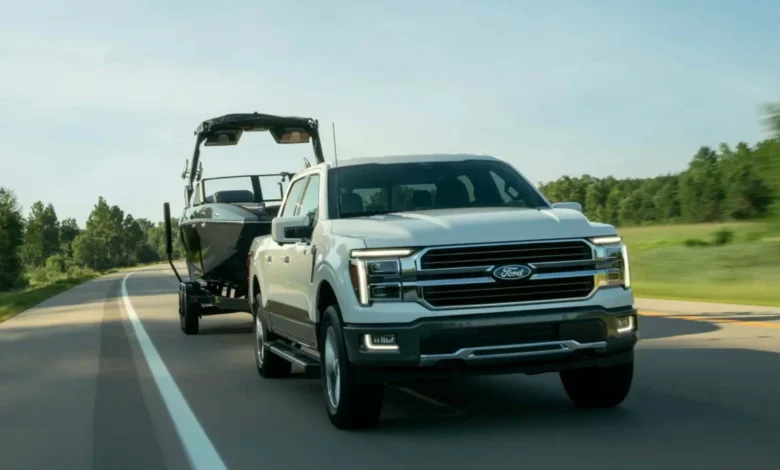
For millions of truck owners across North America, towing is not just an occasional chore; it is an intrinsic part of daily operations, weekend recreation, and heavy-duty labor. Recognizing this reality, Ford Motor Company has announced a significant evolution of its advanced driver-assistance technology. Beginning with the 2027 model year, the automaker’s popular BlueCruise hands-free highway driving system will officially support towing capabilities, allowing F-150 drivers to haul up to 10,000 pounds while keeping their hands off the steering wheel.
This technological leap represents a major milestone for the Blue Oval’s driver-assist division. According to internal data provided by Ford, more than three-quarters—specifically 76 percent—of F-150 buyers utilize their vehicles for towing purposes. Despite this overwhelming statistic, previous iterations of BlueCruise required drivers to disconnect the hands-free functionality whenever a trailer was hitched. With the upcoming 2027 software and hardware integration, Ford is closing that gap, promising to alleviate the physical and mental fatigue associated with long-distance trailering.
The Evolution of Ford BlueCruise: From Highway Assist to Heavy Hauler
Since its initial rollout, Ford’s BlueCruise has steadily evolved through multiple software updates, growing in capability, geographic coverage, and reliability. Classified as a Level 2 advanced driver-assistance system (ADAS), BlueCruise allows motorists to travel on pre-mapped, divided highways without maintaining physical contact with the steering wheel. However, the designation remains strictly Level 2, meaning that the human behind the wheel retains ultimate legal and practical responsibility for monitoring the roadway and must be prepared to resume manual control at a moment’s notice.
Last year alone, Ford owners accumulated an impressive 118 million miles using BlueCruise. Yet, the inability to engage the system while towing remained a notable limitation, especially when compared directly to key competitors. General Motors introduced its competing Super Cruise system with towing capabilities back in 2022, capturing the attention of long-haul truck and SUV owners who demanded automated assistance while pulling campers, livestock trailers, and heavy equipment. By introducing BlueCruise with Towing for the 2027 F-150, Ford is bringing its flagship truck directly up to speed with rival technologies, ensuring it remains competitive in the fiercely contested full-size pickup segment.
Engineering the Complexities of Towing Dynamics
Developing a hands-free system capable of managing a massive, dynamic load safely was far from simple. Ford engineers have described the project as one of the most complex software and vehicle-dynamics challenges the company has ever undertaken. Unlike a standard passenger vehicle, which moves with predictable mass and aerodynamics, a truck towing a trailer introduces a multitude of unpredictable variables.
Engineers had to program the vehicle’s central computer to account for trailer length, shifting cargo weight, variable load dynamics, crosswinds, and rolling resistance. When a trailer is attached, it fundamentally alters how a vehicle accelerates, brakes, and corners. The system must orchestrate microscopic, continuous adjustments to the steering rack, throttle, and braking system to prevent the trailer from wandering or swaying, all while keeping the combined rig precisely centered within its designated highway lane.
Furthermore, the software relies on an array of onboard sensors, radar units, and camera systems to continuously monitor the trailer’s behavior. If the vehicle detects anomalies—such as excessive trailer sway caused by a sudden gust of wind or an improperly balanced load—the system is programmed to take immediate protective measures. Depending on the severity of the detection, BlueCruise with Towing can automatically limit the vehicle’s speed or gently disengage, prompting the driver to take over manual steering and stabilization.
Strict Operational Parameters and Safety Requirements
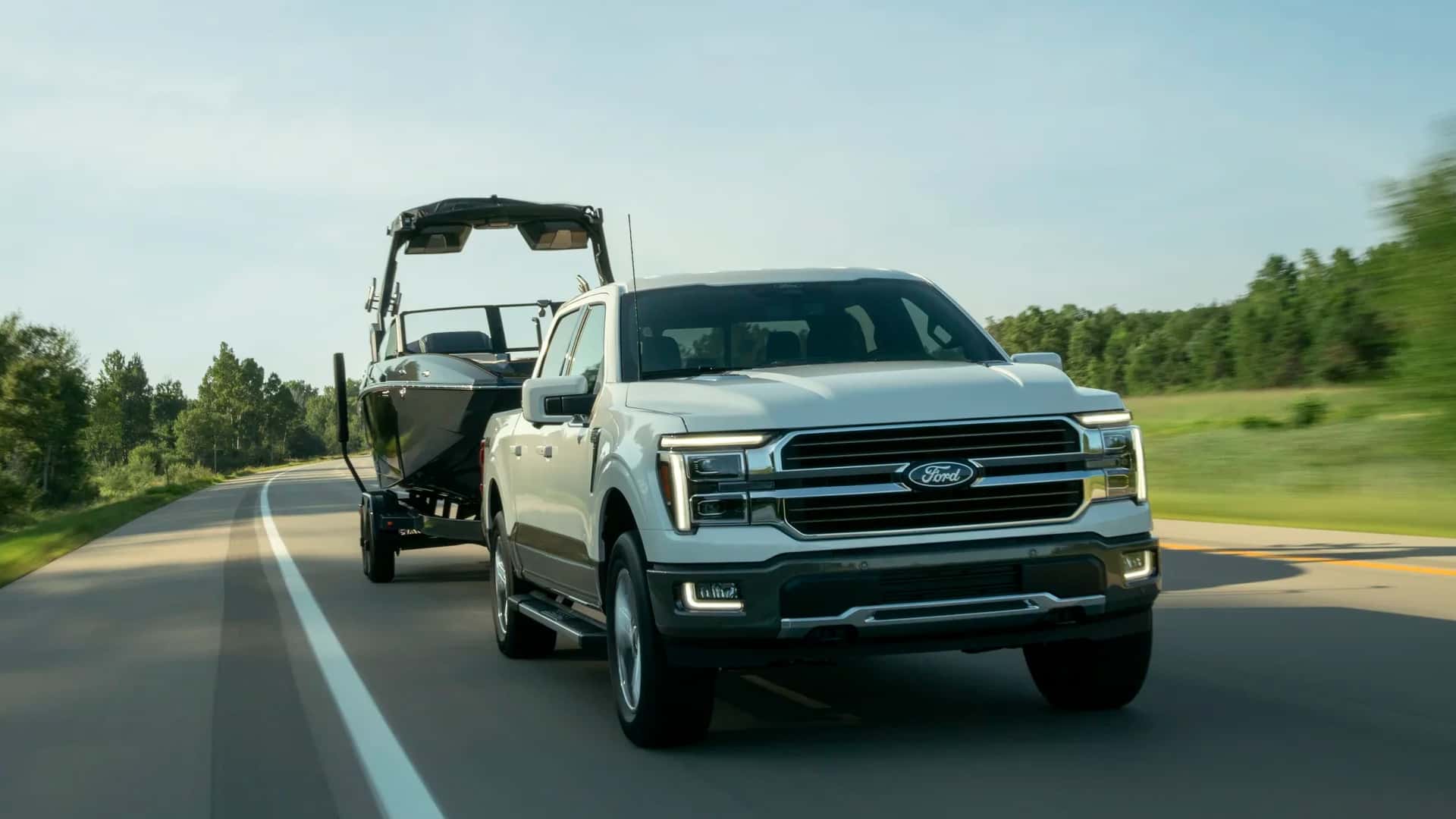
To ensure safe deployment, Ford is implementing rigorous prerequisites before motorists can activate the towing-specific hands-free function. Drivers cannot simply hitch a trailer and immediately engage BlueCruise.
Before the system will allow activation, the driver must input a comprehensive trailer profile into the vehicle’s infotainment system. This profile requires accurate physical dimensions of the trailer, including length, height, and weight parameters, enabling the truck’s onboard computers to calculate precise operational parameters tailored to the specific load.
Even with the profile established, strict operational boundaries remain in place. Ford’s towing-enabled BlueCruise will not support automated lane changes while a trailer is attached. Additionally, the system is hard-coded to disengage or refuse activation in active construction zones, or whenever the vehicle exceeds 75 miles per hour. These limitations are designed to minimize risk in high-complexity environments where unpredictable road geometry or erratic traffic flow demands human intervention.
Trim Level Availability Across the F-150 Lineup
Ford has confirmed that the new towing technology will not be exclusively reserved for high-end, luxury trim levels. Instead, the automaker plans to democratize the feature across a broad swath of the 2027 F-150 lineup.
With the sole exception of the entry-level XL work truck and the sport-oriented STX trims, every variant of the 2027 F-150 equipped with the necessary hardware packages will feature BlueCruise with Towing capability. This strategy ensures that commercial operators, small business owners, and everyday recreational towers utilizing mid-tier and high-end trims—such as the XLT, Lariat, King Ranch, Platinum, and Limited—will all have access to the hands-free technology.
Implications for the Full-Size Truck Market
The introduction of hands-free towing for America’s best-selling vehicle line marks a pivotal shift in consumer expectations regarding commercial and recreational hauling. Long-distance road trips involving travel trailers, boat hauls, and utility loads are notoriously fatiguing, often requiring hours of intense concentration to manage blind spots, crosswinds, and braking distances.
By offloading the repetitive task of steering and lane-centering to automated systems, automakers are fundamentally altering the long-haul towing experience. Industry analysts suggest that as Level 2 systems become more robust, features like BlueCruise with Towing will transition from being novel luxury upgrades to expected standard equipment for buyers who regularly utilize their vehicles for heavy-duty tasks.
As the automotive industry looks toward the 2027 model year, Ford’s latest software advancement underscores a broader trend: the convergence of heavy utility capability with sophisticated artificial intelligence and automation. For the millions of Americans who rely on the F-150 to move their world, the open highway is about to become significantly less taxing.