IFixit Teardowns Reveal Inside the Apple Watch Series 12 and Ultra 4 Highlighting Small Tweaks and Enduring Repair Hurdles

The consumer technology repair community has concluded its examination of Apple’s latest hardware cycle. In its most recent teardown publication, the renowned repair advocacy and documentation platform iFixit has dismantled both the newly released Apple Watch Series 12 and the rugged Apple Watch Ultra 4. While the teardowns offered a granular look at the microscopic engineering powering Apple’s latest wearable technology, they also underscored persistent challenges regarding consumer repairability. Despite subtle improvements in component layout and battery replacement methods on the base model, the overarching design philosophy of Apple’s smartwatch lineup continues to heavily prioritize water resistance, thinness, and spatial efficiency over modularity and ease of repair.
The publication of these teardowns marks the final installment in iFixit’s systematic evaluation of Apple’s major hardware launches. As consumers and regulatory bodies increasingly scrutinize the lifecycle and sustainability of modern electronics, the repair scores assigned to devices like the Apple Watch Series 12 and Ultra 4 carry significant weight. They provide a transparent metric for understanding how manufacturers balance the physical demands of high-performance micro-machinery against the growing global demand for right-to-repair frameworks.
Inside the Apple Watch Ultra 4: A Heavy-Duty Shell With Familiar Obstacles
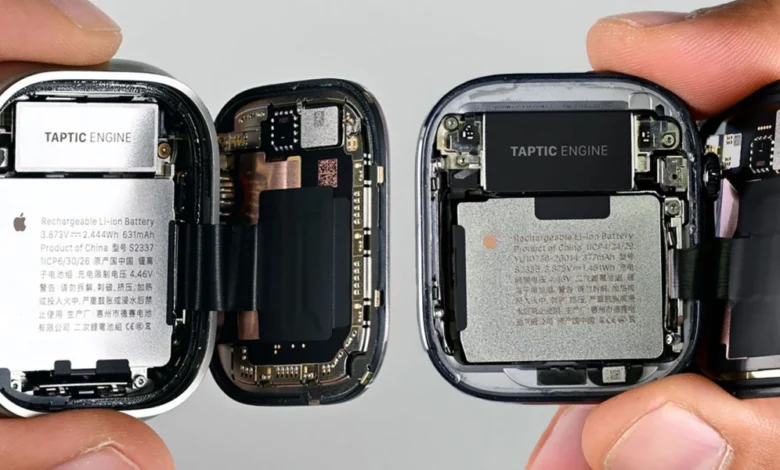
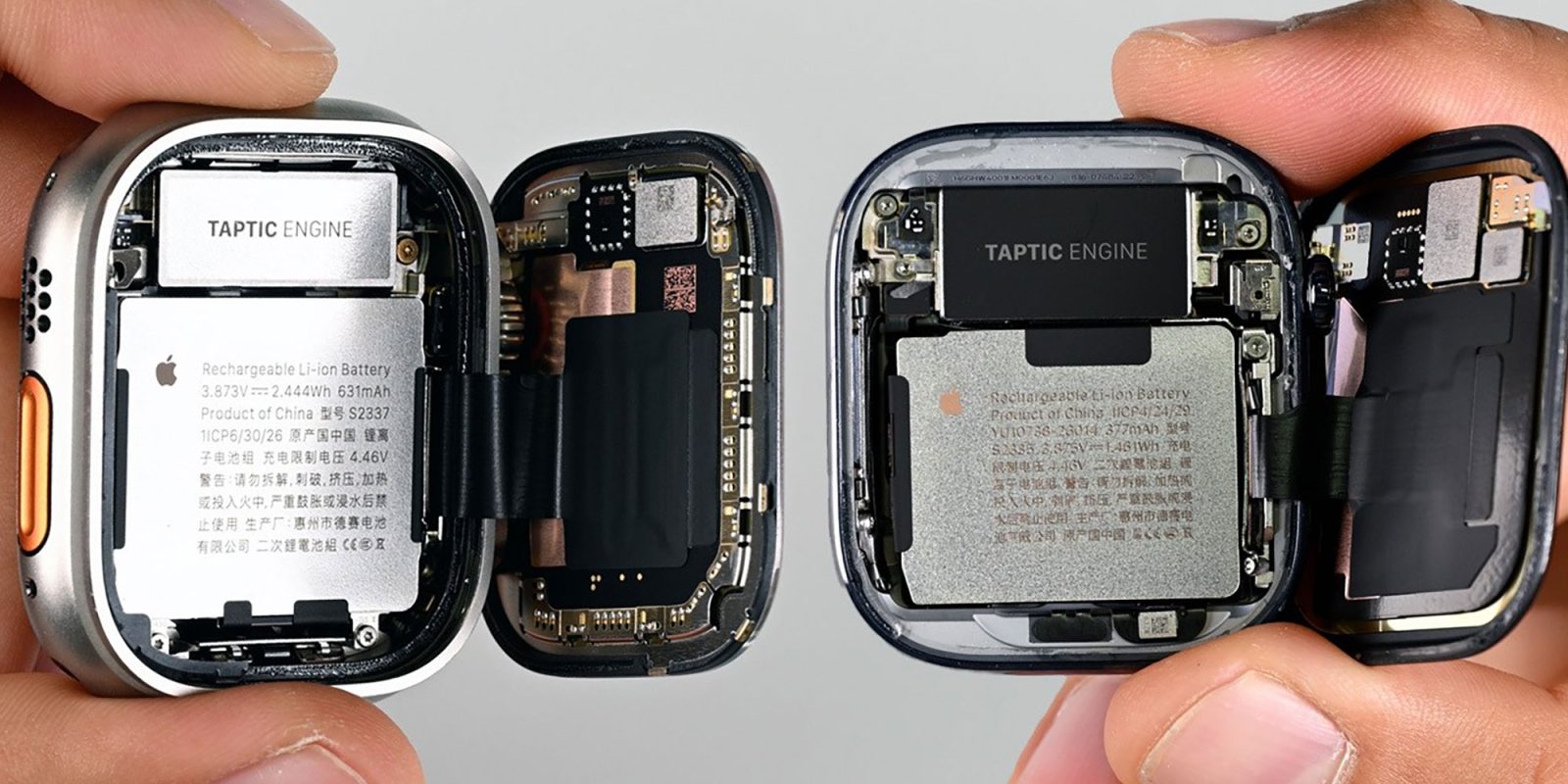
Beginning with the high-end, adventure-focused wearable, iFixit hardware expert Shahram Mokhtari initiated the Apple Watch Ultra 4 teardown by applying controlled heat to soften the industrial adhesive securing the display panel. Once the adhesive bond was weakened, Mokhtari utilized a newly developed specialized metal pick to carefully pry open the screen assembly, exposing the internal architecture, which includes the primary power cell and the Taptic Engine responsible for haptic feedback.
A primary focal point of the Ultra 4 examination was the battery. The device houses a 2.444 Wh battery, representing a modest capacity increase compared to the 2.313 Wh cell found in the preceding Apple Watch Ultra 3. However, accessing and replacing this power source remains procedurally complex. Technicians must still remove the fragile display assembly first—a design choice that introduces a substantial risk of accidental screen damage during standard battery maintenance.
Observers often look at the visible exterior screws on the Ultra’s titanium case and assume modular accessibility. However, iFixit noted that the four prominent screws located on the bottom of the device chassis serve a limited purpose. They provide access exclusively to the underlying sensor assembly on the rear cover and the S11 processing chip housed directly on the case structure, rather than opening a direct pathway to the primary interior components.
Once the glued screen is successfully unseated, the subsequent steps of disconnecting the display’s press connector and extracting the battery are relatively straightforward. Yet, the initial barrier to entry remains notoriously unforgiving. A momentary miscalculation with the heat application or prying tool can easily sever the delicate flex cables running beneath the display. Consequently, with virtually no meaningful advancements in overall structural repairability, the Apple Watch Ultra 4 earned a score of 4 out of 10 on iFixit’s standardized repairability scale—matching the exact score of its predecessor.
Apple Watch Series 12 Introduces Adhesives, Tight Tolerances, and Modest Score Increases
Shifting focus to the mainstream consumer market, the teardown of the Apple Watch Series 12 revealed a slightly different engineering approach, characterized by a mix of user-friendly upgrades and severe mechanical constraints. Most notably, Apple integrated stretch-release adhesive and a dedicated pull tab designed to simplify the removal of the 1.461 Wh battery, which sees a minor capacity bump over the 1.403 Wh cell utilized in the 46mm variant of the Series 11.
Despite this welcome modification, the baseline hurdle of accessing the device’s interior remains unchanged. Just like the Ultra 4, the Series 12 requires technicians to slice through resilient factory adhesive and pry away the front glass display. Mokhtari pointed out during the teardown process that the manufacturing tolerances around the perimeter of the Series 12 display are noticeably tighter than those found on the Ultra 4. This precision engineering creates an exceptionally tight seal, demanding a degree of physical force that raises legitimate concerns regarding potential screen fracture during professional or independent repairs.
Internal connector architectures also underwent revision. Apple opted to replace the traditional Zero Insertion Force (ZIF) connector and securing tape used for the display assembly in previous generations, transitioning instead to a simpler press connector mechanism. While this streamlines the reconnection process, it introduces a new procedural dependency: replacing the display now inherently requires the removal and subsequent replacement of the battery as well. Addressing this design interdependence, Mokhtari remarked during the video walkthrough that once a technician has dismantled the device to that depth, proceeding with a concurrent battery swap becomes a logical necessity.

Weighing these competing factors—the inclusion of pull-tab adhesive offset by increasingly tight physical tolerances and mandatory component overlap—iFixit ultimately awarded the Apple Watch Series 12 a repairability score of 4 out of 10. While this represents a modest one-point improvement compared to previous base-model iterations evaluated by the platform, it illustrates that mainstream smartwatches remain among the most difficult consumer electronics to service independently.
Comparative Industry Standards: Apple Versus Competitors
To contextualize Apple’s engineering choices within the broader wearable market, industry analysts frequently compare these repairability metrics against competing products from major technology developers. A prominent point of comparison highlighted during the teardown sequence involves Google’s competing hardware line.
By contrast, iFixit previously awarded Google’s Pixel Watch 5 a remarkably high repairability score of 9 out of 10. Technical assessments of Google’s wearable noted a significantly more accessible design philosophy. The Pixel Watch 5 allows technicians to remove its display assembly utilizing just two standard Torx screws and a removable gasket seal, bypassing the labor-intensive heating and prying processes required for Apple devices. Furthermore, the internal battery within Google’s flagship watch can be extracted directly without navigating complex webs of chemical adhesives or overlapping flex cables.
This stark contrast highlights divergent design philosophies within the consumer electronics sector. Apple continues to emphasize ultra-slim profiles, seamless unibody aesthetics, and robust water and dust resistance ratings. Achieving these engineering benchmarks often necessitates the extensive use of structural adhesives, laser-welded elements, and densely packed internal architecture, which inherently compromises ease of disassembly. Conversely, competitors experimenting with modular or screw-secured assemblies achieve higher repairability scores, though often at the potential expense of other physical design metrics.
Broader Market Implications and Regulatory Context

The ongoing scrutiny of consumer electronics repairability is not merely an academic exercise for tech enthusiasts; it forms a critical battleground in the global push for legislative reform and consumer rights. Jurisdictions across North America, the European Union, and various international markets have increasingly enacted or proposed "Right to Repair" legislation. These regulatory frameworks aim to compel manufacturers to design products that are easier to fix, provide accessible spare parts to independent repair shops and consumers, and publish comprehensive service documentation.
For Apple, maintaining a low repairability score of 4 out of 10 on flagship devices like the Watch Series 12 and Ultra 4 indicates that structural design priorities remain heavily anchored in traditional manufacturing methods. While the introduction of stretch-release pull tabs for the Series 12 battery demonstrates a willingness to adopt incremental improvements that aid automated or professional refurbishment processes, the core vulnerability of glued display panels remains a major obstacle for independent repair technicians.
The economic and environmental implications of these design choices are profound. Smartwatches are compact, high-turnover consumer goods worn daily in environments subject to moisture, sweat, and physical impact. When a battery degrades past its optimal performance threshold or a screen suffers accidental damage, the high cost and structural difficulty of authorized repairs often steer consumers toward complete device replacement rather than component restoration. This dynamic contributes directly to the accumulation of electronic waste, a growing environmental crisis that regulatory bodies are seeking to mitigate through stricter manufacturing standards.
Conclusion and Future Outlook
As the dust settles on the latest hardware teardowns, the Apple Watch Series 12 and Ultra 4 stand as testaments to advanced micro-engineering. They pack extraordinary processing power, health-monitoring sensors, and rugged durability into exceptionally small form factors. Yet, as iFixit’s detailed analysis demonstrates, this technological sophistication comes with a trade-off.
The reliance on industrial adhesives, tight physical tolerances, and screen-first entry points ensures that smartwatches will likely remain some of the most challenging devices for everyday repair and maintenance. While small victories—such as the new pull-tab battery adhesive on the Series 12—show that manufacturers are paying attention to the conversation surrounding hardware longevity, the journey toward truly modular, consumer-friendly wearable technology remains a distant horizon. Consumers and independent repair advocates will undoubtedly continue to monitor these developments closely as future product generations emerge on the horizon.
Related posts: