0ktapus Phishing Campaign Compromises Over 130 Organizations and Thousands of Employee Accounts Through Sophisticated MFA Bypass


The global cybersecurity landscape has been significantly altered by a sprawling and highly coordinated phishing campaign known as "0ktapus," which successfully compromised 9,931 accounts across more than 130 organizations. This sophisticated operation, named for its primary focus on spoofing the identity and access management (IAM) provider Okta, has exposed critical vulnerabilities in traditional multi-factor authentication (MFA) systems. By targeting employees at high-profile firms such as Twilio, Cloudflare, and DoorDash, the threat actors demonstrated an alarming ability to bypass security layers that many enterprises previously considered nearly impenetrable.
The campaign was first brought to light by researchers at Group-IB, who identified a pattern of attacks designed to harvest Okta credentials and MFA codes through a method known as "smishing"—phishing via SMS text messages. The scale of the breach is vast, with 114 of the impacted firms based in the United States and the remaining victims spread across 68 other countries. This geographic diversity underscores the global reach of the threat actors and their strategic focus on software-as-a-service (SaaS) providers and telecommunications companies.
The Anatomy of the 0ktapus Campaign
The 0ktapus campaign was characterized by its methodical execution and its reliance on social engineering rather than technical exploits of software vulnerabilities. The primary objective of the threat actors was to obtain Okta identity credentials and multi-factor authentication codes. By gaining control of these credentials, attackers could impersonate employees and gain unauthorized access to internal corporate systems, mailing lists, and sensitive customer data.
The methodology began with the distribution of deceptive text messages to targeted employees. These messages often contained urgent language, prompting the recipient to click a link to update their password or re-authenticate their account. The links directed users to meticulously crafted phishing pages that mimicked the legitimate Okta authentication portal of the victim’s specific organization. Once the user entered their username and password, the phishing site would then prompt for an MFA code.
Because the phishing site was monitored in real-time by the attackers, they could immediately use the harvested credentials and MFA codes on the actual Okta login page before the codes expired. This "man-in-the-middle" approach allowed the attackers to circumvent standard SMS-based or app-based MFA, which relies on one-time passcodes (OTPs) that are only valid for a short window of time.
The Targeting Strategy: From Telcos to Tech Giants
One of the most significant aspects of the 0ktapus campaign was the attackers’ initial focus on telecommunications companies. Researchers at Group-IB posit that the threat actors began their campaign by targeting mobile operators to gain access to lists of phone numbers belonging to employees of their ultimate targets. This initial phase provided the necessary infrastructure for the subsequent smishing campaign.
By starting at the "source" of mobile communication, the attackers were able to build a database of potential victims. According to compromised data analyzed by investigators, the threat actors likely collected these numbers during the initial breach of telecom providers, which they then used to launch the broader wave of attacks against SaaS and technology firms.
The choice of Okta as the primary spoofed platform was also highly strategic. Okta is a dominant player in the identity and access management market, used by thousands of corporations to manage employee logins for a wide array of internal and external applications. By compromising an individual’s Okta account, an attacker effectively gains a "master key" to the organization’s entire digital ecosystem.
Major Victims and the Domino Effect
The 0ktapus campaign gained international attention when major tech firms Twilio and Cloudflare reported targeted attacks on their employees. In the case of Twilio, the attackers successfully compromised the accounts of several employees, which subsequently allowed them to gain access to internal systems. This breach had a significant "blast radius," as Twilio’s infrastructure is used by numerous other companies. Most notably, the attackers were able to access the accounts of a limited number of users of the encrypted messaging app Signal, which relies on Twilio for SMS verification services.
Cloudflare, however, provided a case study in successful defense. While their employees were also targeted with the same 0ktapus smishing links, the company’s use of hardware-based security keys (FIDO2-compliant keys) prevented the attackers from gaining access. Unlike SMS-based codes or push notifications, hardware keys require a physical device to be present and are cryptographically bound to the legitimate website, making them immune to the type of spoofing used in the 0ktapus campaign.
The impact of the campaign continued to manifest even after the initial reports. Shortly after Group-IB published its findings, the food delivery giant DoorDash revealed that it had been victimized by a similar attack. An unauthorized party used stolen credentials from a third-party vendor’s employees to access DoorDash’s internal tools. This breach resulted in the theft of personal information belonging to customers and "Dashers" (delivery drivers), including names, phone numbers, email addresses, and delivery histories.
Detailed Chronology of the Attack Wave
The timeline of the 0ktapus campaign suggests a sustained effort that likely began in early 2022 and escalated throughout the summer.
- Phase One: Intelligence Gathering and Telecom Breaches. In the early months of 2022, the threat actors targeted telecommunications providers. The goal was to acquire corporate directories and employee phone numbers.
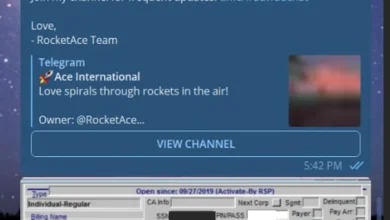
- Phase Two: Infrastructure Setup. The attackers developed a sophisticated phishing kit that could be easily customized to spoof the Okta login pages of various companies. They also set up a command-and-control infrastructure, often using Telegram bots to receive the stolen credentials in real-time.
- Phase Three: Mass Smishing Operations. Throughout June and July 2022, thousands of SMS messages were sent to employees at over 130 organizations. The messages were tailored to appear as though they came from the company’s IT department.
- Phase Four: Exploitation and Lateral Movement. Upon gaining access to Okta accounts, the attackers moved laterally through corporate networks. In the case of Twilio and DoorDash, this led to the compromise of customer-facing systems and third-party vendor data.
- Phase Five: Discovery and Reporting. In August 2022, security researchers and affected companies began to connect the dots, leading to the public disclosure of the 0ktapus moniker and the technical details of the campaign.
The Vulnerability of Legacy Multi-Factor Authentication
The success of the 0ktapus campaign has sparked a heated debate within the cybersecurity community regarding the efficacy of traditional multi-factor authentication. For years, MFA has been touted as the gold standard for securing accounts, yet this campaign proved that not all MFA is created equal.
SMS-based MFA and time-based one-time passwords (TOTP) delivered via apps are increasingly vulnerable to "proxy" attacks. In these scenarios, the attacker doesn’t need to "break" the MFA; they simply need to trick the user into providing the code to a fake site that they control.
Roger Grimes, a data-driven defense evangelist at KnowBe4, noted that the industry’s push toward MFA has often ignored the reality of how easily some forms can be phished. "It simply does no good to move users from easily phish-able passwords to easily phish-able MFA," Grimes stated. "It’s a lot of hard work, resources, time, and money, not to get any benefit."
The consensus among experts is a shift toward "phishing-resistant" MFA. This primarily includes FIDO2 and WebAuthn standards, which utilize public-key cryptography to ensure that the authentication process is tied to the specific, legitimate domain of the service provider.
Corporate Responses and Security Mitigation
In the wake of the 0ktapus revelations, organizations worldwide are re-evaluating their identity security posture. The recommendations from Group-IB and other security analysts emphasize a multi-layered approach to defense:
- Adoption of Hardware Security Keys: The most effective defense against 0ktapus-style attacks is the implementation of physical security keys. These devices eliminate the risk of a user inadvertently sharing a code with a phishing site.
- Enhanced Employee Training: While technical controls are vital, training employees to recognize the signs of "smishing" remains a critical line of defense. This includes teaching users to verify the URL of any page asking for credentials and to be skeptical of unsolicited text messages from "IT."
- Monitoring and Alerting: Companies are encouraged to implement tighter monitoring for unusual login patterns, such as an Okta login occurring from a new IP address immediately after a successful credential entry.
- URL Filtering: Implementing advanced email and SMS filtering solutions can help block known phishing domains before they reach the employee.
Broader Industry Implications and the Future of Identity Security
The 0ktapus campaign is a watershed moment for corporate cybersecurity. It has demonstrated that even the most well-resourced technology companies can be compromised through relatively simple social engineering techniques if their authentication methods are not phishing-resistant.
Furthermore, the campaign highlights the growing risk of supply-chain attacks. By targeting a third-party vendor or a centralized identity provider like Okta, threat actors can gain access to a multitude of downstream targets. This "hub-and-spoke" model of cybercrime allows for maximum impact with minimal effort, as a single successful breach can yield access to dozens of separate corporate environments.
As organizations continue to migrate to the cloud and rely on SaaS platforms, the management of digital identities will remain the primary battleground in cybersecurity. The 0ktapus campaign serves as a stark reminder that as security measures evolve, so too do the tactics of adversaries. The transition from "phish-able" MFA to cryptographic, hardware-based authentication is no longer a luxury for high-security firms—it is becoming a necessity for any organization operating in the modern digital economy.
The full scale of the 0ktapus campaign’s impact may not be fully realized for months or even years, as the stolen data could be used for secondary attacks, corporate espionage, or sold on dark web forums. For now, the incident remains a definitive lesson in the limits of traditional security and the urgent need for more robust, identity-centric defense strategies.