The peripheral market continues to evolve at a rapid pace, with manufacturers constantly striving to deliver smaller, faster, and more affordable hardware for remote workers, content creators, and corporate professionals. Dell has entered this competitive arena with its newest flagship peripheral, the Dell Pro 7. Designed to offer professional-grade video fidelity and robust audio capabilities, the device aims to capture the attention of users who demand top-tier performance from their desk setups. However, entering the high-end webcam market in the current technological landscape requires more than just high-resolution capture; it demands versatility, seamless integration with existing software ecosystems, and distinct value to justify a premium price point.
Priced at $199.99, the Dell Pro 7 positions itself directly alongside established heavyweights in the high-definition imaging space, such as the Logitech MX Brio and the Insta360 Link 2 4K. At this price tier, consumers expect a comprehensive suite of hardware and software features that elevate the device above standard integrated laptop cameras or budget-friendly USB alternatives. By focusing on ultra-smooth frame rates, intelligent imaging algorithms, and Windows security integrations, Dell is attempting to carve out a definitive niche for itself among enterprise users and hybrid professionals.
Main Facts and Technical Specifications
At the core of the Dell Pro 7 is its capacity to capture video at a crystal-clear 4K resolution running at a smooth 60 frames per second (fps). For standard video conferencing applications, such as Microsoft Teams, Zoom, and Google Meet, a 4K stream at 60 fps exceeds typical platform limitations, as most services compress outgoing video to 1080p or lower to conserve bandwidth. Nevertheless, the high ceiling provided by the sensor ensures exceptional detail, allowing for advanced digital pan, tilt, and zoom (PTZ) functionalities without a noticeable degradation in image clarity.
Beyond raw video resolution, the hardware incorporates several advanced utilities tailored for modern enterprise environments. Most notably, the device features native compatibility with Windows Hello, enabling fast, secure biometric facial recognition logins for Windows operating systems. Furthermore, the inclusion of built-in presence detection adds a layer of automated security and power management, locking the computer when the user steps away and waking the system upon their return.
Audio performance has historically been an afterthought in standalone webcams, with most users relying on dedicated desktop microphones or headsets. The Dell Pro 7 attempts to challenge this industry norm by integrating dual beam-forming microphones equipped with smart noise-reduction technology. According to initial evaluations by hardware specialists, these built-in mics represent a significant leap forward, offering voice clarity that rivals entry-level dedicated desktop microphones—a welcome relief for professionals who prefer a clean desk layout free of dangling boom arms.
Chronology and Market Evolution of High-End Webcams
The demand for high-end webcams experienced an unprecedented surge beginning in 2020, as global shifts toward remote and hybrid work models transformed video communication from an occasional convenience to a daily necessity. Initially, manufacturers scrambled to meet basic supply chain demands for standard 720p and 1080p sensors. As the remote work infrastructure matured, consumer and enterprise expectations shifted dramatically. By 2022, 4K webcams began transitioning from niche developer tools to mainstream consumer devices.
Throughout 2023 and 2024, the market saw a convergence of artificial intelligence and imaging hardware. Companies began integrating neural processing units (NPUs) and sophisticated software suites to handle real-time framing, background blur, and lighting correction directly on the device or via companion software. The introduction of the Dell Pro 7 follows this trajectory, arriving at a time when users expect smart features—such as auto-framing and dynamic lighting adjustments—to operate fluidly without manual intervention.
By timing the release of the Pro 7 to coincide with the broader industry push toward AI-enhanced peripherals and Windows Copilot+ PC ecosystems, Dell is aligning its hardware strategy with Microsoft’s enterprise software initiatives. This chronological alignment ensures that the webcam is not viewed merely as an isolated imaging tool, but as an integral component of a modern, secure, and intelligent workspace.
Supporting Data and Comparative Analysis
In the competitive landscape of $200 webcams, the Dell Pro 7 faces formidable rivals. The Logitech MX Brio, launched earlier in the product cycle, has established a strong reputation for its robust aluminum body, fine-tuned light correction, and deep integration with Logitech’s Logi Options+ software. Similarly, the Insta360 Link 2 4K leverages advanced AI-tracking algorithms and motorized gimbal technology to appeal heavily to content creators and dynamic presenters who move around during their broadcasts.
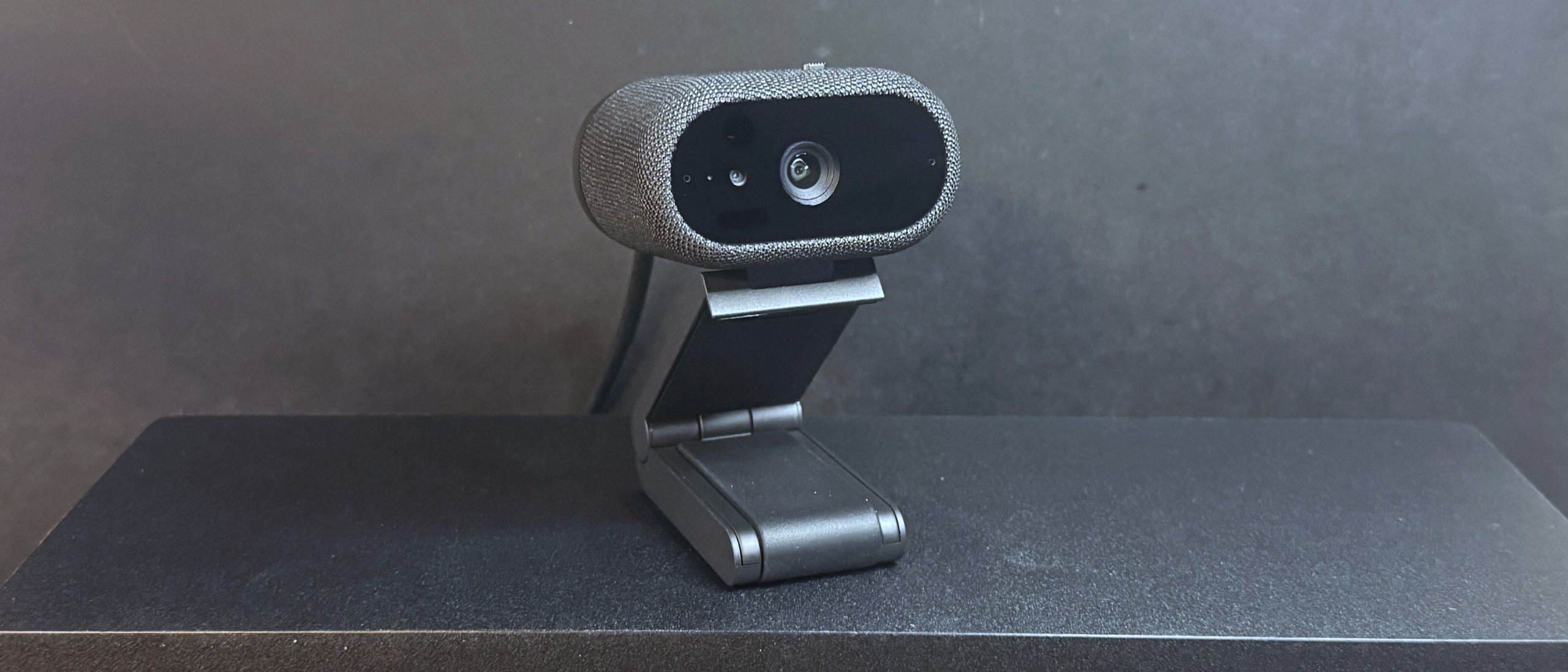
When analyzing the technical specifications side by side, the Dell Pro 7 holds its own primarily through its enterprise-focused feature set rather than motorized mechanics or purely cinematic color profiles. While the Insta360 offering relies on physical movement for tracking, Dell utilizes software-based smart framing and electronic zoom, reducing mechanical points of failure over long-term usage. Additionally, the integration of physical privacy shutters—a mandatory requirement for corporate compliance in many organizations—ensures that the Pro 7 meets strict IT security guidelines.
Power consumption and thermal management also play critical roles in 4K webcam performance. Sustaining a 4K resolution at 60 fps demands substantial processing power, which can lead to thermal throttling or excessive heat generation in poorly ventilated housings. Dell’s engineering team has optimized the Pro 7’s internal architecture to maintain stable performance during prolonged streaming sessions, mitigating the risk of frame drops or sudden disconnections during critical conference calls.
Official Responses and Industry Perspectives
While Dell has not released extensive public statements regarding sales projections, corporate communications emphasize the company’s commitment to delivering enterprise-grade security and hybrid work solutions. Representatives have noted that modern workspaces require hardware that adapts dynamically to changing lighting conditions and security protocols. The inclusion of Windows Hello and proximity sensors directly addresses feedback from enterprise IT administrators who prioritize endpoint security alongside video quality.
Industry analysts observe that while 60 fps at 4K resolution may be underutilized by current video conferencing codecs, it provides essential headroom for digital image stabilization and future-proofing. As internet infrastructure improves and video conferencing platforms gradually upgrade their bandwidth allocations to support higher-resolution streams, devices like the Dell Pro 7 will be uniquely positioned to deliver uncompressed, high-fidelity visual communication without requiring hardware upgrades.
Broader Impact and Enterprise Implications
The introduction of the Dell Pro 7 carries several broader implications for the peripherals market and corporate IT deployment strategies. As organizations continue to support permanent hybrid work models, the quality of remote communication tools directly influences corporate brand perception during client interactions, virtual pitches, and executive presentations.
Investing in high-end peripherals reduces technical friction for employees, minimizing the time spent troubleshooting poor video or muffled audio. Furthermore, the consolidation of multiple features—such as a security camera login via Windows Hello, a high-resolution video sensor, and directional microphones—into a single USB-connected device streamlines desk setups and reduces cable clutter.
However, the $199.99 price point also establishes a clear dividing line in the market. While enterprise buyers with corporate stipends may readily adopt the Pro 7, budget-conscious consumers and small businesses may find it difficult to justify the expenditure when competent 1080p webcams are available at a fraction of the cost.
Conclusion and Outlook
The Dell Pro 7 enters a crowded and fiercely contested market segment, but it distinguishes itself through a thoughtful balance of high-end imaging specifications and practical enterprise features. By combining 4K / 60 fps capture capabilities with Windows Hello compatibility, reliable presence detection, and surprisingly capable dual beam-forming microphones, Dell has crafted a compelling package for the modern professional.
While everyday video conferencing software may not yet fully leverage the massive data throughput of a 4K 60 fps stream, the technological overhead ensures longevity and exceptional digital zoom clarity. Facing tough rivals like the Logitech MX Brio and Insta360 Link 2 4K, the Dell Pro 7 relies on its seamless integration into enterprise security ecosystems and clean hardware design to make its case. For professionals seeking a reliable, secure, and future-proof upgrade to their video communication setup, Dell’s latest offering stands as a formidable contender in the high-end peripheral space.