BMW i3 50 xDrive Takes to the Nürburgring and Punches Above Its Weight Class

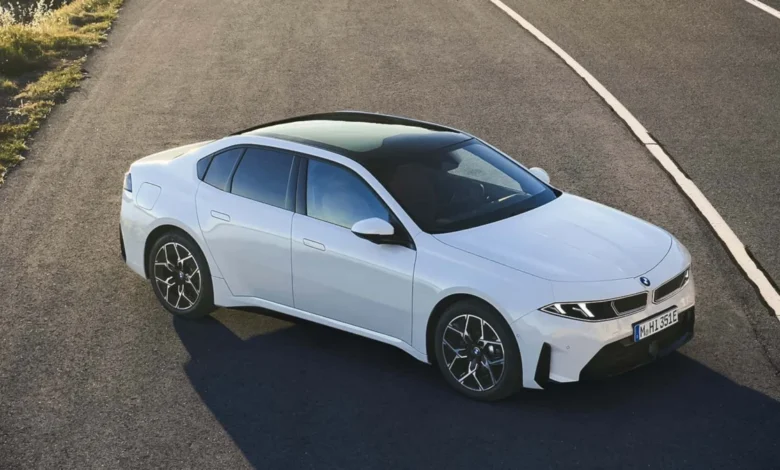
The automotive landscape is evolving at a breakneck pace, and traditional performance benchmarks are being rewritten by unexpected contenders. While enthusiasts eagerly await the arrival of a fully electric, track-capable variant of the legendary BMW M3, the standard production vehicle lineup is already demonstrating astonishing capability. In a recent track test captured on video by automotive personality Misha Charoudin, a regular, showroom-specification BMW i3 50 xDrive took to Germany’s infamous Nürburgring Nordschleife. Far from merely surviving a lap around the grueling 12.9-convoluted-mile circuit known as the Green Hell, the electric sedan carved its way through heavy track traffic, outpaced dedicated performance machines, and delivered a masterclass in modern EV battery and thermal management.
The Nürburgring Nordschleife has long served as the ultimate proving ground for the global automotive industry. Automakers spend countless hours testing prototypes, fine-tuning suspension geometries, and chasing lap records on the demanding layout, which features over 150 turns, dramatic elevation changes, and notoriously unforgiving runoff areas. On any given public tourist day, the track becomes a congested melting pot of high-powered supercars, heavily modified track toys, and standard rental vehicles. Navigating this chaotic environment safely while maintaining high speeds requires exceptional vehicle dynamics, precise braking, and immediate power delivery. The BMW i3 50 xDrive handled these conditions with composure, showcasing that everyday electric mobility can comfortably crossover into the realm of high-performance track driving.
Underneath its unassuming exterior, the BMW i3 50 xDrive packs a formidable powertrain that explains its surprising track prowess. Equipped with a dual-motor configuration, the current iteration on sale churns out a combined 463 horsepower and 476 lb-ft of torque. To put these figures into historical context, this output eclipses the vast majority of internal-combustion M3 generations that came before it. Supplying energy to those dual electric motors is a massive 109 kWh battery pack. While such a large and heavy energy storage system might initially seem counterproductive for track applications—where excess weight traditionally degrades handling agility, accelerates tire wear, and strains thermal limits—the reality on the asphalt proved vastly different.
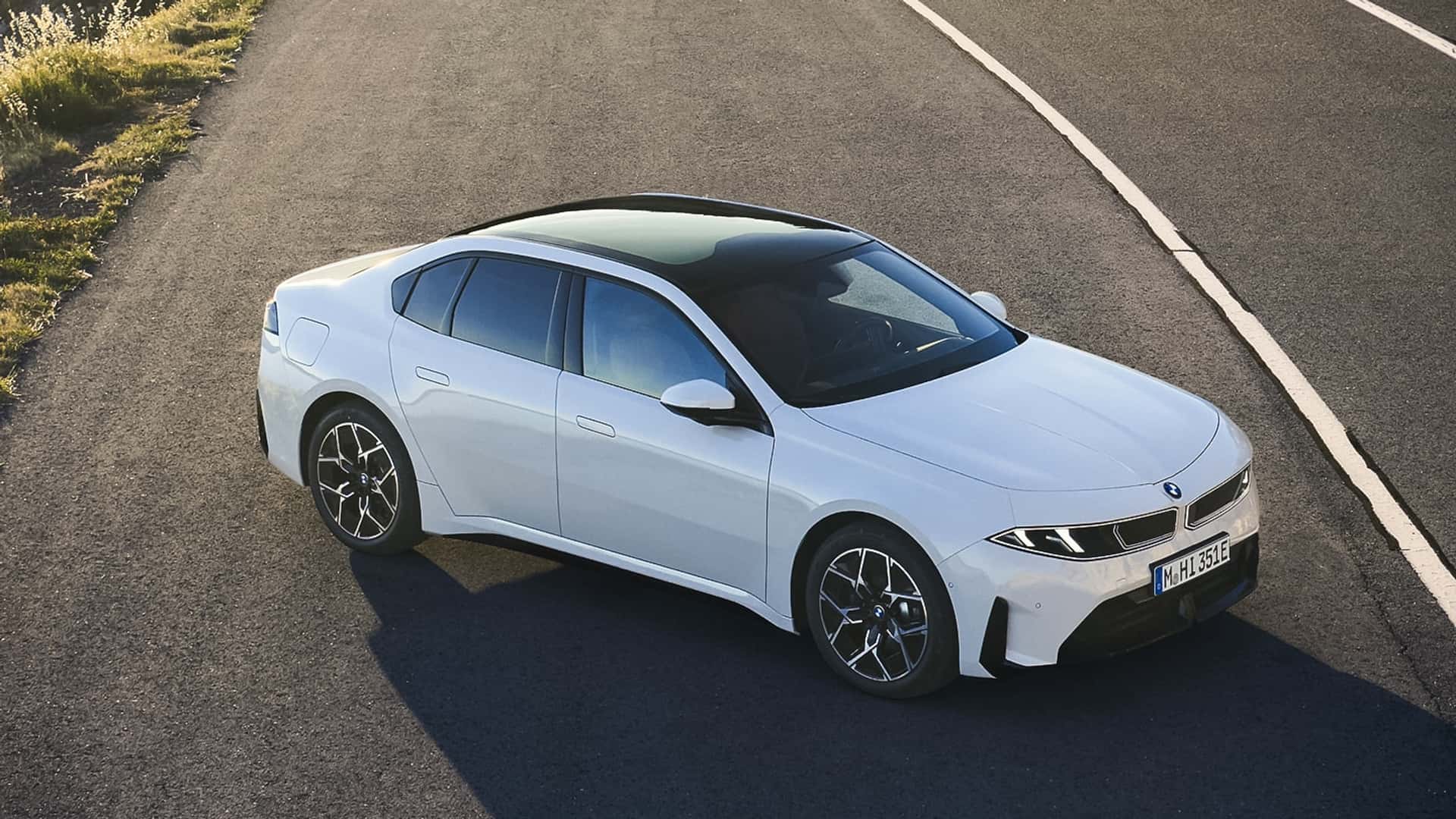
The integration of the substantial battery pack yielded unexpected operational advantages during the Nürburgring test. Before embarking on the flat-out reconnaissance lap, Charoudin noted the vehicle’s state-of-charge (SoC) sat at 79 percent. Upon completing the demanding 12-mile lap driven at maximum competitive effort, the SoC dropped by a mere 14 percent, leaving the battery at 65 percent. To put this energy consumption into perspective, a drop of only 14 percent under aggressive track conditions on the world’s most challenging circuit is a remarkable engineering feat.
The test session did not end with a single lap. Following Charoudin’s run, the vehicle was subjected to three additional consecutive laps driven at high speeds by a secondary pilot. Even after four total laps of punishing track use, the battery retained 20 percent of its charge. Under normal circumstances, depending on the driver’s proximity to regional charging infrastructure, the vehicle could theoretically have been driven away from the facility immediately after a battery-draining track session. This level of efficiency bridges a critical gap between everyday practicality and track-day usability.
Performance on the Nürburgring is defined not only by raw straight-line acceleration but also by a vehicle’s behavior through complex technical sections. Observers of the track footage noted the i3’s sharp turn-in capabilities, explosive throttle response exiting slow corners, and robust braking system, which seamlessly blends regenerative braking with traditional friction brakes. Notably, these dynamic feats were achieved while the vehicle was outfitted with eco-focused electric vehicle tires operating in cold ambient weather conditions. Automotive analysts suggest that fitting the vehicle with dedicated, high-performance summer compound tires in warmer ambient temperatures would unlock an even higher tier of grip and cornering speeds.
Thermal management is frequently the Achilles’ heel for electric vehicles driven hard on race tracks, often leading to aggressive power derating to protect sensitive electronic components. However, the BMW i3 50 xDrive demonstrated exceptional thermal endurance. Throughout the grueling lap, the vehicle’s onboard temperature monitor displayed an "OK" status, indicating optimal operating parameters. It was only in the final moments of the lap that the battery temperature readings began to climb into a higher bracket, by which point the test run was effectively complete. This resilience highlights significant advancements in BMW’s thermal architecture, ensuring that high-output demands do not immediately trigger performance-limiting safeguards.

This track demonstration builds upon a growing portfolio of impressive real-world capabilities exhibited by the current i3 platform. Earlier evaluation milestones have underscored the model’s astonishing efficiency, including long-distance endurance drives such as a journey from Norway to Spain totaling 3,658 miles, where the vehicle required less than three hours of total charging time. Additionally, separate range testing has highlighted the platform’s capacity to cover over 750 miles on a single charge under hyper-miling conditions, alongside an EPA-rated range that speaks directly to the efficiency of its powertrain management.
The successful Nürburgring outing by a standard production i3 raises expectations for future performance iterations within the brand’s portfolio. As BMW continues development on its dedicated high-performance electric vehicle architectures—including heavily anticipated platforms bearing the M badge—the performance baseline established by standard variants suggests that the future of electric motorsport-inspired road cars will be formidable. By combining high-capacity energy storage, advanced thermal management, and robust dynamic tuning, the modern electric vehicle is proving that track capability is no longer the exclusive domain of internal combustion engines.