7 Ways AI Agent Wasting Tokens and How to Optimize Your Architectural Pipeline

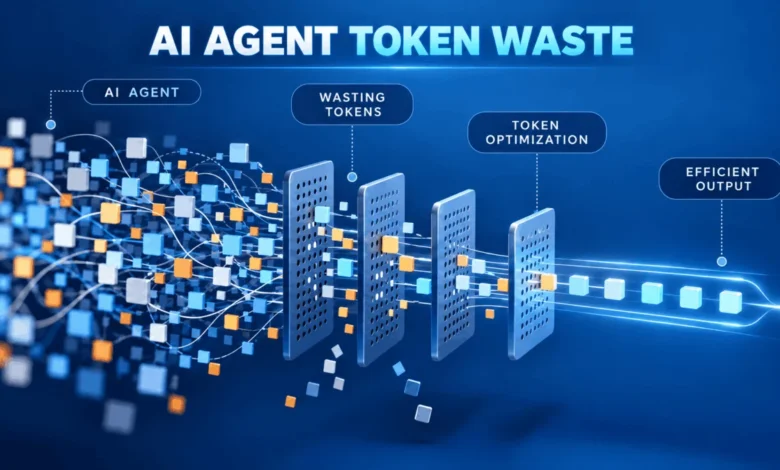
The rapid ascent of autonomous AI agents in enterprise environments has introduced a significant operational challenge: the escalation of API costs driven by inefficient token management. While prototyping an agent can be accomplished in a matter of days, the transition to production often reveals a "token-waste" phenomenon where inference latency and API billing grow quadratically as the agent interacts with complex data environments. At its core, the problem stems from a fundamental misunderstanding of the relationship between context and state. Developers frequently treat the ephemeral context window—the data sent to a model for a single inference request—as a permanent system of record. This leads to bloated payloads that increase costs linearly with every turn and degrade the model’s reasoning performance through "contextual noise."
The Evolution of Agentic Scaling
To understand the current crisis in token expenditure, one must look at the timeline of Large Language Model (LLM) integration. In early 2023, most deployments were simple, stateless request-response chains. By mid-2024, the industry shifted toward persistent agents capable of iterative reasoning and tool usage. This shift brought the "append-only" architecture to the forefront. In this model, developers store the entire history of an interaction—user prompts, system messages, intermediate reasoning, and raw tool outputs—in a single array, sending it back to the model on every iteration.
Industry data suggests that by the tenth turn of an average autonomous agent session, over 60% of the token payload often consists of redundant or irrelevant historical data. This bloat creates a twofold burden: developers pay for the ingestion of stale information, and the LLM must expend additional attention cycles to filter out noise, which frequently triggers latency timeouts and increases the likelihood of hallucination.
Addressing the Append-Only Trap
The primary architectural fix for context accumulation is the implementation of a sliding window coupled with semantic summarization. Rather than maintaining an infinite list of messages, high-performance systems utilize a "Working Memory" approach. The most recent N-turns remain in the context for immediate reasoning, while older interactions are condensed into a dense, background summary.
Furthermore, developers must distinguish between "Context" (ephemeral data) and "State" (durable progress). Structural information, such as session progress, user preferences, or UUIDs, should be offloaded to a persistent, deterministic store like Redis or SQLite. By querying this store only when necessary, the agent avoids the "database read" penalty that occurs when developers attempt to store persistent state directly within the LLM prompt.
Optimizing Tool Result Ingestion
A secondary, yet equally critical, source of token waste involves the ingestion of raw third-party API payloads. Modern LLMs are often paired with tools—such as Stripe, Jira, or AWS—that return verbose, deeply nested JSON responses designed for machine parsing rather than human or model reasoning. A single response can easily exceed 5,000 tokens, most of which serve no utility in the agent’s decision-making process.
The industry-standard solution involves the implementation of a middleware transformation layer. This layer acts as a filter, stripping null values, irrelevant metadata, and boilerplate identifiers before the data reaches the model. Converting complex JSON structures into optimized YAML or structured Markdown can reduce input token volume by up to 70% in high-traffic applications. However, engineers must exercise caution: aggressive filtering can inadvertently strip essential metadata like pagination cursors, which are necessary for the agent to navigate large datasets.
AST-Aware Retrieval and Coding Agents
For coding-focused agents, the "Grep-and-Dump" method—where the entire file content is fed into the context window—represents a catastrophic waste of resources. Modern software engineering environments have shifted toward AST-aware (Abstract Syntax Tree) retrieval. By parsing code into a structured call graph during the indexing phase, systems can identify the specific function signatures, docstrings, and dependencies required for a task. Instead of ingesting a 4,000-line file, the agent receives only the 300 tokens necessary to understand the relevant logic. This not only reduces costs but also significantly improves the model’s accuracy, as it is no longer distracted by peripheral, unrelated code blocks.
The Trade-off: Static Prefixes vs. Dynamic Tooling
A major tension exists between prompt caching and dynamic tool orchestration. Most LLM providers offer significant cost and latency benefits if a large, static "system prompt" or schema definition is placed at the top of the request, allowing the provider to cache the key-value representation of the prefix.
However, developers often feel compelled to prune tool schemas dynamically to save tokens, only including the tools relevant to the agent’s current state. This dynamic manipulation changes the request structure, effectively breaking the cache and forcing a full re-computation of the attention mechanism. The most successful production systems today follow a "static-to-dynamic" gradient: placing massive, unchanging organizational style guides and core schemas at the top of the prompt to maximize cache hits, while reserving the dynamic pruning only for highly specific, tool-heavy sub-tasks.
Economic Implications of Model Routing
The economic viability of an agent system is often determined by the choice of model. A common error is the use of "Frontier" models (such as GPT-4o or Claude 3.5 Sonnet) for routine classification or data extraction tasks. These models carry a significant cost premium.
By implementing a cascaded routing architecture, organizations can use smaller, high-velocity models (like Haiku or Gemini Flash) to classify intent, clean data, and perform log summarization. Only when the task is categorized as "complex reasoning" is the request escalated to a more capable, expensive model. This tiered approach is gaining traction among infrastructure engineers, as it allows for a predictable cost structure that scales with volume. Using tools like LiteLLM, teams can implement provider-agnostic routing logic, ensuring that the system is not locked into a single provider’s pricing model.
Guardrails and Circuit Breakers
Autonomous loops are prone to "runaway billing," where an agent enters a recursive cycle of failure, retrying a tool call that is fundamentally broken. Without an orchestrator-level circuit breaker, such loops can consume tens of thousands of tokens in minutes. Effective production design now mandates strict limits on retry counts and output token budgets. If an agent hits these thresholds, the system must force a graceful exit or escalate the issue to human oversight.
Conclusion and Future Outlook
As AI agents move past the initial hype cycle, the focus of engineering teams is shifting toward "production stability." Token optimization is no longer viewed merely as a budget concern; it is a critical metric of data quality and system reliability. By day 100 of a deployment, the cumulative effect of poor architecture manifests as a degradation of performance, characterized by stale information in vector stores and an inability to resolve conflicting facts within the context window.
The industry is reaching a consensus: the most robust agents are those that minimize the amount of reasoning an LLM must perform on irrelevant data. Whether through AST-aware retrieval, cascaded routing, or strictly managed state stores, the goal remains the same—to provide the model with the minimum viable context necessary to achieve the task. As providers continue to refine their caching mechanisms and pricing tiers, developers who prioritize these architectural guardrails will be best positioned to scale their agentic systems without the risk of runaway operational costs or systemic instability.