The decision to stand down was not merely a matter of safety regarding the vehicle’s ascent but was specifically driven by the mission’s rigorous scientific requirements. A primary objective for Flight 13 is the acquisition of high-fidelity ground-based imagery of the Starship’s thermal protection system (TPS) during the critical "Max Q" phase—the point of maximum dynamic pressure. During this stage of flight, the vehicle experiences its most intense structural and thermal stresses. SpaceX engineers require clear, unobstructed visual data to monitor how the heat shield tiles perform under these extreme conditions. The thick cloud cover and atmospheric turbulence generated by Tropical Storm Bertha rendered such observations impossible, prompting the mission directors to opt for a 24-hour recycle in hopes of improved visibility.
A Second Hurdle in the Flight 13 Campaign
This latest delay follows a more technical setback experienced earlier in the month. SpaceX’s first attempt to launch Flight 13 occurred on July 16, 2026. During that attempt, the countdown reached T-0, only to be met with an automated abort sequence initiated by the flight computer. Investigations revealed that four of the 33 Raptor engines on the Super Heavy Booster (Booster 20) failed to ignite properly. In the wake of the abort, Elon Musk noted that two of the Raptor units required complete removal and replacement due to hardware anomalies.
The recovery effort was a testament to the operational efficiency SpaceX has cultivated at Starbase. Over the following week, technicians performed a "destack" of the vehicle, separating Ship 40 from Booster 20. After the engine swaps and a series of stringent leak checks were completed, the vehicle was restacked on Orbital Launch Pad 2 on Wednesday night. While the hardware was cleared for flight, the arrival of Tropical Storm Bertha introduced a new variable that the engineering teams could not mitigate through mechanical repairs.

Technical Specifications of the V3 Starship Architecture
Flight 13 represents a significant milestone in the evolution of the Starship program, serving as the second mission to utilize the "Version 3" (V3) hardware configuration. Following the debut of V3 on Flight 12 in May 2026, this iteration features several critical upgrades designed to move the platform closer to full operational status. The V3 Starship is characterized by its increased propellant capacity, refined aerodynamic surfaces, and an enhanced Raptor engine suite capable of higher thrust-to-weight ratios.
Perhaps most notably, Flight 13 marks the transition from test flights carrying mass simulators to missions carrying operational payloads. Stowed within the payload bay of Ship 40 are 20 production-grade Starlink V3 satellites. This deployment is a crucial proof of concept for SpaceX’s long-term business model, demonstrating that Starship can reliably deliver large batches of the company’s next-generation internet satellites to orbit.
In a novel engineering move, six of these Starlink satellites have been equipped with specialized outward-facing cameras. These cameras are intended to provide a "downward-looking" perspective of the Starship’s heat shield during the ascent. This internal data source is intended to complement the ground-based imagery that the current weather delay is protecting. By capturing data from two distinct angles, SpaceX hopes to resolve long-standing questions regarding tile shedding and thermal hotspots that have occasionally plagued previous flight tests.
Mission Profile and Objectives
The flight plan for Flight 13 largely mirrors the successful trajectory established during Flight 12, though with several aggressive modifications. After lifting off from the Starbase pad, the Super Heavy Booster 20 will power the stack through the lower atmosphere before performing a "hot-stage" separation. Following separation, the booster is slated to perform a boostback burn, targeting a controlled splashdown and landing burn in the Gulf of Mexico (referred to in some mission documents as the Gulf of America).

The booster’s ascent profile for Flight 13 is expected to be more "aggressive" than previous iterations. Engineers have programmed the 33 Raptor engines to maintain a higher throttle setting through Max Q to test the structural integrity of the V3 airframe.
Meanwhile, Ship 40 will continue its suborbital trajectory. Its heat shield has been outfitted with "load-sensing" tiles—experimental sensors embedded within the ceramic hexagonal tiles designed to measure mechanical stress and vibration in real-time. This data is vital for validating the durability of the TPS for future orbital reentries. If all goes according to plan, Ship 40 will navigate through the vacuum of space before reentering the atmosphere over the Indian Ocean for a targeted splashdown.

The Strategic Importance of Flight 13
The stakes for Flight 13 are elevated by the current corporate landscape surrounding SpaceX. Following the company’s blockbuster Initial Public Offering (IPO) earlier in 2026, SpaceX (trading under the ticker SPCX) has become a focal point for institutional investors. Alphabet Inc. (Google’s parent company) recently disclosed a staggering $94.1 billion equity stake in the firm, highlighting the massive valuation placed on SpaceX’s ability to dominate the launch market and the burgeoning satellite internet sector.
For investors, Flight 13 is more than a technical test; it is a demonstration of the company’s ability to generate revenue. The successful deployment of 20 Starlink V3 satellites would signal to the market that Starship is no longer a "science project" but a functional commercial asset. Furthermore, if Flight 13 achieves its objectives, it is widely expected to be the final suborbital test in the program’s history. SpaceX leadership has already indicated that Flight 14 will target a full orbital velocity attempt, a prerequisite for the company’s upcoming lunar missions under NASA’s Artemis program.

Environmental and Regulatory Context
The delay also highlights the ongoing logistical challenges of operating a high-cadence launch site in a sensitive ecological and volatile weather zone. The Rio Grande Valley, where Starbase is located, is frequently subject to tropical depressions and shifting wind patterns. SpaceX has worked closely with the Federal Aviation Administration (FAA) to secure launch licenses that account for these variables, but the "wrath of the Texas skies" remains a factor that even the most advanced aerospace technology cannot fully bypass.
While the delay is a setback in terms of the calendar, SpaceX’s "fail fast, iterate faster" philosophy suggests that the time will be used for final system checks and data review. The company’s ability to recycle a vehicle of this magnitude within 24 hours is a feat that traditional aerospace contractors often take weeks or months to accomplish.

Conclusion and Outlook
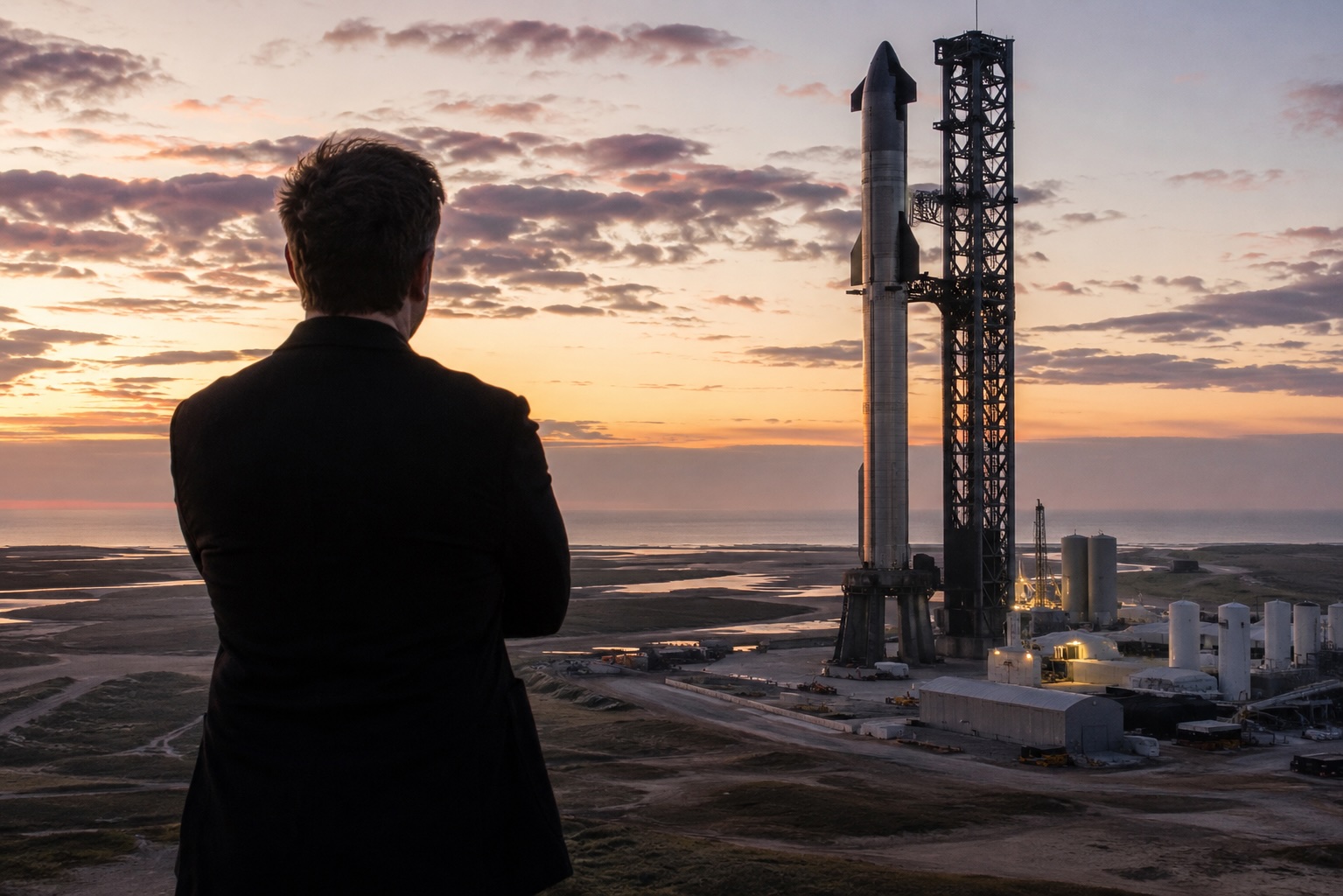
As the sun sets over the Boca Chica launch site, all eyes are on the meteorological reports for Friday evening. The success of Flight 13 would solidify the V3 architecture as the new standard for heavy-lift launch vehicles and pave the way for a rapid transition to orbital operations. For Elon Musk and the thousands of engineers at SpaceX, the immediate goal is simple: wait for the clouds to break, ensure the 33 Raptors roar in unison, and capture the data necessary to turn the dream of a multi-planetary future into a repeatable, commercial reality.
If the weather clears as predicted, Friday’s launch will not only be a spectacle of fire and physics but a pivotal moment in the 2026 space race. With the transition to operational payloads and the looming prospect of orbital flight with Flight 14, SpaceX is standing on the precipice of a new era in space exploration—one where the "wrath of the skies" is merely a temporary pause in an otherwise inevitable ascent.