US Federal Regulators Initiate Rulemaking to Update Vehicle Exit Standards Following Tesla Entrapment Incidents

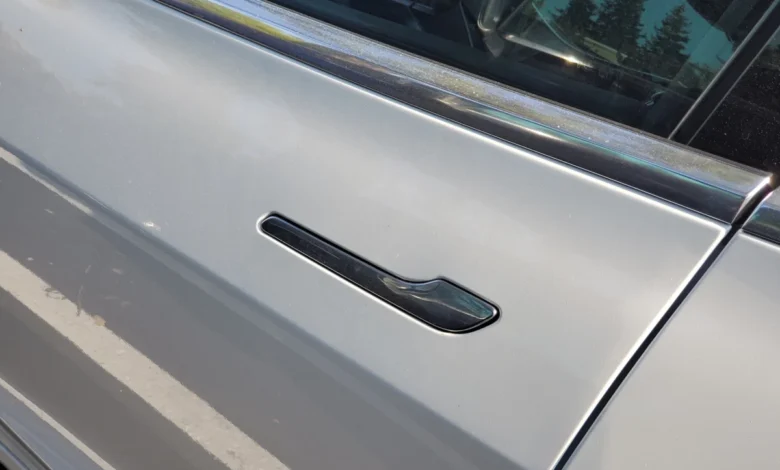
The National Highway Traffic Safety Administration (NHTSA) has officially announced the commencement of a new rulemaking process aimed at strengthening federal requirements for vehicle door handles and emergency exit mechanisms. This regulatory shift follows a series of harrowing reports and fatal incidents involving passengers becoming trapped inside vehicles equipped with electronically operated, flush-mounted door handles—a design feature that has become a hallmark of modern electric vehicles (EVs), most notably those manufactured by Tesla. The decision, outlined in a federal regulatory filing, marks a significant pivot from investigating specific vehicle defects to establishing a new, industry-wide safety standard that could redefine how car doors are designed and operated in the United States.
The move by the NHTSA is a direct response to a petition filed by safety advocates and concerned owners regarding the 2022 Tesla Model 3. The petitioners requested a formal safety defect investigation into the vehicle’s emergency mechanical door release design, arguing that the current configuration fails to comply with Federal Motor Vehicle Safety Standards (FMVSS). While the NHTSA denied the specific request for a defect investigation into the Model 3, it acknowledged the systemic nature of the risk, stating that the complexities of electronic door latches are best addressed through the creation of new, modernized rules that would apply to all automakers.
The Evolution of Door Design and the Rise of Electronic Latches
For over a century, automotive door handles were primarily mechanical. A physical linkage—usually a metal rod or cable—connected the interior and exterior handles directly to the latch mechanism. This design ensured that as long as the door was not structurally crushed or locked, a simple pull of the handle would release the latch, regardless of the vehicle’s electrical state.
However, the transition toward electric mobility and high-efficiency internal combustion engines has prioritized aerodynamics and aesthetic minimalism. Flush-mounted handles, which retract into the door body when the vehicle is in motion, significantly reduce drag, thereby extending the range of EVs. To achieve this "seamless" look, many manufacturers have replaced mechanical linkages with electronic solenoids. In these systems, pulling a handle or pressing a button sends an electrical signal to a computer, which then commands a motor to unlatch the door.
While technologically advanced, these systems introduce a critical point of failure: the need for consistent electrical power. In the event of a high-voltage battery failure, a depleted 12-volt accessory battery, or a collision that severs electrical wiring, these doors can become impossible to open through standard means.
Chronology of Safety Concerns and Regulatory Action
The journey toward this rulemaking process has been marked by years of mounting evidence regarding the dangers of electronic door systems.
2012–2022: The Aesthetic Standard is Set
Tesla introduces the Model S with retracting handles, followed by the Model 3 and Model Y with flush-manual and electronic-button releases. Other manufacturers, including Rivian, Lucid, and legacy brands like Ford and Hyundai, begin adopting similar flush or electronic designs for their premium and electric models.
2024: Mounting Reports of Entrapment
Dozens of "consumer complaints" are filed with the NHTSA describing "sudden power loss" incidents where drivers found themselves unable to exit their vehicles. In several cases, Tesla owners reported being trapped in sweltering heat for over 20 minutes before figuring out how to engage the emergency manual override.
September 2025: The Initial Tesla Probe
The NHTSA opened a formal investigation into Tesla’s door handles after receiving nine specific reports of failure. These reports included instances where children were trapped inside vehicles while parents were locked out. This probe was further intensified by investigative reporting from major media outlets, which highlighted fatal crashes where bystanders were unable to pull victims from burning vehicles because the exterior handles would not present themselves or function without power.
July 2026: The Shift to Rulemaking
The NHTSA concludes that a "one-off" investigation into the Tesla Model 3 is insufficient. By initiating rulemaking, the agency signals that the issue is not merely a manufacturing defect in one model but a regulatory gap in the FMVSS that allows for "non-intuitive" or "unreliable" emergency exits across the entire industry.
Technical Analysis of the Entrapment Risk
The primary technical concern cited by investigators involves the voltage requirements for electronic latches. In an initial review, NHTSA investigators discovered that certain electronic door locks may fail to actuate if they do not receive a specific threshold of voltage from the vehicle’s battery system. During a crash, the "pyrotechnic fuse"—a safety device designed to disconnect the high-voltage battery to prevent fires—can sometimes inadvertently disrupt the low-voltage power needed to operate the doors.
While vehicles with electronic latches are required to have manual overrides, the implementation of these overrides has been a point of heavy criticism. In many Tesla models, the front doors feature a mechanical lever located near the window switches, but the rear doors often require passengers to find a hidden pull-tab underneath the door pocket carpeting or inside a speaker grille. In a high-stress emergency, such as a vehicle fire or submersion in water, expecting a passenger—especially a child or an elderly person—to locate and operate these hidden mechanisms is viewed by safety experts as a significant design flaw.
Industry Responses and Proactive Redesigns
As the NHTSA moves toward formalizing new rules, some segments of the automotive industry have already begun to pivot. Franz von Holzhausen, Tesla’s chief designer, indicated last year that the company was evaluating a redesign of its handle systems to improve both reliability and ease of use.
Rivian, a prominent American EV manufacturer, took proactive steps in late 2025 by announcing a redesign of the interior handles for its upcoming R2 SUV. The company moved the manual release mechanism to a more prominent, visible location, ensuring it is collocated with the primary electronic button. This "dual-action" approach—where a single handle can operate both electronically and mechanically—is widely considered the gold standard for modern door safety.
Safety advocacy groups have praised the NHTSA’s decision to pursue rulemaking. "A car door is the most basic safety feature of a vehicle," said a representative from a leading automotive safety foundation. "It must work every single time, especially when the power goes out. We cannot trade the lives of passengers for a few miles of extra aerodynamic range."
Broader Implications and the Path Forward
The "commencement" of rulemaking is a process that can take several years to finalize. It involves a period of public comment, technical feasibility studies, and cost-benefit analyses. However, the announcement itself serves as a stern warning to the global automotive industry.
If the NHTSA adopts a new standard, it will likely mandate:
- Intuitive Operation: Manual overrides must be clearly visible and require no more than one or two simple motions to operate.
- Redundant Power: Requirements for "reserve energy" or capacitors that can power door latches for a set number of cycles even after a total battery failure.
- Standardized Exterior Access: Ensuring that first responders can manually open doors from the outside without specialized tools or knowledge of a specific brand’s hidden mechanisms.
The impact of these rules will extend far beyond Tesla. Every automaker selling vehicles in the United States—from luxury brands like Porsche and Mercedes-Benz to mass-market manufacturers—will have to ensure their "hidden" or "pop-out" handle designs meet the new safety thresholds. This may lead to a resurgence of more traditional, semi-flush mechanical handles or the integration of more sophisticated mechanical-electronic hybrid systems.
For Tesla, the company that popularized the current trend of minimalist door design, the rulemaking represents a significant regulatory hurdle. With millions of vehicles already on the road using these systems, the agency’s final decision could potentially lead to large-scale retrofits or software-based "safety training" prompts to educate owners on manual release locations.
As vehicles become increasingly software-defined and electronically controlled, the NHTSA’s move underscores a vital principle in automotive engineering: in an emergency, the simplest mechanical solution is often the most life-saving. The upcoming regulations will aim to ensure that no passenger is ever again left at the mercy of a failing battery when they need to exit a vehicle.