Lexus Announces 2027 TZ: Pricing, Specifications, and Range for the Brand’s First Three-Row Electric SUV

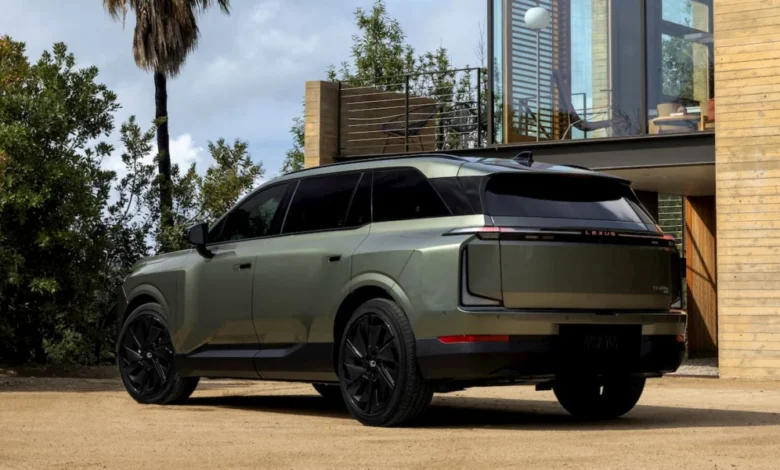
Lexus has officially pulled back the curtain on its highly anticipated entry into the three-row electric vehicle segment, confirming that the all-new 2027 Lexus TZ will arrive at dealerships later this year with a starting price under $65,000. As traditional automotive giants recalibrate their electrification timelines—most notably with corporate sibling Toyota delaying its own Highlander BEV and Subaru postponing the Getaway—Lexus is positioning the TZ to seize an early advantage in the competitive family-hauling luxury EV market.
The unveiling details a robust lineup spanning three distinct trim levels, advanced powertrain engineering, and competitive driving ranges designed to challenge established and emerging rivals in the North American and global markets. By blending familiar platform underpinnings with bespoke luxury tuning, the Japanese luxury automaker aims to capture affluent families seeking zero-emission transport without sacrificing driving dynamics, ride comfort, or prestige.
Main Facts and Pricing Structure of the 2027 Lexus TZ
The 2027 Lexus TZ will launch with a base Manufacturer’s Suggested Retail Price (MSRP) starting at $64,050, a figure that includes a mandatory $1,550 delivery, processing, and handling fee. The vehicle will be rolled out in a phased release schedule over the next several months, with different trims prioritizing either accessible entry pricing or maximized driving range and luxury appointments.
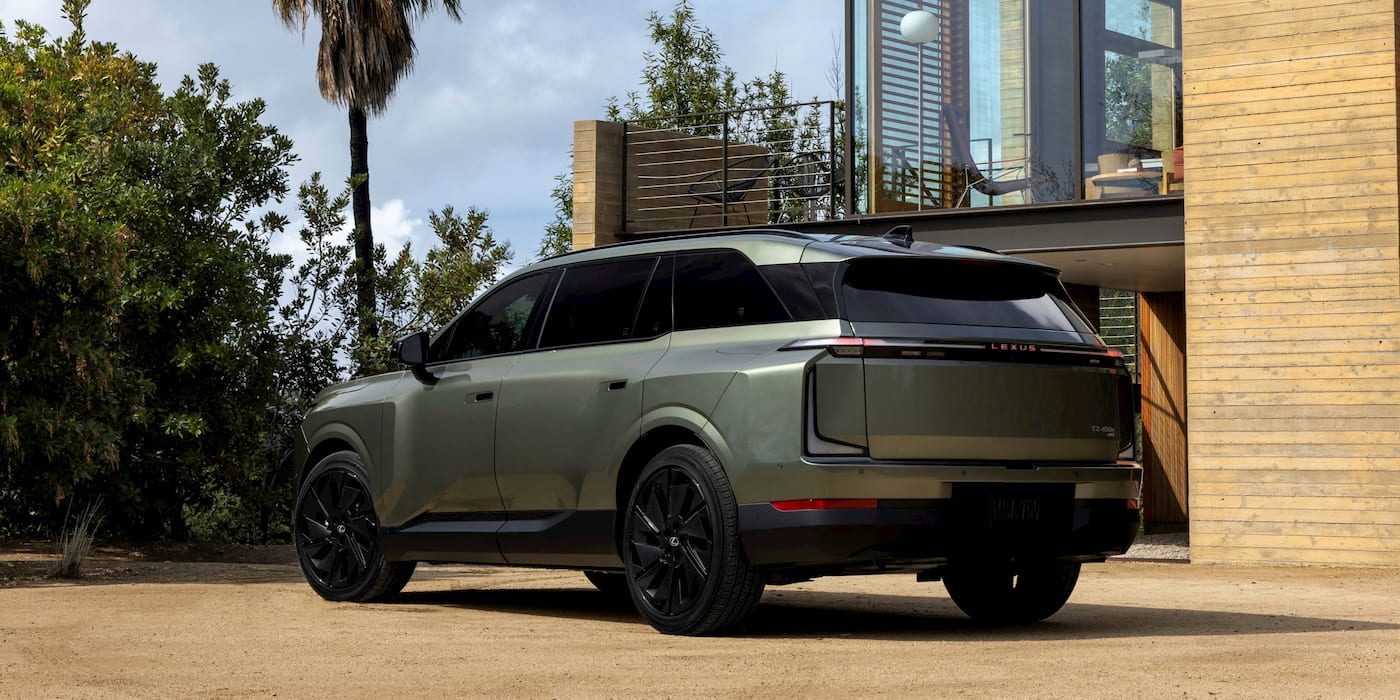
The vehicle will be offered across three specific grades: the TZ 450e Premium AWD, the TZ 450e Premium Touring AWD, and the range-topping TZ 450e Luxury AWD.
The entry-level TZ 450e Premium AWD is slated to hit showroom floors first, arriving in late 2026. Equipped with a smaller 76.96 kWh battery pack, this base variant delivers an EPA-estimated driving range of 253 miles on a single charge and carries a starting price of $64,050.
For buyers seeking extended range and additional comfort features, the TZ 450e Premium Touring AWD and TZ 450e Luxury AWD will follow in early 2027. Both upscale models transition to a larger 95.82 kWh battery pack. The Touring model, priced at $72,050, achieves the maximum efficiency of the lineup, boasting an EPA-estimated driving range of up to 315 miles—just shy of Lexus’s initial internal projection of 320 miles. Meanwhile, the heavily appointed Luxury trim, priced at $80,550, trades a small amount of range for enhanced amenities, delivering 279 miles per charge.
Powertrain Engineering and Performance Capabilities
Underpinning the 2027 Lexus TZ is an advanced dual-motor all-wheel-drive architecture. All models come standard with an evolved iteration of Lexus’s proprietary DIRECT4 AWD system, engineered to dynamically distribute torque between the front and rear axles based on driving conditions, vehicle speed, and steering inputs.
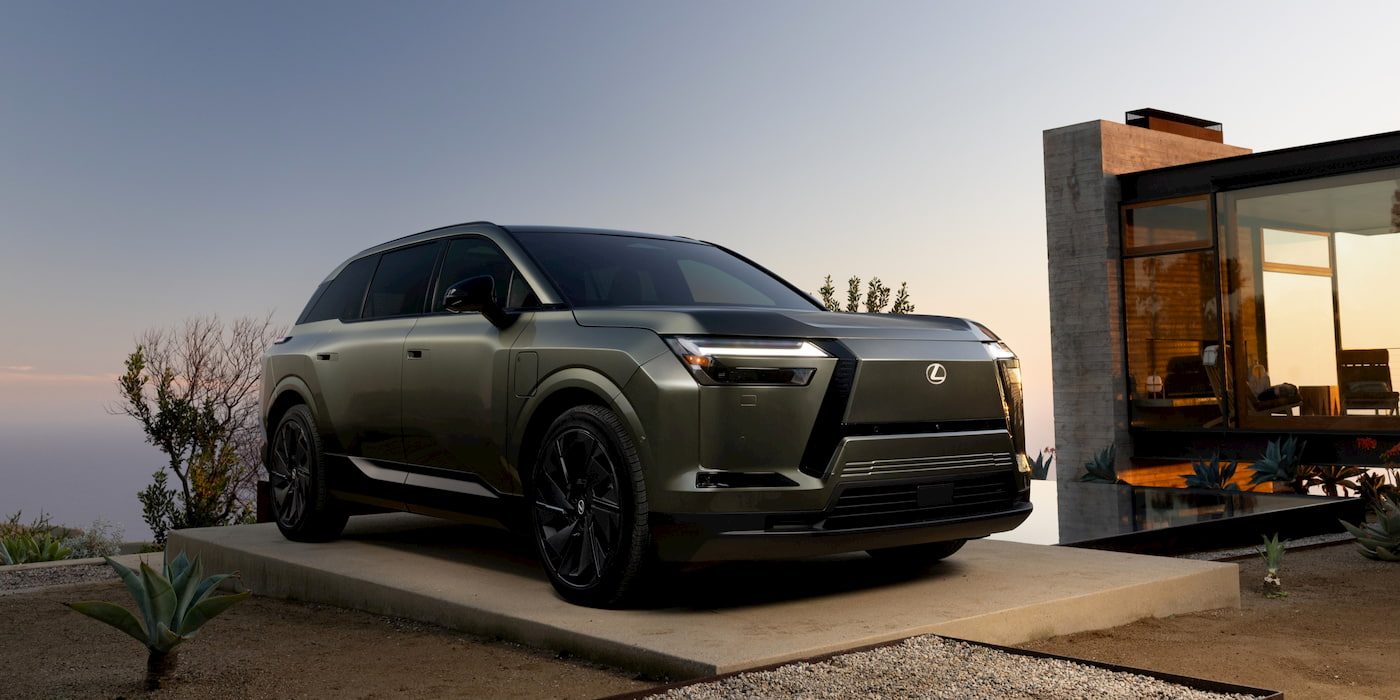
The dual-motor setup generates a combined output of 308 horsepower. While this figure is notably lower than the preliminary 402 horsepower estimated by Lexus during early concept reveals, the power delivery is meticulously tuned to provide effortless acceleration suited for a three-row luxury cruiser.
Though the TZ shares its underlying modular platform with the forthcoming Toyota Highlander BEV and Subaru Getaway, Lexus engineers have heavily modified the chassis to ensure the vehicle meets the brand’s stringent "Lexus Driving Signature" standards. This includes the integration of fine-tuned independent suspension geometry, dynamic rear steering to improve low-speed maneuverability and high-speed stability, and a reinforced body structure designed to reduce noise, vibration, and harshness (NVH) while maximizing crash safety.
Dimensions, Design, and Charging Infrastructure
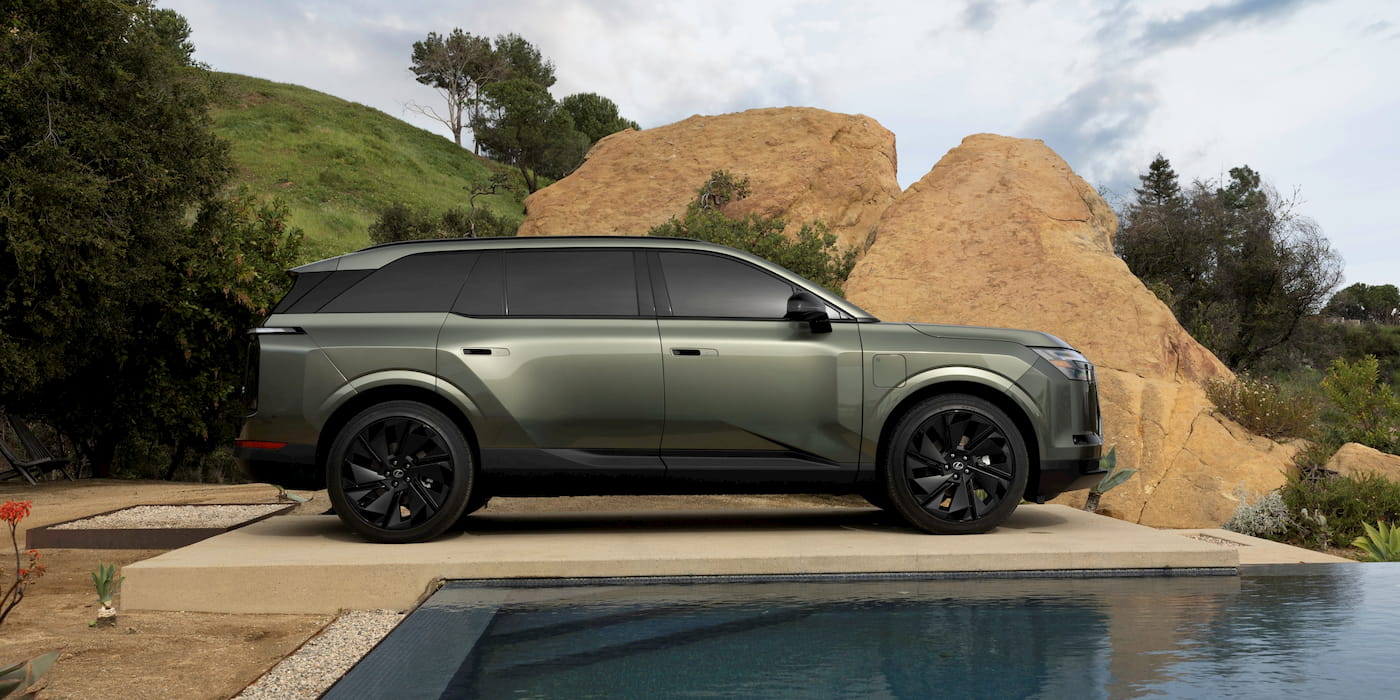
In terms of physical footprint, the 2027 Lexus TZ occupies a substantial presence on the road. Measuring 200.8 inches in length, 78.3 inches in width, and 67.1 inches in height, with a generous 120.1-inch wheelbase, the electric SUV places itself squarely in line with mid-to-large-size three-row competitors such as the Hyundai IONIQ 9 and the Volvo EX90.
Charging capabilities are a critical consideration for modern electric vehicle adoption, and the TZ addresses this with robust hardware. The vehicle supports DC fast charging at speeds up to 150 kW, enabling the battery pack to replenish from 10% to 80% capacity in approximately 35 minutes under optimal conditions. Crucially, Lexus has integrated a North American Charging Standard (NACS) port directly into the vehicle architecture from the factory. This design choice grants TZ owners native, direct access to Tesla’s extensive Supercharger network across North America without the need for cumbersome physical adapters.
Cabin Technology and Intelligent Navigation
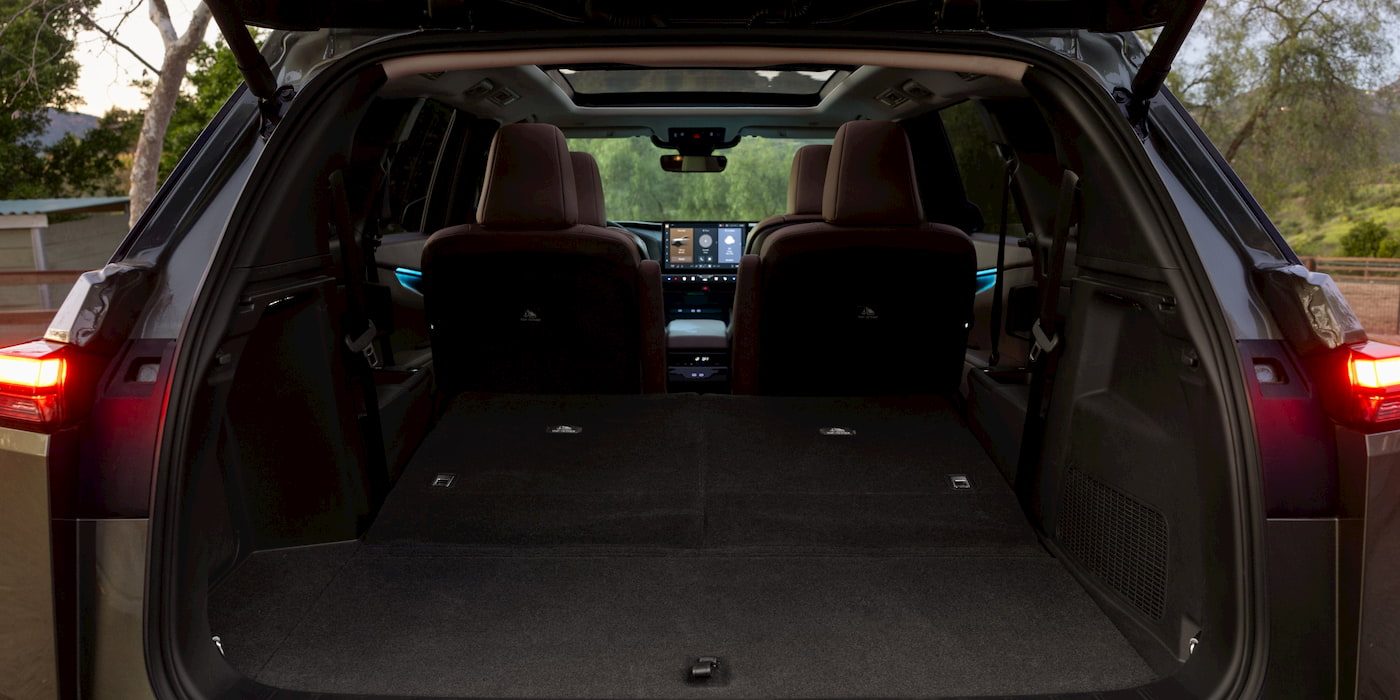
Inside the cabin, the three-row layout is dominated by the latest generation of the Lexus Interface multimedia system. Designed to reduce driver distraction while offering deep customization, the system features a high-definition digital instrument cluster capable of full-screen navigation projection, customizable home-screen widgets, and an upgraded voice-recognition assistant that responds to natural language commands.
To eliminate range anxiety—a primary concern for prospective three-row family vehicle buyers—Lexus has introduced specialized EV-centric software functions. These include advanced EV Routing, which automatically calculates optimal charging stops along a journey based on real-time traffic, elevation, and battery consumption data, as well as an interactive EV Range Map that visually outlines how far the vehicle can travel on its remaining state of charge.
Chronology and Market Context
The journey toward the 2027 Lexus TZ reflects a broader, highly strategic shift within the global automotive industry. As consumer demand for multi-passenger electric vehicles matures, automakers are carefully balancing development costs with shifting market adoption rates.
Initially, Toyota Motor Corporation—parent company of Lexus—projected a simultaneous or closely clustered rollout of its shared-platform three-row electric SUVs. However, supply chain maturation, shifting regulatory landscapes, and internal software development timelines led Toyota and Subaru to delay the arrival of the Highlander BEV and the Getaway until calendar year 2027 as 2028 model-year vehicles.
By pushing the Lexus TZ forward to debut later this year as a 2027 model, the luxury division effectively steals a march on its mainstream corporate counterparts. This staging allows Lexus to establish brand equity and capture early-adopter luxury consumers before the broader market is flooded with lower-cost corporate variants.
Fact-Based Analysis of Industry Implications and Competitive Landscape
The launch of the Lexus TZ at a sub-$65,000 entry point carries significant strategic implications for the luxury electric vehicle segment. By pricing the base model competitively, Lexus is deliberately targeting a wide demographic of upper-middle-class families who might otherwise consider internal combustion engine (ICE) or hybrid alternatives like the Lexus RX and TX, or established luxury competitors.
When positioned against direct rivals, the TZ carves out a distinct pricing and positioning niche. It commands a higher starting price than the mass-market-oriented Hyundai IONIQ 9, which opens at $60,555, reflecting Lexus’s premium brand cachet, bespoke interior materials, and higher-tier customer service network. Conversely, the TZ undercuts established European luxury competitors such as the Volvo EX90, which carries a starting price of $78,090, potentially drawing price-conscious luxury buyers away from traditional Swedish and German offerings.
However, the vehicle also faces potential headwinds. The discrepancy between early horsepower estimates of 402 hp and the final certified output of 308 hp may draw scrutiny from performance-oriented enthusiasts, though target buyers for three-row luxury family haulers typically prioritize ride comfort, safety ratings, and cabin space over raw acceleration figures. Furthermore, the 253-mile range of the base battery pack places it at the lower end of acceptability for long-distance family road trips, making the 315-mile Touring variant the likely volume seller despite its higher $72,050 price tag.

As the official on-sale date approaches later this year, the market performance of the 2027 Lexus TZ will serve as a vital bellwether for the viability of premium, three-row electric crossovers. Whether Lexus can successfully convert traditional luxury hybrid buyers into full battery-electric vehicle owners will depend heavily on the real-world efficiency of its DIRECT4 system, the reliability of its NACS Supercharger integration, and the overall execution of its promised luxury ride quality.