Google Unveils Gemini 4 Carbon: A New Frontier in AI Capabilities, Long-Horizon Reasoning, and Cybersecurity Defense

The artificial intelligence landscape shifted once again as the technology sector welcomed the latest development in foundational model design. Building swiftly upon the momentum generated by previous releases, developers introduced Gemini 4 Carbon, positioning the system as their most robust and capable model to date. Featuring state-of-the-art cybersecurity proficiencies and advanced long-horizon reasoning capabilities, the release marks a significant milestone in how artificial intelligence handles complex, multi-step engineering and defense workflows.
The unveiling follows closely on the heels of the Gemini 4 Argon rollout, which reached the public just two weeks prior. This rapid cadence highlights an accelerating timeline in model development, where researchers and computational models work in tandem to push technological boundaries while continuously refining safety protocols. Industry analysts note that this compressed release schedule demonstrates a strategic push by major technology firms to maintain a competitive edge in the high-stakes generative AI market.

Dominating Benchmarks and Long-Horizon Engineering
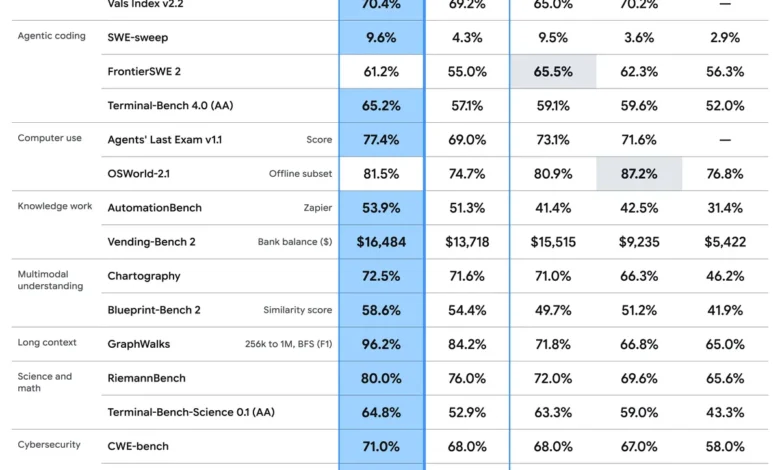
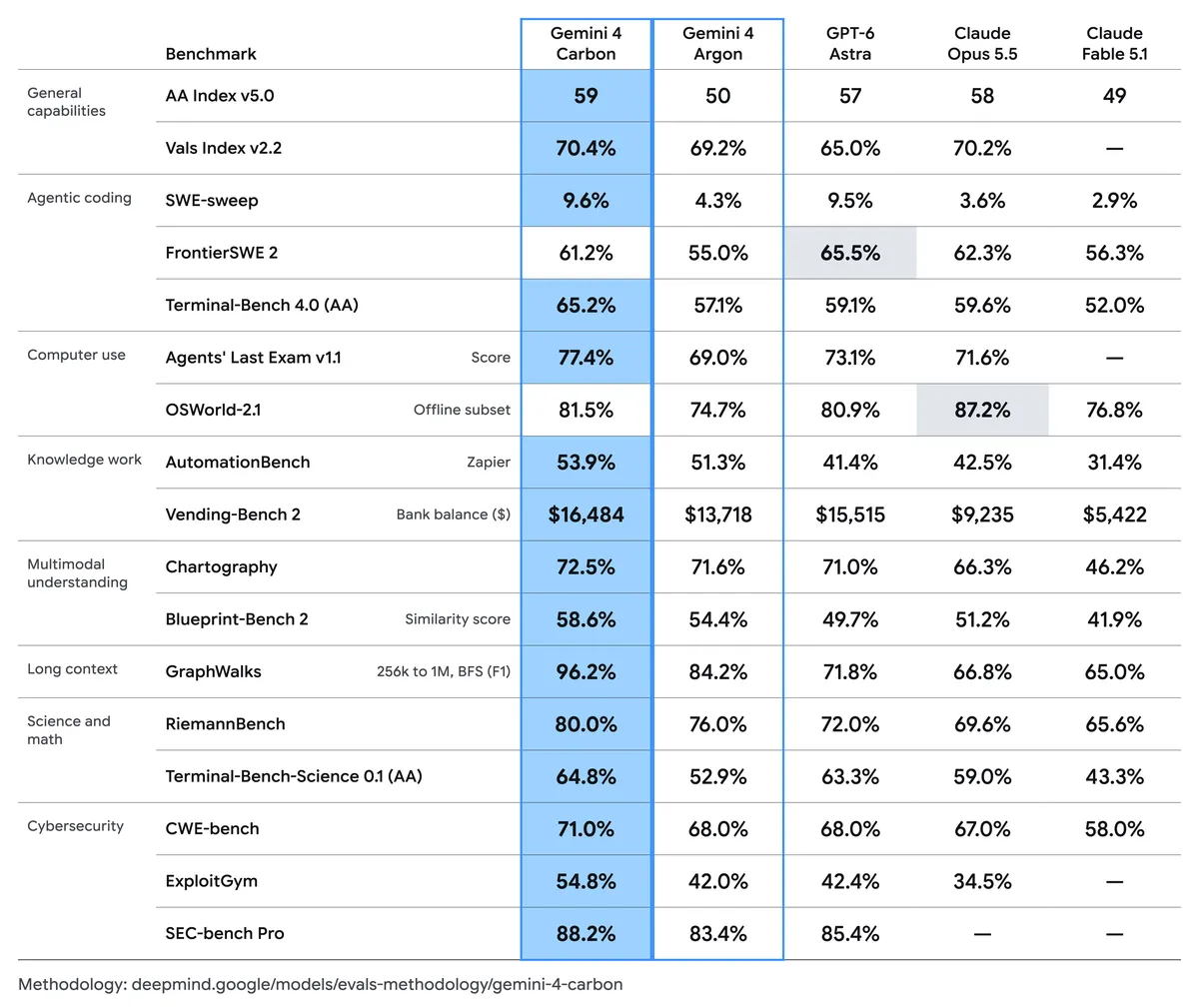
Gemini 4 Carbon has immediately made an impression across the global evaluation landscape, capturing the number one ranking on the updated version 5.0 of the Artificial Analysis Intelligence Index with an impressive score of 59. This top-tier placement is underpinned by substantial performance gains in coding, agentic tasks, and scientific reasoning.
Unlike traditional AI models that excel primarily in short, conversational exchanges, Carbon is specifically engineered to tackle difficult, long-horizon engineering problems. Internal testing revealed that the model can operate autonomously for days, persistently navigating through dead ends and troubleshooting complex, multi-step hurdles. These capabilities allow it to perform root-cause analysis and patch subtle, deeply embedded bugs across massive enterprise codebases and intricate low-level systems.
Furthermore, user feedback from previous iterations heavily influenced enhancements across full-stack web development and multimodal understanding. On the WebDev Arena leaderboard, Carbon achieved a notable jump of 89 Elo points, landing securely at number four with an overall score of 1768. This improvement translates to higher-quality output, cleaner artifacts, and more reliable web development assistance for developers operating in live environments.

State-of-the-Art Cybersecurity Performance
One of the most consequential aspects of Gemini 4 Carbon is its leap forward in cybersecurity defense. The model achieves industry-leading performance across the entire lifecycle of cybersecurity operations, spanning vulnerability detection, validation, and remediation.
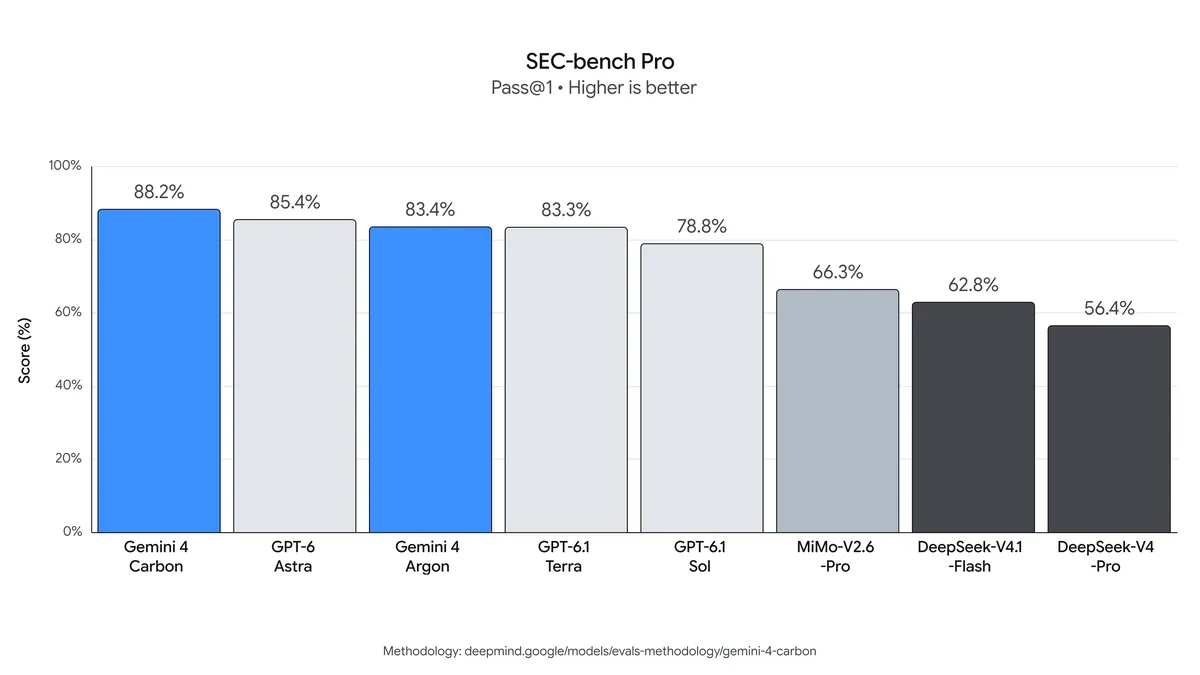
When evaluated without guardrails on rigorous external benchmarks, Carbon secured decisive leads. It scored 88.2% on SEC-bench Pro for identifying vulnerabilities, 54.8% on ExploitGym for exploitation tasks, and 71.0% on CWE-bench for patching code. These quantitative achievements translate to practical advantages in the field. Internal teams working with the model reported more than a twofold increase in the success rate for generating secure code compared to its predecessor, Argon.
The real-world utility of these advancements has already drawn attention from specialized engineering groups. The Google Chrome team reported that Carbon performed more than ten times better than competing large frontier models when tasked with generating high-quality patches for complex software vulnerabilities. Similarly, cloud security platform Wiz observed that Carbon excels on web penetration testing benchmarks, reinforcing critical initiatives focused on automated vulnerability scanning and threat mitigation.
A Deliberate Rollout and Government Collaboration
Recognizing the dual-use nature of advanced cybersecurity capabilities, developers are taking a measured, highly deliberate approach to the rollout of Gemini 4 Carbon. Rather than making the model immediately available to the general public, the organization is actively participating in the United States government’s voluntary process for pre-release model testing and safety evaluations.
Beginning this week, access to Carbon is being granted to a carefully curated subset of cyber defenders. Over the coming weeks and months, access will be phased out gradually to additional trusted partners through specialized initiatives such as the Fairwind Program. This phased deployment allows safety researchers to gather continuous feedback, stress-test guardrails, and mitigate potential risks before the model is integrated into broader product surfaces for developers, enterprise businesses, and everyday consumers.
Despite its advanced capabilities, Gemini 4 Carbon will launch at the same introductory pricing structure established by Argon. The model will cost $2 per million input tokens and $10 per million output tokens, with a steep 95% discount applied to cached input tokens to encourage efficient enterprise integration.
Advanced Safety, Alignment, and Mitigation Protocols
To address the inherent risks associated with high-performance AI models capable of complex reasoning and code exploitation, Gemini 4 Carbon incorporates a sophisticated, multi-layered safety and security stack. This architecture combines rigorous model training, real-time misuse defenses, heightened resilience against prompt-injection attacks, and continuous chain-of-thought monitoring.
Building on the strong alignment foundation established by Argon—details of which were published in comprehensive safety and security documentation—researchers challenged themselves to elevate Carbon’s behavioral reliability. The model has been explicitly trained to handle high-pressure, ambiguous, and complex tasks while adhering strictly to safety guidelines. Evaluations using Gray Swan intelligence and prompt-injection benchmarks demonstrate that these added training layers successfully suppress undesirable behaviors without sacrificing raw utility.
Broader Implications and Industry Impact
The introduction of Gemini 4 Carbon underscores a broader transformation within the software engineering and cybersecurity industries. As automated agents become capable of sustained, multi-day problem-solving, the day-to-day operations of software developers and security analysts are poised for radical shifts.
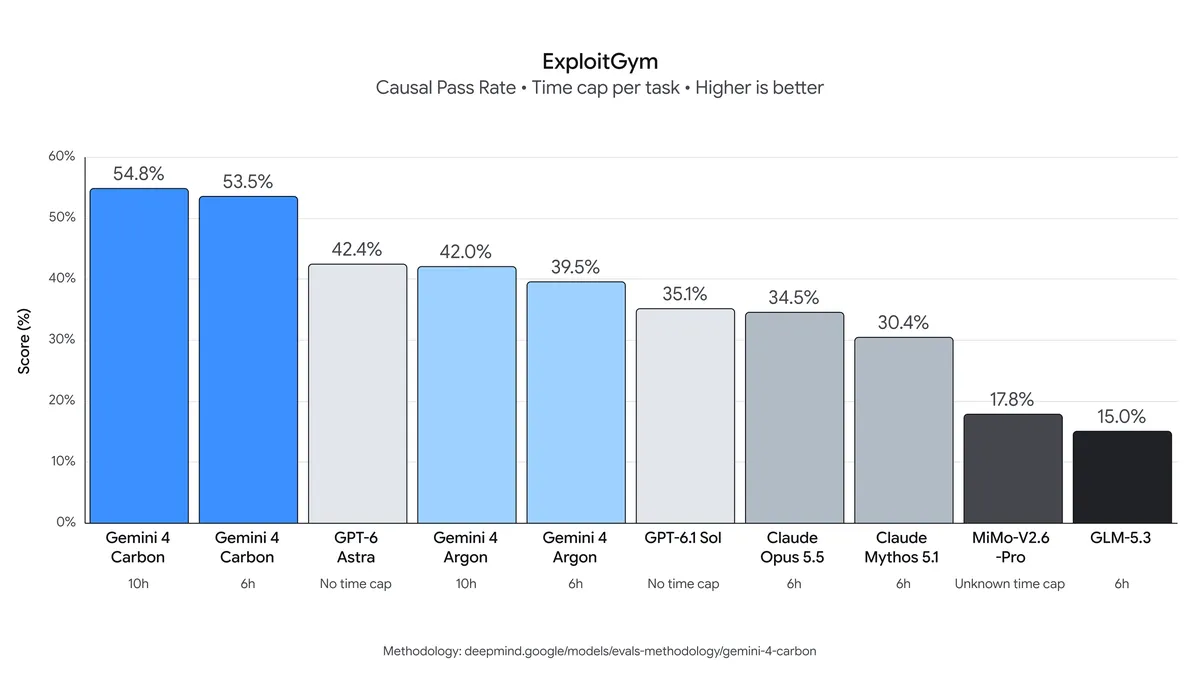
On one hand, the ability of AI to rapidly identify vulnerabilities and generate robust patches offers a powerful countermeasure against the escalating volume of sophisticated cyberattacks globally. Organizations facing chronic talent shortages in cybersecurity may find these tools invaluable for maintaining baseline defensive postures across expansive digital infrastructures. On the other hand, the advanced offensive proficiencies demonstrated on benchmarks like ExploitGym emphasize the urgent need for robust regulatory frameworks, international cooperation, and standardized pre-release testing.
As Gemini 4 Carbon transitions from closed testing environments to broader commercial availability, its reception will likely serve as a litmus test for how the tech industry balances rapid innovation with rigorous risk management. For now, developers, enterprises, and policymakers alike will be watching closely to see how this next-generation frontier model performs under the scrutiny of real-world deployment.