Zoox Issues Software Recall for Robotaxi Fleet Following Critical Navigation Failure at Emergency Fire Scene

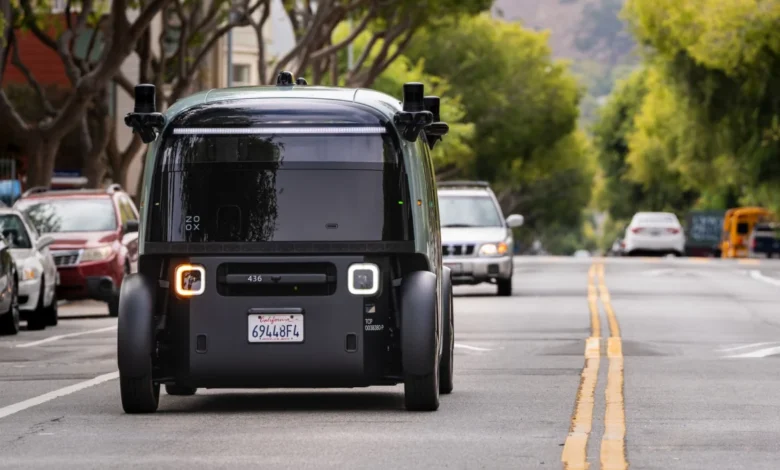
The Amazon-owned autonomous vehicle developer Zoox has officially initiated a voluntary software recall affecting its entire fleet of 105 robotaxis following a June incident in which a vehicle failed to navigate a smoke-heavy emergency scene. The company announced the decision on Friday, confirming that a software update has been deployed to enhance the vehicles’ ability to detect and appropriately respond to active emergency environments, specifically those obscured by heavy smoke. This move comes at a pivotal moment for the autonomous vehicle (AV) industry, which is facing heightened scrutiny from federal regulators regarding the interaction between self-driving technology and first responders.
According to documents filed with the National Highway Traffic Safety Administration (NHTSA), the recall aims to rectify a "functional insufficiency" in the software’s perception and response logic. The June 20 incident, which served as the catalyst for this corrective action, involved a Zoox vehicle encountering a fire scene that had not yet been formally cordoned off with traffic cones. The presence of dense smoke apparently confused the vehicle’s sensor suite, leading to a sequence of events that required manual intervention by a remote operator to ensure the safety of the scene and the efficiency of emergency personnel.
Detailed Chronology of the June Incident and Subsequent Recall
The specific event occurred on June 20, 2024, when a Zoox robotaxi—operating without any human passengers on board—stumbled upon an active fire emergency. While the exact location of the incident has not been disclosed by Zoox or the NHTSA, the report describes a scenario where heavy smoke significantly obscured the roadway and the emergency scene. Unlike many established emergency zones, this particular site was not yet marked by traditional traffic control measures such as cones or flares.
Upon encountering the smoke, the vehicle’s onboard computer systems struggled to interpret the environment. The robotaxi reportedly "braked hard" while simultaneously attempting to steer away from the perceived obstacle, eventually coming to a complete stop in a position that could have potentially hindered emergency operations. The situation was ultimately resolved when a Zoox teleoperator—a remote human monitor—took control of the vehicle and reversed it away from the scene. This manual intervention allowed first responders the necessary space to place traffic cones and manage the fire without further obstruction from the autonomous craft.
Following the incident, Zoox engaged in a series of internal investigations to determine the root cause of the failure. Throughout late June and the first week of July, the company maintained an open dialogue with the NHTSA, discussing the severity and frequency of such sensor-related issues. On July 7, Zoox leadership decided to issue a formal recall. Notably, this decision was made just 24 hours before a broader "call to action" was issued by the NHTSA to the entire autonomous driving industry.
Regulatory Pressure and the NHTSA Mandate
The timing of the Zoox recall is significant, occurring amidst a crackdown by federal safety regulators. On July 8, NHTSA Administrator Jonathan Morrison sent a pointed letter to various self-driving car companies, including industry leaders like Waymo and Tesla, warning them that interfering with first responders is an unacceptable safety risk.
Morrison’s letter was explicit in its criticism of the industry’s current progress in handling "edge cases." He stated that the inability to detect and respond to emergency scenes represents a fundamental failure of the technology. "Emergency scenes are not rare or extreme ‘edge cases,’" Morrison wrote, challenging the common industry narrative that such events are too unpredictable to program for. "As such, NHTSA is today issuing a call to action for AV developers and operators to immediately focus their resources on fixing this issue."
The federal regulator’s stance marks a shift from passive observation to active enforcement. By categorizing emergency scenes as routine occurrences rather than rare anomalies, the NHTSA is effectively raising the bar for what constitutes a "road-ready" autonomous system. For Zoox, the recall serves as a proactive attempt to align with these tightening standards before their planned commercial launch.
Technical Challenges: Sensors, Smoke, and Perception
The failure of the Zoox vehicle to navigate the smoke-filled scene highlights a persistent technical hurdle for autonomous systems: the limitations of sensor fusion. Most robotaxis, including those from Zoox, rely on a combination of LiDAR (Light Detection and Ranging), cameras, and radar to build a 3D map of their surroundings.
Smoke presents a unique challenge for these systems. LiDAR works by bouncing laser pulses off objects; however, dense smoke particles can cause those pulses to reflect prematurely, creating a "phantom" wall or a confusing cloud of data points that the computer may interpret as a solid object or a sensor error. Cameras, meanwhile, suffer from the same visibility issues as the human eye, and radar, while capable of seeing through smoke, often lacks the resolution to identify specific emergency equipment or the subtle gestures of a firefighter directing traffic.
The software update issued by Zoox is designed to bridge this gap. According to a statement provided to TechCrunch, the update "enhances the existing capability of detecting active emergency scenes by adding the ability to detect and respond to heavy smoke in certain situations." By refining the algorithms that process sensor data, Zoox aims to ensure that future encounters with fire scenes result in more predictable and safer vehicle behavior, such as early slowing or autonomous rerouting, rather than abrupt emergency braking.
A Pattern of Recalls and Safety Investigations
This latest software update marks the fourth recall for Zoox in a relatively short timeframe, reflecting the growing pains of a company transitioning from testing to commercial viability.
- March 2025: Zoox voluntarily recalled software across 258 vehicles to address a "hard-braking" issue. This followed a 2024 NHTSA investigation into reports that the vehicles were stopping unexpectedly in traffic, posing a rear-end collision risk to following motorists.
- May 2025: Two separate recalls were issued within the same month. One followed a collision with a passenger car, and the other involved an incident where a Zoox vehicle was struck by an e-scooter rider.
- July 2025: The current recall involving 105 vehicles and the smoke-detection failure.
While Zoox has maintained that it is not aware of any injuries associated with the June smoke incident, the frequency of these recalls has drawn attention to the company’s "purpose-built" design. Unlike competitors who retrofit existing passenger cars (like the Jaguar I-PACE used by Waymo), Zoox has developed a unique, "carriage-style" vehicle with no steering wheel or pedals. This design necessitates a higher level of scrutiny, as there is no option for a backup safety driver to take physical control of the vehicle in the event of a system failure.
Industry-Wide Context: The Waymo Comparison
Zoox is not the only player in the autonomous space struggling to coexist with emergency services. Waymo, widely considered the leader in the field, has had numerous documented run-ins with first responders. As of March 2024, Waymo had recorded at least six incidents where first responders were forced to physically move a robotaxi that had become "stuck" or was blocking an emergency scene.
These incidents have fueled a growing tension between municipal authorities and tech companies. In cities like San Francisco, fire department officials have been vocal about the delays caused by autonomous vehicles blocking fire trucks or driving over active fire hoses. The NHTSA’s recent "call to action" is a direct response to this mounting friction, signaling that the federal government will no longer view these disruptions as minor inconveniences of the "beta testing" phase.
The Path Toward Commercialization and Legislative Hurdles
Despite these setbacks, Zoox is continuing its push toward a full commercial launch. The company is currently conducting extensive testing and offering free rides to select users in Las Vegas and San Francisco. However, the path to a revenue-generating service is contingent on more than just software updates.
Zoox is currently awaiting an exemption from the NHTSA regarding certain Federal Motor Vehicle Safety Standards (FMVSS). Because the Zoox robotaxi lacks traditional controls like a steering wheel, brake pedals, or rearview mirrors, it does not meet the standard requirements for road-going vehicles. The company must prove that its "equivalent" safety measures—such as its redundant sensor suites and remote teleoperation capabilities—provide a level of safety equal to or greater than traditional vehicle designs.
In a move that could benefit Zoox, the current administration has recently proposed removing the requirement for a physical brake pedal in vehicles built specifically for full autonomy. This regulatory shift would be a significant boost for companies like Zoox and Tesla, who are moving away from human-centric interior designs. However, as the June smoke incident demonstrates, the removal of human controls places the entire burden of safety on the software, leaving little room for error when the technology encounters the complexities of the real world.
Analysis of Implications for the AV Sector
The Zoox recall serves as a sobering reminder that the "last 1%" of autonomous driving—the ability to handle rare, chaotic, and high-stakes environments—remains the most difficult challenge to solve. While robotaxis have proven they can navigate standard city grids and highway traffic with remarkable proficiency, their performance in emergency scenarios is a critical metric for public trust.
For the industry to move forward, developers must move beyond treating emergency scenes as "edge cases." As the NHTSA suggested, these are predictable components of urban life. The success of the Zoox software update will be watched closely by both regulators and competitors. If the update successfully allows the fleet to recognize and navigate environmental hazards like smoke, it could provide a blueprint for other developers facing similar perception hurdles.
Furthermore, the role of the "teleoperator" is likely to become a permanent fixture of the AV ecosystem. The fact that a human had to intervene to reverse the Zoox vehicle away from the fire suggests that, for the foreseeable future, autonomous systems will require a "human-in-the-loop" to handle nuanced social and emergency cues that AI cannot yet master.
As Zoox continues to refine its fleet, the focus will remain on whether these software-defined vehicles can truly integrate into the fabric of a city without becoming a liability to those tasked with public safety. The July recall is a step toward that integration, but it also underscores the significant distance yet to be traveled on the road to fully autonomous urban mobility.