UGREEN NAS Units See Significant Price Reductions Amid Growing Demand for Decentralized Data Storage Solutions

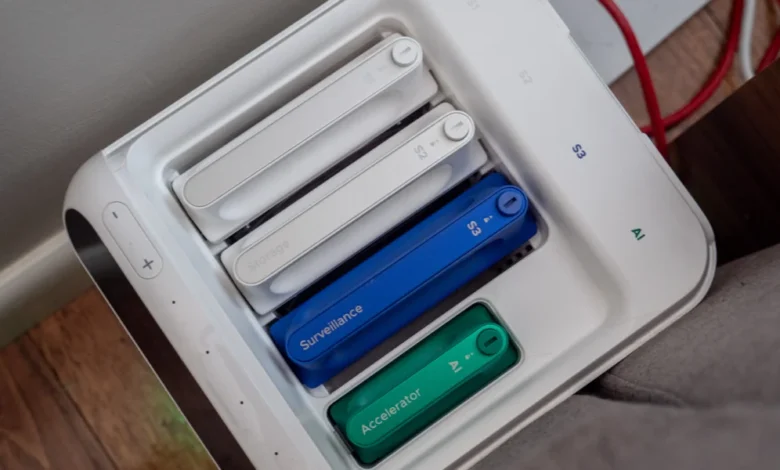
The landscape of personal and small-business data management is undergoing a significant shift as consumer-grade Network Attached Storage (NAS) devices become increasingly accessible. UGREEN, a prominent manufacturer in the consumer electronics space, has recently initiated a series of promotional discounts across its NAS product lineup on Amazon. This move aligns with a broader market trend where users are moving away from centralized cloud storage subscriptions toward self-hosted, private alternatives to regain control over their digital assets.
The Evolution of Personal Data Infrastructure
For decades, the standard for personal storage involved tethered external hard drives—a fragmented approach that often leads to data loss, physical degradation, and organizational chaos. The NAS category was historically relegated to IT professionals and corporate environments, characterized by high entry costs and steep technical learning curves.
However, the hardware market has changed significantly over the last three years. By integrating simplified operating systems and user-friendly mobile applications, companies like UGREEN have bridged the gap between enterprise-grade performance and consumer ease-of-use. The current market availability of units such as the DH and DXP series represents the maturation of this technology. These devices function as dedicated servers that connect directly to a home or office network, allowing multiple devices to access a centralized repository of files, media, and backups simultaneously.
Product Categorization and Technical Specifications
UGREEN’s current catalog is segmented into two primary tiers, each addressing distinct user requirements. The DH series is engineered for domestic use, focusing on simplicity, automatic backups, and media streaming. These units are designed to replace recurring cloud storage costs associated with services like Google One, iCloud, or Dropbox. By housing data on a local drive, users eliminate monthly subscription fees while ensuring that their personal information remains within their physical control, mitigating the privacy risks inherent in third-party data centers.

The DXP series serves as the advanced tier, targeted at power users, creative professionals, and small office environments. These units feature more robust internal processors and expanded memory capacities, facilitating the use of containerized applications. This capability transforms the NAS from a simple storage box into a multifunctional edge-computing device. Users can host private web servers, run local AI-powered photo organization software, manage smart home security camera feeds without relying on external cloud processing, or maintain private game servers.
Current Market Promotions and Availability
As of October 2026, UGREEN has implemented price reductions ranging from 10% to 15% on key models across its Amazon storefront. The following table summarizes the currently discounted units:
| Product Model | Configuration | Discount Level |
|---|---|---|
| UGREEN NAS DH2300 | 2-Bay | 11% off |
| UGREEN NAS DH4300 Plus | 4-Bay | 15% off |
| UGREEN NAS DXP2800 | 2-Bay | 14% off |
| UGREEN NAS DXP4800 Plus | 4-Bay | 15% off |
| UGREEN NAS DXP6800 Plus | 6-Bay | 10% off |
These discounts arrive during a period of high competition in the storage hardware sector, as manufacturers attempt to capture market share from traditional cloud storage giants. Industry analysts suggest that these price adjustments are likely part of a seasonal strategy to encourage hardware adoption before the end of the fiscal year, a common practice among electronics manufacturers looking to clear inventory and expand their user base.
The Rise of the "Self-Hosted" Movement
The shift toward local storage is not merely a cost-saving measure; it is a fundamental change in how data privacy is perceived. Following several high-profile security breaches at major cloud providers in the mid-2020s, there has been a measurable increase in consumer interest regarding "sovereign data."
Industry data indicates that the global NAS market is expected to grow at a compound annual growth rate (CAGR) of approximately 8% through 2030. This growth is largely driven by the increasing volume of high-resolution video content generated by smartphone users and the expansion of smart home IoT devices that require local, high-speed storage for continuous recording.

By utilizing software such as Pi-Hole for network-wide ad blocking or setting up private media servers, users are effectively reclaiming their network sovereignty. The ability to run these services on a UGREEN DXP unit via Docker containers provides a level of customization that is impossible to achieve with standard cloud-based utilities.
Technical Implications for Small Offices
For small businesses, the transition to a NAS architecture has profound implications for workflow efficiency. Unlike cloud storage, which is subject to internet bandwidth fluctuations, a NAS provides local network speeds (often exceeding 1Gbps or 2.5Gbps depending on the local hardware configuration). This allows for real-time video editing, rapid file transfers, and instantaneous synchronization across multiple workstations.
The DXP series, specifically, addresses the scalability needs of growing businesses. With multi-bay configurations, users can implement RAID (Redundant Array of Independent Disks) protocols. RAID allows for data mirroring, where the same data is written to two or more drives simultaneously. If one drive fails, the data remains intact on the second drive, providing a critical layer of redundancy that is often overlooked in traditional external drive setups.
Challenges and Considerations
While the barrier to entry has lowered, prospective users must still account for the total cost of ownership. Beyond the initial purchase price of the UGREEN hardware, users must invest in reliable NAS-rated hard drives, which are built for 24/7 operation—a factor that separates them from standard desktop hard drives.
Furthermore, while UGREEN’s software has made significant strides in accessibility, the transition to self-hosting requires a baseline understanding of network management. Users must configure port forwarding or secure remote access protocols (such as VPNs or Tailscale) if they intend to access their files from outside their home network. While many manufacturers now include "one-click" remote access features, the security implications of exposing a NAS to the internet remain a topic of ongoing discussion in cybersecurity forums.

Looking Ahead: The Future of Home Storage
The current promotion by UGREEN serves as a catalyst for a broader demographic of users to engage with local server technology. As consumer devices continue to produce massive data files, the limitations of "pay-per-gigabyte" cloud storage models will become increasingly apparent.
In the long term, experts predict that the "Smart Home" will eventually include a central server as a standard utility, much like a router or a modem. By subsidizing the hardware and focusing on the ecosystem of apps available to the user, UGREEN is positioning itself to be a primary player in this digital infrastructure transition.
As the industry moves into the final quarter of 2026, the focus for manufacturers will likely shift toward further automation of security patches and the integration of on-device AI. For the consumer, the immediate benefit is the availability of professional-grade storage technology at a price point that makes the transition from cloud-dependent to local-first storage a logical, and increasingly attractive, financial decision. Whether for the casual user looking to archive family photographs or the power user building a private media ecosystem, the current market availability of these NAS units provides a viable pathway to greater digital independence.